
The worth of a decision in insolvency resolution is not settled only by how many creditors supported it. It is equally necessary that the voting be free of conflicts of interest and that correct information about the assets and the possible recovery be available before the decision.
Why in the News
In the discussion paper of 12 September 2026, the Insolvency and Bankruptcy Board of India proposed four safeguards for the resolution process of personal guarantors of corporate debtors. These include the voting of related parties, an examination of suspect transactions, the valuation of assets, and recording the reasons for the creditors' decision. This is a discussion of proposals, not an announcement of final rules in force.
Key facts
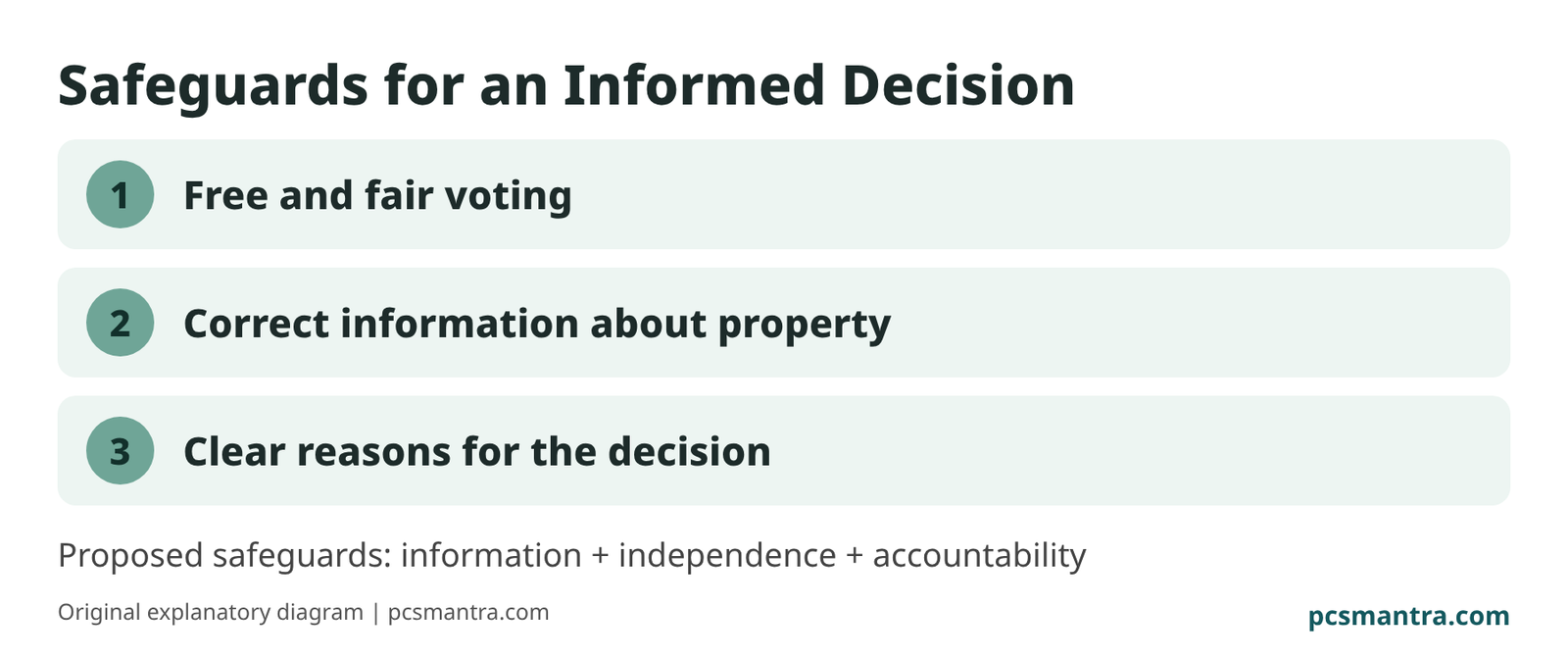
Conflicts of interest in voting: the discussion paper proposed assigning a zero voting share to a creditor who is a related party of the guarantor. The purpose is that a party linked to the debtor should not influence the outcome of a plan that benefits that very debtor.
A picture of the assets before the vote: the proposal includes an examination, by the resolution professional, of undervalued, preferential and other specified transactions. There is also a proposal to have an independent registered valuer determine the fair and realisable value of the assets.
Not merely the count of votes, but the reasons too: there is a proposal to record in the record of the creditors' meeting such reasons as the plan's viability, the certainty of payment and the comparison with the alternative process. This can help tie the decision to the available information and business reasoning.
Why is the credibility of the process necessary?
An imbalance of information: a guarantor may know more than the creditor about his assets and past transactions. Independent valuation and timely information can reduce this imbalance.
The quality of consent: if related parties are not correctly identified, the numerical support in a vote may not reflect real independent consent. Clear criteria and examination are therefore necessary.
Accountable discretion: recording reasons does not mean forcing one fixed recovery percentage on every plan. It means showing why the decision was considered right among the available options.
Analysis and Way Forward
The success of these safeguards will depend on professional capacity, timely documents and independent examination. Identifying a related party requires information about real relationships, not only declared ones. The valuation should disclose its assumptions and limits, so that an estimate is not mistaken for a definite sale price. In the examination of transactions, a person affected by an adverse finding should get the opportunity to answer. At the same time, the examination should not run so long that the resolution's own value shrinks. The balance of transparency and timeliness is what will strengthen an informed business decision.
Distinguishing the concepts
A general discussion of a corporate resolution plan and a personal guarantor's repayment process are not the same. This subject is centred not on a debt haircut in any particular case but on independent voting and the evidence available before the decision.
Mains perspective
Do not write the four proposals only as a list. Tie each measure to the risk it addresses: conflicts of interest, information about assets, uncertainty of value and the accountability of the decision.
Answer Outline
Introduction: In the repayment process of a personal guarantor of a corporate debtor, keep the need for independent consent and adequate information; raise the question of the quality of the decision beyond the number of votes.
Main Body: The real interests of related parties can affect independent voting; reduce the risk of merely numerical consent through identification and checking. Examination of prior transactions and independent registered valuation can reduce information asymmetry and price uncertainty. In the meeting's reasons, keep feasibility, certainty of payment and a comparison of options. Do not take proposed safeguards as rules in force, or an estimated value as a fixed sale price.
Conclusion: Strengthen the process with professional capacity, timely documents and disclosure of the valuation's assumptions. Let the affected person get an opportunity to respond, but delay in checking should not reduce the value of the resolution; do not read a reasoned decision as imposing a fixed recovery percentage in every case.
Sources
- IBBI: the discussion paper on safeguards for personal guarantors
- 13 September: an independent report on the proposed process reforms
- The proposal's date and the detail of the four safeguards
Remember: a good decision is made not by support alone, but by independence, information and clear reasons.
Download This Article: PDF