Mains: GS-2 - regional organisations and India's foreign policy; GS-1 - culture and heritage
Prelims: SCO, cultural cooperation, members and dialogue partners
Why in the News
India will host the Shanghai Cooperation Organisation's (SCO) first civilisational dialogue forum. An official announcement on 20 October had confirmed that the event would take place this year. A public broadcaster's report of 28 October gave the dates 20-22 November 2026 in New Delhi. All ten member countries, including Pakistan, are reported to have been invited. An invitation should not be read as confirmation of any particular minister's visit; the 27 October report had not confirmed who would lead Pakistan's delegation.
What is a civilisational dialogue
It is a forum for conversation between countries and societies on the basis of shared history, art, ideas, language and living traditions. Cultural diplomacy means building mutual understanding and relations through culture. Its effect should not remain limited to meetings of governments; the work of museums, universities, researchers and artists can connect with it.
It would be hasty to treat this as an immediate solution to security disputes or proof that bilateral relations have normalised. Participation on a multilateral forum and political agreement between two countries are different things.
The place of culture in the SCO
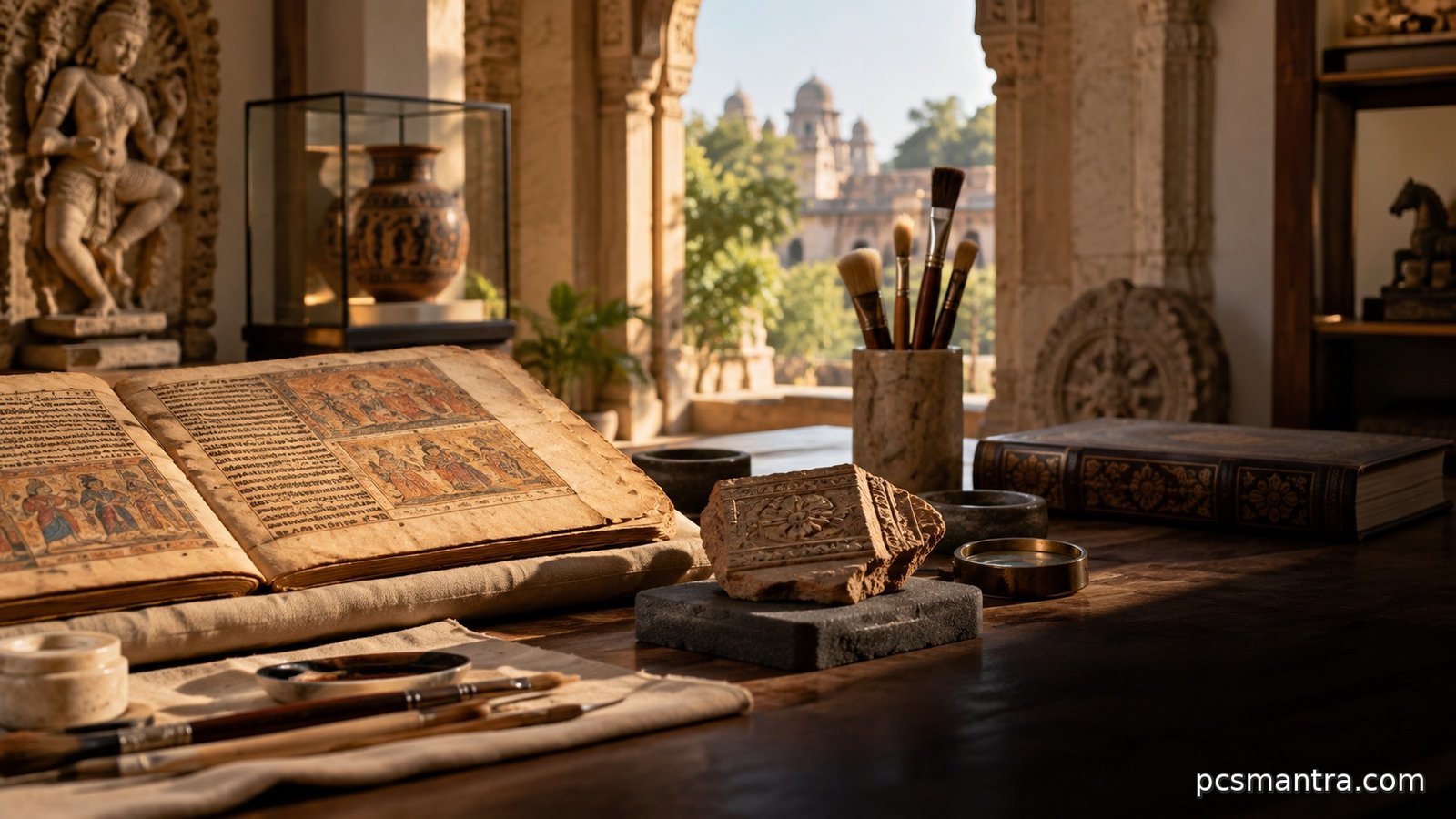
Regard to the SCO as only a security body is incomplete. Its mechanism of culture ministers works on inter-cultural exchange and the preservation of tangible and intangible heritage. Tangible heritage includes monuments, manuscripts and antiquities; intangible heritage can include oral traditions, performing arts and the traditional knowledge of communities.
According to the organisation, the cultural cooperation agreement of 16 August 2007 covers fields such as music, theatre, cinema, archives, libraries, museums, heritage conservation and handicrafts. So the new dialogue is not the first start of cultural cooperation; it can give an additional forum to cooperation that already exists. India has been a full member since 2017.
Opportunities for India
- Exchange of knowledge: through the cataloguing, translation and study of manuscripts, a shared past can be taken to more people. Digitisation is not merely scanning; it also means giving accurate description and context.
- Cooperation in conservation: museums and conservation institutions can share material care, training and experience. The issue of antiquities taken out illegally should proceed with legal process and evidence.
- Contact between societies: the participation of artists, students and heritage specialists can turn official announcements into long-term contact.
- Multilateral dialogue: sitting together on a shared subject despite political differences is useful, but it should not be read as India stepping back from its concerns on terrorism or sovereignty. India's statement of 20 October had kept these concerns separate.
Remember these distinctions
| Situation | Correct meaning |
|---|---|
| Invitation | An opportunity to participate; travel, representative or acceptance is not settled by itself. |
| Members and partners | Full membership, observer and dialogue partner are distinct categories. Do not count every invited country as an SCO member. |
| Shared heritage | A basis of contact in history; not a claim of uniform culture or present political agreement. |
| New forum | A new opportunity for cultural cooperation; not a self-executing treaty or a binding programme. |
Challenges
Presenting a shared past requires giving space to diverse voices. Measuring success only by grand events, photographs and announcements can leave research and local communities behind. The quality of translation, rights over collections, digital access, funding and regular institutional contact also matter. Potential cooperation should not be described as an achieved outcome without an announced project.
Way forward
The work emerging from the forum should have a clear list, responsible institutions and a method of review. Limited, measurable work such as exchanges of students and researchers, joint cataloguing and training can be more useful than long statements. Shared heritage does not mean erasing differences; it means keeping the paths of dialogue open while acknowledging them.
Mains practice question
"Cultural diplomacy can create space for dialogue without ending political differences." Discuss India's opportunities and limitations with reference to the SCO's proposed civilisational dialogue forum. (250 words, 15 marks)
Answer outline
In the introduction: State the meaning of cultural diplomacy and civilisational dialogue.
In the main body: Explain the opportunities of heritage conservation, research, translation and contact between societies. Write the limitations of political differences, diversity, resources and implementation, along with the difference between membership, invitation and confirmation of travel.
In the conclusion: Tie the success of the dialogue to concrete cooperation and continuous institutional contact, not merely to a conference.
Sources
- PIB, 20 October 2026: India's hosting and India's perspective in the SCO
- DD News, report of 28 October: invitations, dates and membership structure
- SCO: introduction to the mechanism of culture ministers and the 2007 agreement
- SCO, 2018: prior cooperation on culture, heritage and exchange between societies
- Report of 27 October: the forum proposal and the unconfirmed status of the delegation
The dates are as per the public broadcaster's report; the original invitation with the detailed event programme was not separately available. No claim has been made of any minister's confirmed travel or of the event's outcome. The opportunities and challenges are our analysis.
Frequently Asked Questions (FAQ)
Summary answer: The SCO's civilisational dialogue is a forum for cultural understanding; an invitation has not been treated as confirmation of a minister's visit.
Question: What is the basis of the civilisational dialogue?
Its basis is shared history, art, ideas, language and living traditions. It is a forum for deepening cultural understanding between countries and societies.
Question: What is the difference between tangible and intangible heritage?
Tangible heritage includes monuments, manuscripts and antiquities. Intangible heritage can include oral traditions, performing arts and the traditional knowledge of communities.
Question: When did India become a full member of the SCO?
India has been a full member since 2017. The article also mentions cultural cooperation that already exists in the SCO.
Download This Article: PDF