
Why in the news
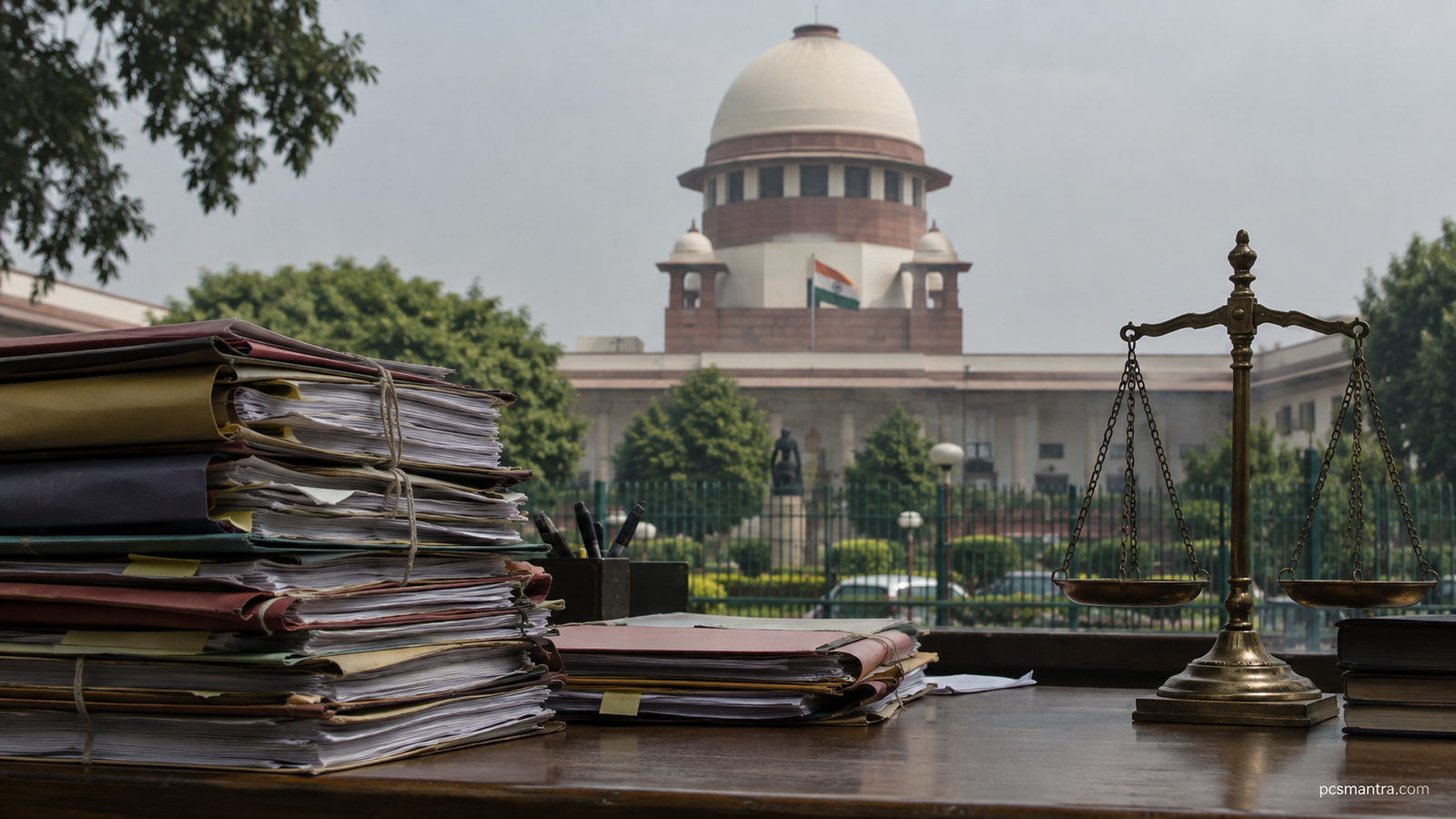
November 13, 2026: In a matter concerning the payment of pending Dearness Allowance (DA) and Dearness Relief (DR) to Punjab government employees and pensioners, the Supreme Court on 5 November 2026 stayed criminal contempt proceedings against the Punjab Chief Secretary and asked the State to present a payment plan by March 2027; the matter will be listed again in December. During the hearing, the bench of Justice B.V. Nagarathna and Justice R. Mahadevan raised sharp oral questions about the accountability of government employees, bringing the long-running debate on the structure and responsibility of the civil services back to the centre.
Key observations of the bench (oral)
It is important to know that these are oral observations made during the hearing - they are not part of a written order or direction and therefore carry no binding legal effect; even so, they reflect the judiciary's concern:
- 'Privileged class': Justice Nagarathna observed that compared with workers in the unorganised and corporate sectors, government employees form a 'privileged class' - they receive pension in addition to DA and other allowances, while freebies are meant for marginalised groups.
- Suggestion of contractual recruitment: "Government servants must hereinafter come on contract basis. Then only they will have accountability."
- The accountability question: "Pensions are being received by families after the death of the government servant... Everywhere red-tapism, black-tapism. Where is the accountability of government servants?" It was also remarked that if employees worked sincerely, litigation in the country would come down.
- Stay on contempt against the Chief Secretary: The bench said hauling up the Chief Secretary in this manner amounted to 'arm-twisting', stayed further criminal contempt proceedings, and barred coercive steps in the civil contempt matter. DA is currently being paid at 53 per cent.
The wider context of the debate
- Constitutional protection: Article 311 shields civil servants from arbitrary dismissal - they cannot be removed without a regular inquiry and hearing. The safeguard was designed for an independent and impartial administration, but critics argue its misuse has become a shield for non-performance.
- Existing accountability mechanisms: Conduct rules, annual performance appraisal (APAR), departmental inquiries, vigilance bodies and disciplinary provisions in service rules all exist; the problem lies in implementation and pace.
- Reviewing contractualisation: Contract-based recruitment can bring flexibility and performance-linked renewal, but it may affect the stability of service, long-term expertise and freedom from political pressure; lateral entry and Mission Karmayogi are other dimensions of this same debate.
- The pension debate: The ongoing contest between the Old Pension Scheme (OPS), the National Pension System (NPS) and the Unified Pension Scheme (UPS) also touches the same question of 'lifelong security versus accountability'.
The view of commissions and committees
The Second Administrative Reforms Commission (2005), among others, recommended performance-based promotion, a simplified procedure for removing the inefficient, clear work standards and citizen charters. Mission Karmayogi (2020) is a step towards role-based capacity building. The essence of these recommendations: a balance of security and accountability - protecting servants from arbitrary pressure and holding them answerable for their work are both necessary.
Way forward
The Supreme Court's oral observations are not orders but warnings - of a growing distrust of the administrative system. The remedy lies not in a single measure like contractualisation, but in clear work standards, time-bound disciplinary proceedings, reducing the scope for delay through e-governance, and balancing rewards for good performance with a lawful exit for inefficiency. Equally, the principle that 'the State must act as a model employer' applies just as much to delivering employees their legitimate dues (such as DA) on time. The question of accountability runs both ways: towards the servant's diligence and towards the State's own arrangements.
Prelims practice questions
Question 1. With reference to Article 311 of the Indian Constitution, consider the following statements:
1. This Article provides certain protections to civil servants against arbitrary dismissal
2. This Article applies only to members of the All-India Services
Which one of the following is correct in respect of the above statements?
(a) Statement 1 is correct, but Statement 2 is not correct
(b) Statement 1 is not correct, but Statement 2 is correct
(c) Both Statement 1 and Statement 2 are correct
(d) Neither Statement 1 nor Statement 2 is correct
Answer and explanation
Answer: (a)
Statement 1: Article 311 protects civil servants from being removed without a regular inquiry and hearing, so this statement is correct. Statement 2: Article 311 is not confined to the All-India Services; it applies broadly to members of civil services of the Union and the States, so this statement is not correct.
Question 2. With regard to oral observations made by judges during the hearing of a case, which of the following statements is correct?
Which one of the above is correct?
(a) They are as binding as the written judgment
(b) They are not part of the written order and carry no binding legal effect by themselves
(c) They automatically acquire the status of an ordinance
(d) Their violation amounts to contempt
Answer and explanation
Answer: (b)
Oral observations made during a hearing reflect a judge's thinking but are not part of the written order or judgment, and are therefore not binding by themselves. The remaining options do not correctly describe the legal position of oral observations.
Mains practice question
"The balance between the security of civil servants and their accountability is the key to good governance." Comment with reference to the recent observations of the Supreme Court and suggest the path of reform. (250 words, 15 marks)
Answer outline:
In the introduction: The bench's oral observations in the Punjab DA matter; the relevance of the debate.
In the body: The case for security - the purpose of Article 311 (an impartial, stable administration). Signs of weak accountability - delays, slack disciplinary process, litigation. Pros and cons of contractualisation - flexibility versus stability and independence. Reform path - work standards, time-bound proceedings, capacity building (Mission Karmayogi), e-governance; the State's duty as a model employer.
In the conclusion: Balanced, performance-based reform.
Frequently Asked Questions (FAQ)
Summary answer: November 13, 2026: In a matter concerning the payment of pending Dearness Allowance (DA) and Dearness Relief (DR) to Punjab government employees and pensioners, the Supreme Court on 5 November 2026 st
Question: What protection does Article 311 give?
It protects civil servants from dismissal without a regular inquiry and hearing; its purpose is an impartial and stable administration.
Question: Are a court's oral observations binding?
No - they are not part of the written order and only reflect a judge's concern; the remarks in the Punjab DA matter were oral too.
Question: What did the court actually direct in the Punjab DA matter?
It stayed criminal contempt proceedings against the Chief Secretary, asked the State for a payment plan by March 2027, and listed the matter again in December; DA is currently paid at 53 per cent.
Sources
- [Press] https://www.livelaw.in/top-stories/supreme-court-justice-bv-nagarathna-punjab-chief-secretary-freebies-government-servants-privileged-class-must-recruit-on-contract-basis-557672
- [Press] https://lawchakra.in/supreme-court/punjab-chief-secretary-sc/
Download This Article: PDF
