
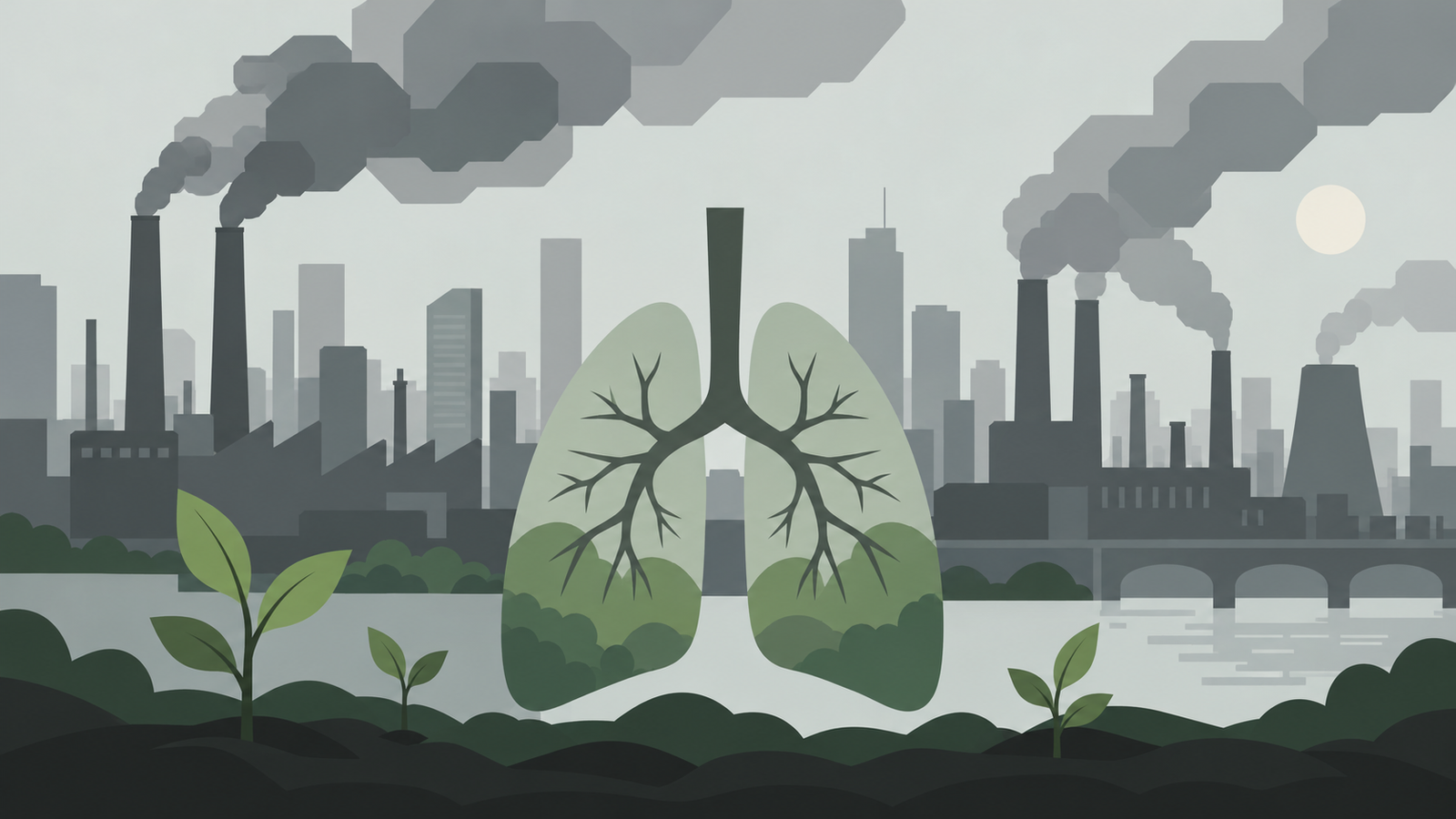
16 November 2026: A new review by the Centre for Research on Energy and Clean Air (CREA) - "Air pollution and health in India: A review of epidemiological evidence" - finds that of 184 epidemiological studies published in India between 1975 and 2025, 169 (91.8%) reported at least one positive association between air pollution exposure and a health outcome. Air pollution in India, it concludes, is no longer just an environmental concern but a primary determinant of public health.
Key findings
- Scope: a synthesis of 184 studies over five decades (1975-2025), examining exposure settings, monitoring approaches, geographic distribution, institutional involvement and funding trends.
- Headline: 169 of 184 studies (91.8%) found a pollution-health association; risks include respiratory, cardiovascular and metabolic diseases, varying by pollutant type, concentration and duration.
- Authors: CREA analysts with professors from VIT Vellore and The Tamil Nadu Dr. MGR Medical University.
- Challenge: methodologies vary widely - from stationary monitors to satellite imagery and chemical transport models - making cross-study comparison hard; localised studies rarely reflect national risk, and several pollutants and outcomes remain understudied.
Policy context: NCAP and the way forward
- NCAP: the National Clean Air Programme (2019) targets up to a 40% reduction in PM10 by 2025-26 in 131 non-attainment cities (revised from 20-30% by 2024). The growing health evidence raises the stakes for meeting it.
- Burden: WHO estimates place air pollution among India's leading risk factors; CREA's review strengthens the domestic evidence base.
- Recommendations: evidence-based policy, standardised methods, nationally representative studies and research into understudied pollutants and outcomes.
Quiz: Test your knowledge
Q1: Consider: 1. The CREA review synthesises 184 studies from 1975-2025 2. 91.8% of them found a pollution-health association 3. The report was published by the Ministry of Environment. Which are correct?
(a) 1 and 2 only
(b) 1 and 3 only
(c) 2 and 3 only
(d) 1, 2 and 3
Answer and explanation: (a) The report is by CREA, an independent research organisation, not the Ministry; 169 of 184 (91.8%) studies found a positive association.
Q2: When was NCAP launched and what is its revised target?
(a) 2018; 50% PM2.5 cut by 2024
(b) 2019; up to 40% PM10 cut by 2025-26
(c) 2020; 40% PM10 cut by 2030
(d) 2019; 50% cut in all pollutants by 2026
Answer and explanation: (b) NCAP was launched in 2019; it targets up to a 40% reduction in PM10 concentration by 2025-26 in 131 non-attainment cities (base year 2017-18).
Frequently Asked Questions (FAQ)
In short: CREA's review: 169 of 184 Indian studies (91.8%) from 1975-2025 found an air pollution-health link; respiratory, cardiovascular and metabolic diseases lead; evidence-based policy recommended.
Question: What is the key finding of the CREA report?
Of 184 epidemiological studies from five decades, 91.8% found at least one positive association between air pollution and a health outcome - pollution is now a primary determinant of public health in India.
Question: What is CREA?
The Centre for Research on Energy and Clean Air - an independent international research organisation on energy and air pollution; this review was prepared with VIT Vellore and The Tamil Nadu Dr. MGR Medical University.
Question: What does the report recommend?
Evidence-based policymaking, standardised study methods, nationally representative research and studies of understudied pollutants and health outcomes.
Sources:
- https://energyandcleanair.org/publication/air-pollution-and-health-in-india-a-review-of-epidemiological-evidence/ (official: CREA publication page)
- https://www.thehindu.com/sci-tech/health/91-of-studies-in-india-in-last-5-decades-linked-air-pollution-to-health-effects-analysis/article71704215.ece
Download this article: PDF (English)