
News context: 18 November 2026 | Prelims: GS-2 | Mains: GS-1, GS-2
In this article: News context, what EMRS is, EMRS 1.0 to 3.0, NESTS, key data, other tribal initiatives, practice questions, FAQ
Why in the news
On Janjatiya Gaurav Diwas (15 November, the birth anniversary of Bhagwan Birsa Munda), Vice President C.P. Radhakrishnan, in an article shared by the Prime Minister, described Eklavya Model Residential Schools (EMRS) as a pillar of tribal students' empowerment. The same week, 24 new Eklavya schools opened in Odisha and Eklavya schools were launched for the Bhotiya and Raji tribes in Uttarakhand. Most significantly, EMRS 3.0 has been operationalised this year, bringing the tribal-education scheme back into focus.
What EMRS is
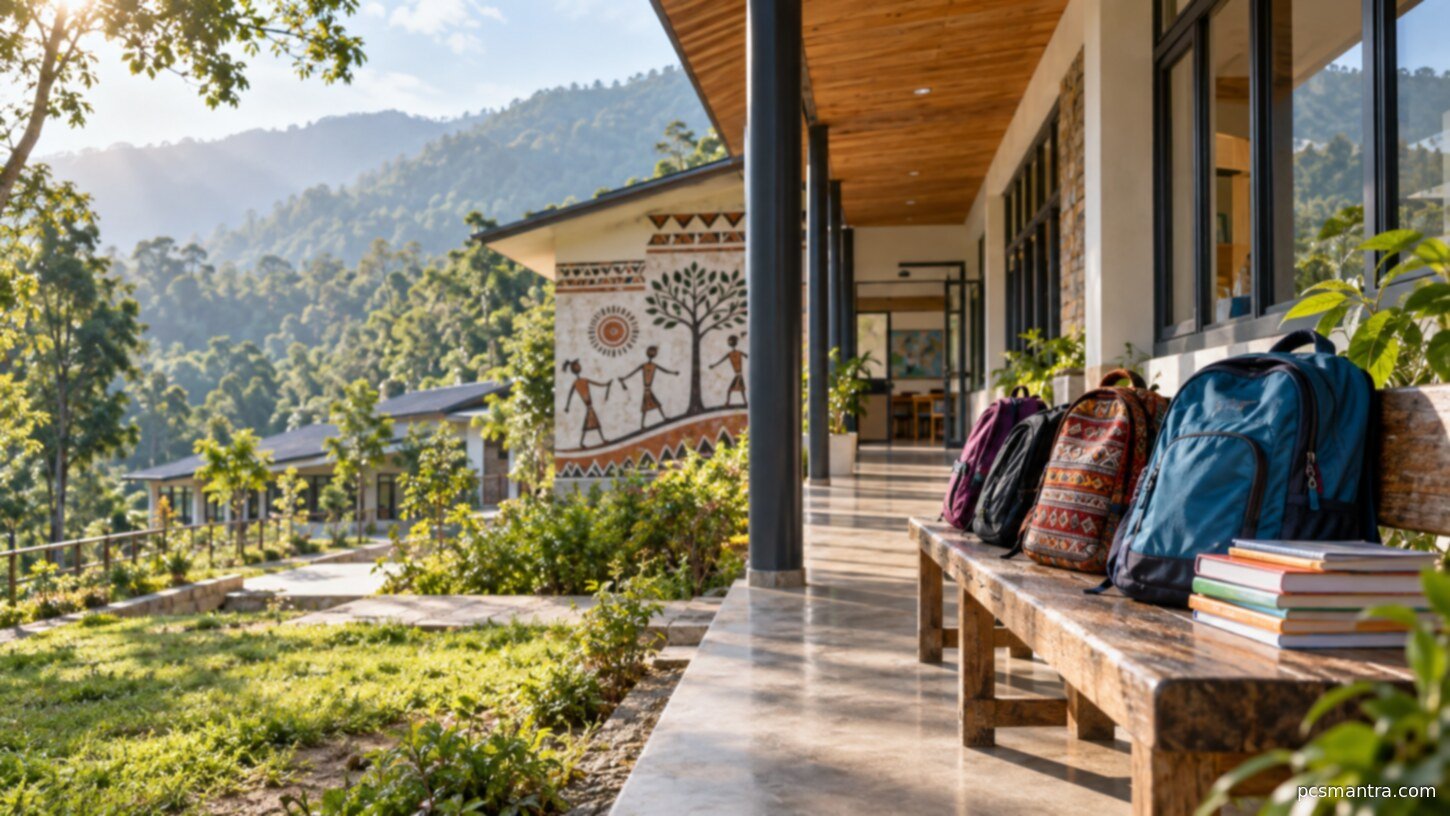
Eklavya Model Residential Schools are residential schools for tribal children, established within their own community setting to provide quality education with holistic development. Key features:
- Ministry: Ministry of Tribal Affairs; schools are CBSE-affiliated.
- Coverage criterion: Expanded in the Union Budget 2018-19 - one EMRS in every block with more than 50% Scheduled Tribe population and at least 20,000 tribal persons as per Census 2011.
- Inclusive design: Compared to the 7.5% ST reservation in other schools, at least 90% of EMRS students are from tribal communities, and 50% of seats are reserved for girls. Admission is through a State-level entrance test, with preference for local students.
- Focus on first-generation learners: Learning Gap Assessments, bridge courses and remedial classes; bilingual teaching in the early classes with a gradual transition to English.
EMRS 1.0 to 3.0
- Phase 1 (1997-2018): 288 schools sanctioned; faced structural challenges.
- EMRS 2.0 (from 2018): Block-level expansion; 440 new schools sanctioned. Capital cost initially Rs 20 crore for plain areas and Rs 24 crore for North-East, hilly and LWE-affected areas, enhanced in 2021 to Rs 37.80 crore and Rs 48 crore respectively. From FY 2026-27, the maximum permissible annual expenditure is Rs 1,47,356 per student.
- NESTS (2019): The National Education Society for Tribal Students, an autonomous society under the Ministry of Tribal Affairs, establishes and manages EMRS. A 65-day Bridge Course is mandatory for newly admitted Class VI students; schools are run by State Government Societies, supervised by a District Level Committee under the District Collector; an annual Key Performance Index across seven domains and 31 indicators and a district ranking system ensure accountability.
- EMRS 3.0 (operational from 2026): The new phase focused on quality and outcomes; details will be added as notified.
Latest data (from the Vice President's article)
- Total enrolment: about 1.73 lakh students, based on the Vice President's article. Its published total and gender subtotals differ by one student, so the figure is rounded here.
- State-wise approved schools: Odisha 114, Jharkhand 91, Chhattisgarh 75, Madhya Pradesh 71, Gujarat 47.
- Highest enrolment: Chhattisgarh 28,884 and Madhya Pradesh 26,857.
- Technology: smart boards in 365 EMRS in partnership with the Ministry of Electronics and IT; an AI-based teaching platform supports teachers in lesson planning, content delivery and evaluation.
- 'Tribal Corners' celebrating tribal heritage, sports facilities, vocational training centres and skill-based subjects under the SANKALP project.
- EMRS students are now entering premier institutions such as the IITs and AIIMS.
Other tribal initiatives (for perspective)
- Janjatiya Gaurav Diwas: 15 November, celebrated since 2021 on the birth anniversary of Bhagwan Birsa Munda (born 1875).
- Dharti Aaba Janjatiya Gram Utkarsh Abhiyan (2024): A convergent initiative for sectoral development of tribal villages.
- Debate continues on evaluating community study-centre models (such as Kerala's): bridging the gap between access and achievement remains the real test.
Prelims Practice Questions
Question 1
With reference to the Eklavya Model Residential Schools (EMRS) scheme, consider the following statements:
Statement 1: It was expanded in the Union Budget 2018-19 with criteria based on Census 2011
Statement 2: At least 90% of EMRS students belong to Scheduled Tribe communities
Statement 3: NESTS was set up under the Ministry of Human Resource Development
Which of the statements given above are correct?
Answer and Explanation
Correct answer: (a)
Statement 1: Correct - the 2018-19 Budget provided one EMRS per block with over 50% ST population and at least 20,000 tribal persons
Statement 2: Correct - at least 90% tribal students, with 50% of seats reserved for girls
Statement 3: Incorrect - NESTS (2019) functions under the Ministry of Tribal Affairs
Question 2
With reference to recent initiatives of the Ministry of Tribal Affairs, consider the following statements:
Statement 1: The capital cost of newly sanctioned schools under EMRS 2.0 was enhanced in 2021
Statement 2: EMRS schools are affiliated to the ICSE board
Statement 3: EMRS 3.0 has become operational in 2026
Which of the statements given above are correct?
Answer and Explanation
Correct answer: (b)
Statement 1: Correct - Rs 20 crore to Rs 37.80 crore for plains and Rs 24 crore to Rs 48 crore for NE/hilly/LWE areas (2021)
Statement 2: Incorrect - EMRS schools are CBSE-affiliated
Statement 3: Correct - EMRS 3.0 is operationalised from this year, per the Vice President
Frequently Asked Questions (FAQ)
Which block is covered under EMRS?
A block with more than 50% Scheduled Tribe population and at least 20,000 tribal persons as per Census 2011.
What is NESTS?
The National Education Society for Tribal Students (2019), an autonomous society under the Ministry of Tribal Affairs that establishes and manages EMRS.
How many students study in EMRS?
About 1.73 lakh students, based on the Vice President's November 2026 article. The source's total and gender subtotals differ by one student.
Sources
Download this article: PDF