
News context: 18 November 2026 | Prelims: GS-2 (health and regulation) | Mains: GS-2, GS-3
In this article: News context, spurious vs NSQ vs counterfeit, National Drug Survey data, law and regulators, practice questions, FAQ
Why in the news
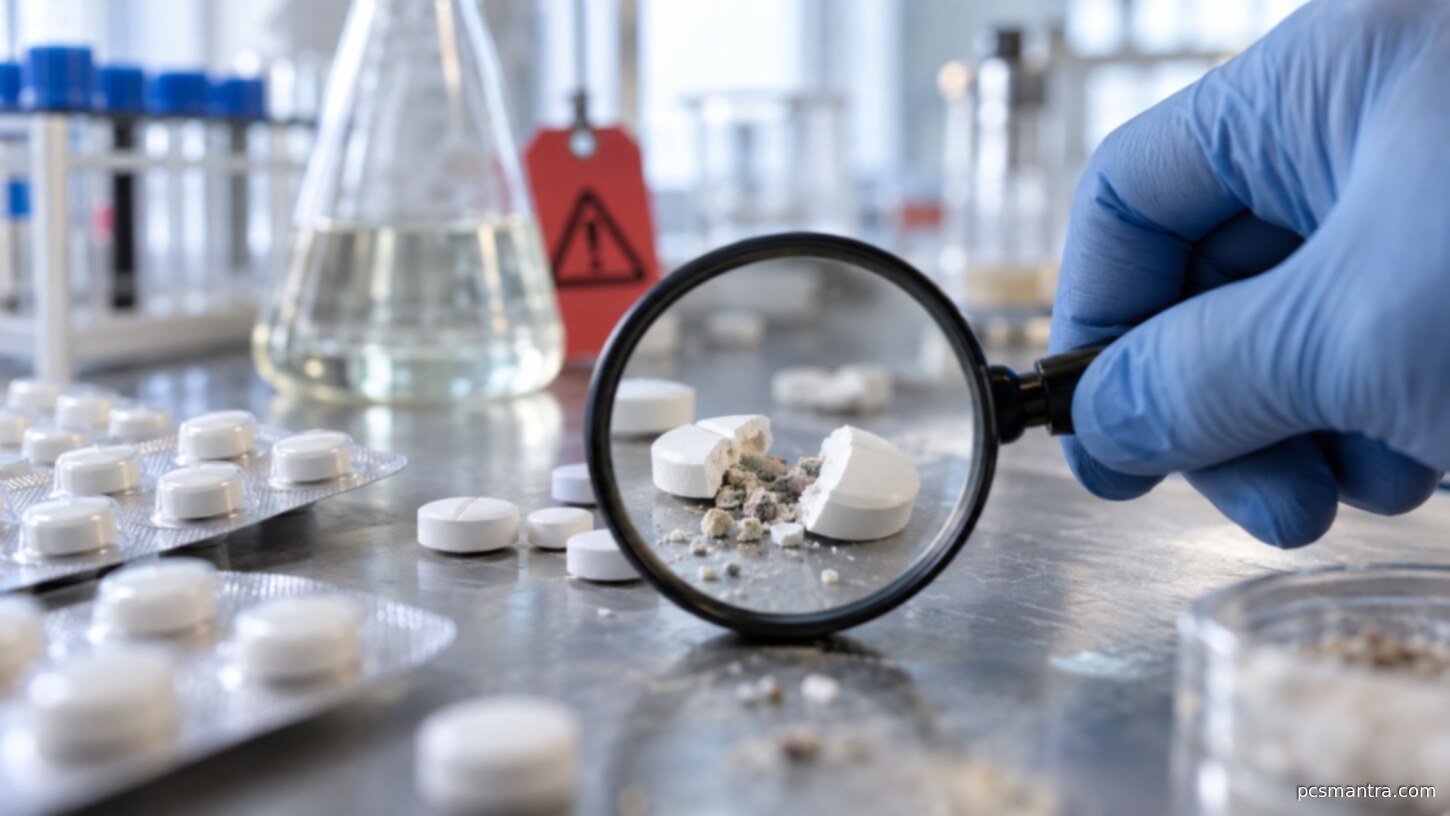
Reports of a raid on a licensed distributor in Karnataka, allegedly seizing fake cancer drugs, have alarmed patients. The state government is yet to officially confirm that the seized medicines were indeed counterfeit cancer drugs, and a list circulating on social media mentioned only antibiotics. Meanwhile, on 18 November, drug department teams raided 40 locations in Bihar including Patna and found an illegal factory, while a fake-medicine racket was also busted in Moradabad, Uttar Pradesh. Earlier this month, the Centre proposed instant suspension of manufacturing licences for drugs that fail quality tests. Together these developments have reopened the debate on fake drugs, their real scale and the regulatory system.
Spurious, NSQ and counterfeit: the difference
For exam purposes the three terms are distinct:
- Spurious drug: Section 17-B of the Drugs and Cosmetics Act, 1940 covers specified forms of deception, including false identity or manufacturer, imitation likely to deceive, and substitution wholly or partly by another drug or substance.
- Not of Standard Quality (NSQ): A drug that fails the applicable prescribed quality standards, such as an assay or dissolution requirement. A quality-test failure does not by itself establish falsification or a trademark offence.
- Counterfeit: A term from intellectual property/trademark law; in everyday use it has become a synonym for spurious drugs.
The World Health Organization uses the umbrella term "Substandard and Falsified (SF) medical products".
What the data says: the National Drug Survey
The most cited figures on fake drugs in India come from a national survey published in 2017, commissioned by the Health Ministry and carried out by the National Institute of Biologicals (NIB), Noida, over 2014-16:
- 47,954 samples drawn from 654 districts across 36 States and UTs; 47,012 samples tested.
- Overall, 3.16% were NSQ and only 0.0245% were spurious.
- Retail outlets: 3% NSQ and 0.023% spurious; government supply chain: 10.02% NSQ and 0.059% spurious - meaning quality failure, not counterfeiting, is the bigger problem, and it is worst in government procurement.
- Most NSQ failures were in dissolution and assay tests.
The takeaway: while public debate focuses on "fake drugs", the data shows India's real challenge is substandard quality, especially in the government supply chain.
Law and regulators
- Drugs and Cosmetics Act, 1940: The foundational law on manufacture, sale and import of drugs. Selling or making spurious drugs invites severe punishment; where a spurious drug causes death or is likely to, the Act provides for imprisonment of not less than ten years, extendable to life, with heavy fines.
- Central Drugs Standard Control Organisation (CDSCO): The national regulator, headed by the Drugs Controller General of India (DCGI); approves new drugs, oversees imports and the laboratory network, and issues monthly NSQ alerts.
- State drug control authorities: Licensing, inspection and raids on manufacturers and sellers in the States - most enforcement happens here.
- Mashelkar Committee (2003): The key committee that assessed the spurious-drugs problem and recommended stronger penal provisions.
- Jan Aushadhi scheme: Affordable generic medicines; relevant to the quality debate.
- November 2026 proposal: instant suspension of the manufacturing licence when a drug fails quality testing - a significant regulatory shift if implemented.
Challenges and way forward
- Digital integration of information-sharing between Centre-State and inter-State regulators, with faster batch recalls.
- Stricter quality testing in government procurement (the 10.02% NSQ gap).
- Mobile drug-testing laboratories, modern detection technology and supply-chain traceability.
- A convention of prompt official clarification by health departments in place of unverified reports, so that patients are not needlessly alarmed.
Prelims Practice Questions
Question 1
With reference to drug regulation in India, consider the following statements:
Statement 1: Section 17-B of the Drugs and Cosmetics Act, 1940 defines spurious drugs
Statement 2: The Central Drugs Standard Control Organisation is headed by the Drugs Controller General of India
Statement 3: The national survey published in 2017 estimated the share of spurious drugs in India at about 10%
Which of the statements given above are correct?
Answer and Explanation
Correct answer: (a)
Statement 1: Correct - Section 17-B defines spurious drugs
Statement 2: Correct - CDSCO is headed by the DCGI
Statement 3: Incorrect - spurious drugs were estimated at 0.0245%; the 10.02% figure refers to NSQ drugs in the government supply chain
Question 2
With reference to the National Drug Survey (2014-16) published in 2017, consider the following statements:
Statement 1: It was entrusted by the Health Ministry to the National Institute of Biologicals, Noida
Statement 2: It found the share of substandard (NSQ) drugs in the government supply chain to be higher than in the retail market
Statement 3: The survey was limited to samples from metropolitan cities
Which of the statements given above are correct?
Answer and Explanation
Correct answer: (a)
Statement 1: Correct - NIB Noida conducted it for the Health Ministry
Statement 2: Correct - 10.02% NSQ in the government chain versus 3% in retail
Statement 3: Incorrect - samples covered 654 districts in 36 States and UTs
Frequently Asked Questions (FAQ)
What is the difference between a spurious and an NSQ drug?
A spurious drug is a deliberate fake (Section 17-B), while an NSQ drug is genuine but fails laboratory quality standards.
Who regulates drugs in India?
The CDSCO (headed by the DCGI) at the Centre and State drug control authorities in the States, under the Drugs and Cosmetics Act, 1940.
What proposal on drug quality came in November 2026?
Instant suspension of manufacturing licences for drugs failing quality tests.
Sources
- www.thehindu.com
- www.cnbctv18.com
- www.livemint.com
- www.livehindustan.com
- www.thehinducentre.com
- www.indiacode.nic.in
Download this article: PDF