
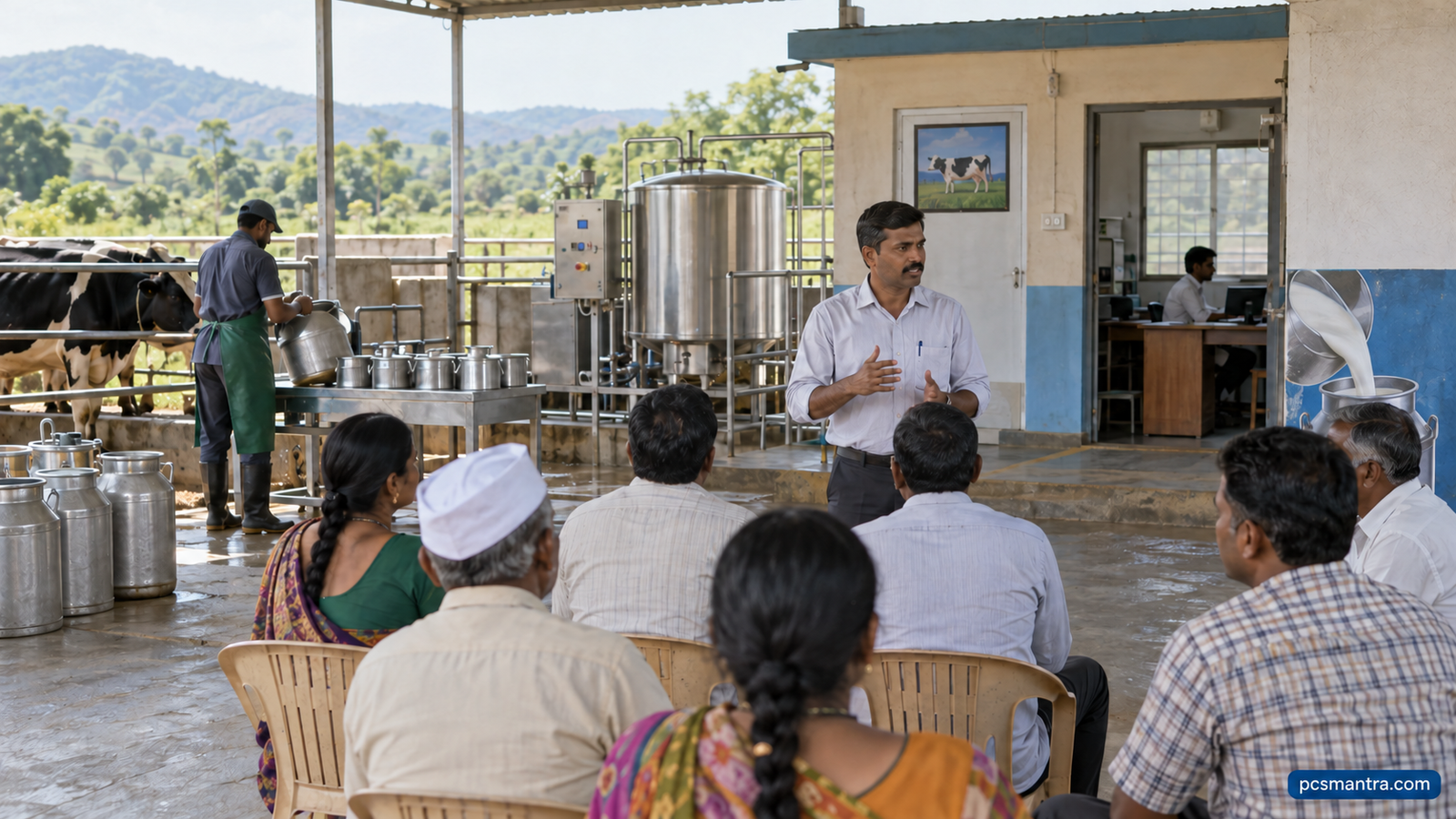
12 November 2026 update: NCP's Rajesh Patil elected Gokul Dairy chairman
In the election held on 10 November 2026, NCP (Mahayuti) leader Rajesh Patil was elected chairman of the Gokul milk union, defeating Shashikant Chuyekar of the Congress MLC-led panel by 3 votes; the term is one year. According to the Times of India, the votes of 4 government directors proved decisive - the very issue at the heart of the earlier controversy.
Reactions: Congress called the result 'another form of vote and election chori'; Chuyekar said he was hopeful of getting justice in court; Deputy Chief Minister Devendra Fadnavis accused Rahul Gandhi of politicising the election; Sanjay Raut called it a 'betrayal of Kolhapur'.
New sources:
- The Hindu: NCP's Rajesh Patil secures Gokul Dairy chairperson post, 11 November 2026
- Times of India: 4 government directors swing it for Mahayuti; Congress allegations, 11 November 2026
- Indian Express: NCP's Rajesh Patil elected Gokul chairman, Opposition cries foul, 11 November 2026
Why in the News
The events of 5 November 2026 and the reporting of 6 November have brought out the dispute over the elected board and government nominations in Maharashtra's Gokul milk cooperative. According to reports, one panel won 13 of 25 seats and the other won 12. The cabinet approved an amendment to appoint five nominated directors, four of whom would have voting rights, in cooperatives receiving substantial government assistance.
The significance of the news here goes beyond which panel won or lost: if the board's composition is changed after an election, what balance remains between member control, the electoral mandate and government accountability?
Majority and Quorum Are Different
A majority relates to the support needed for a motion or in an election. A quorum is the minimum attendance required to validly conduct a meeting. According to the report, with a quorum of 14 directors present at Gokul, the panel with 13 elected members could not complete a meeting on its own.
Nominated members with additional voting rights can change the balance of power on a board. But the possible arithmetic should not be called the final result of the chairperson's election. Nor can the process proposed for 10 November be treated as an outcome that has already happened.
Whose Argument Is What
The opposition has described this as interference in an elected mandate and a case of changing the rules after the election. The government has argued from the need for oversight, citing large public assistance and an administrative deadlock. These are mutually opposed political and administrative claims; it would be wrong to present allegations as facts proven by a court.
Cabinet approval, the ordinance being duly issued, the actual appointment and the final vote are separate steps. On the basis of the available reporting, it is not right to assume that every step has been completed.
The Special Character of a Cooperative
The purpose of a cooperative is to meet the shared economic needs of its members. In dairy cooperatives, arrangements for collection, quality testing, the cold chain, payments, processing and marketing affect the producer's income. So the effect of board governance falls not only on a political office but also on daily economic activity.
Government assistance makes accountability for public money necessary. At the same time, that oversight should not be such that the real control of producer-members comes to an end.
A Balanced Solution
- The rules for nomination and voting rights should be clear, general and non-arbitrary in advance.
- The rights and duties of members, the elected board and public assistance should be spelt out separately.
- There should be a transparent process for a quorum crisis, not selective changes aimed at one outcome.
- Audits, declarations of conflict of interest and timely financial information should be strengthened.
- Milk collection and regular payments to producers should continue during the dispute.
- A legal dispute should be resolved in the proper forum and on the basis of the factual record.
Significance for the Exam
This is an example of the tension between cooperative democracy, oversight of public money, institutional rules and political interference. A good answer will avoid both extremes - complete government control and a complete absence of oversight - and speak of member-based, accountable governance.
Mains Practice Question
How can a balance be created between public accountability and member control in cooperatives receiving government assistance? Discuss with reference to the Gokul dispute. (250 words, 15 marks)
Answer Outline
Introduction: State the member-centred nature of a cooperative.
Main Body: Analyse the tensions of quorum-majority, nomination, oversight and mandate; do not turn a political claim into a proven fact.
Conclusion: Offer a solution based on pre-set rules, audits, control of conflicts of interest and producer interests.
Sources
- 6 November: report on the Gokul dispute of 5 November and the government's side
- 5 November: the cabinet decision and the proposed nomination arrangement
Download This Article: PDF

PCSMANTRA Editorial Team
Research and Editing
We prepare current affairs analysis, exam updates and study material in Hindi and English for UPSC, State PCS, PCS-J and other competitive examinations. Every article is verified against official sources before publication; sources are listed at the end of each article.
Read our editorial policy