
Prelims | News context: 2026-11-10
Why in News
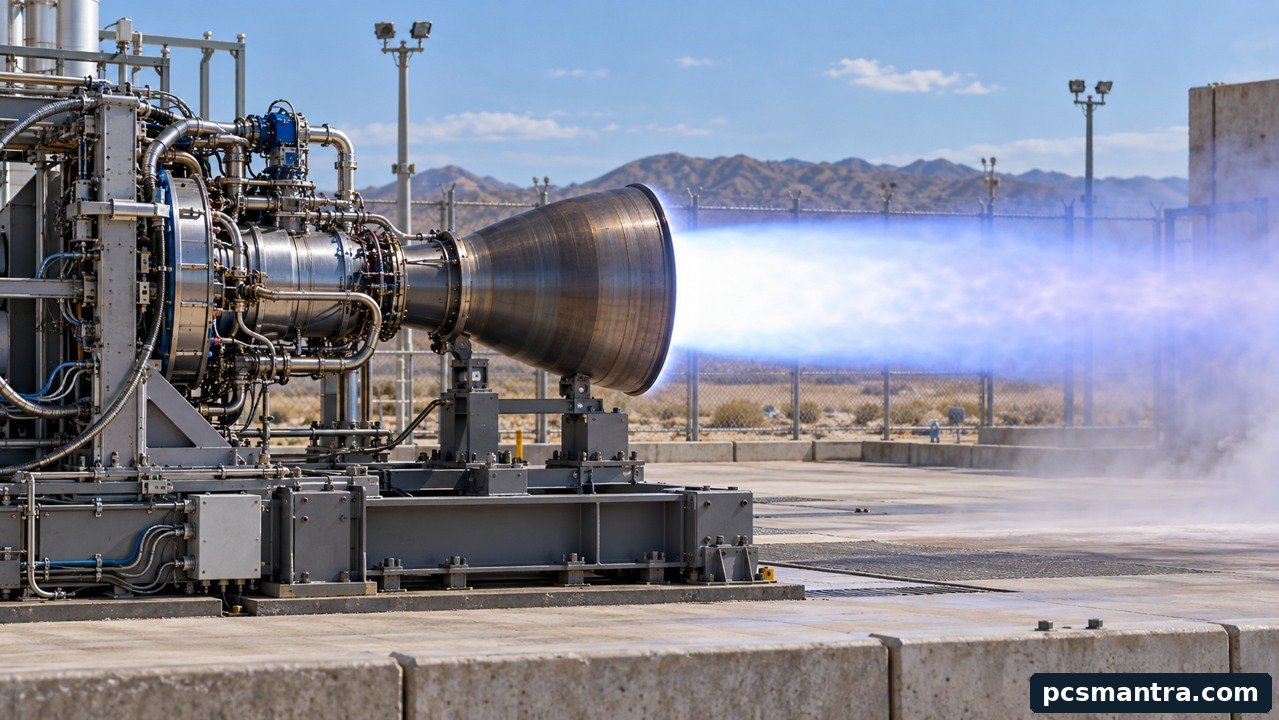
On 5 November 2026, ISRO successfully conducted the flight acceptance test of the cryogenic engine identified for the next GSLV mission (GSLV-F19) at the test facility of the ISRO Propulsion Complex (IPRC), Mahendragiri in Tamil Nadu. ISRO shared this in its official release of 10 November 2026. The test ran for 200 seconds; both the Main Engine and the Gas Generator ignited as expected, and the engine's steady-state performance was satisfactory and consistent with pre-test predictions. The engine will now be inducted into the cryogenic stage of GSLV-F19, which will launch the NVS-04 navigation satellite.
Introduction: GSLV and the cryogenic stage
GSLV (Geosynchronous Satellite Launch Vehicle): ISRO's three-stage launch vehicle that carries heavier satellites to the Geosynchronous Transfer Orbit (GTO). Its first stage runs on solid propellant, the second stage on liquid propellant, and the third, upper stage on cryogenic technology.
What is a cryogenic stage: 'Cryogenic' refers to extremely low-temperature technology. Liquid hydrogen (fuel) and liquid oxygen (oxidiser) are stored hundreds of degrees below zero. This combination provides high specific impulse, but storage, insulation and engine operation at very low temperatures create engineering challenges.
Flight acceptance test: The engine meant for an actual flight is fired on a ground stand under flight-like conditions to confirm its acceptability before launch. IPRC, Mahendragiri is ISRO's principal propulsion test centre, where liquid and cryogenic engines are tested.
Main Body: details of the test
Key points from ISRO's release:
- Date and site: 5 November 2026, IPRC Mahendragiri (Tamil Nadu).
- Duration: A planned burn of 200 seconds.
- Ignition: Both the Main Engine and the Gas Generator ignited as expected; the gas generator drives the turbo-pumps that feed propellants to the engine.
- Performance: Steady-state performance was normal and consistent with predictions.
- Next step: This engine will be integrated into the cryogenic stage of GSLV-F19.
The NVS series and NavIC
NavIC (Navigation with Indian Constellation) is India's indigenous regional navigation satellite system, providing positioning, navigation and timing services. NVS (Navigation Satellite) is its new-generation series; the first satellite NVS-01 was launched on GSLV-F12 in 2023 and NVS-02 on GSLV-F15 in January 2025. NVS-04, linked to GSLV-F19, is the next satellite of this series and will further strengthen NavIC's capability and reliability.
Exam relevance
For Prelims: GSLV's stages, the cryogenic propellant combination, the role of IPRC Mahendragiri, the NVS series and NavIC are all direct question areas.
For Mains: Indigenous cryogenic technology is an example of self-reliance and strategic capability - useful for GS-III (science and technology, space).
Way Forward
With the test successful, the engine will be inducted into the cryogenic stage of GSLV-F19, and the mission will carry the NVS-04 satellite to orbit. Once the full NVS series is deployed, NavIC's accuracy, coverage and service continuity will improve, benefiting civilian as well as strategic uses.
Prelims Practice Questions
Q1. With reference to the flight acceptance test of the cryogenic engine for the GSLV-F19 mission, consider the following statements:
Statement 1: The test was conducted at the ISRO Propulsion Complex, Mahendragiri
Statement 2: The duration of the test was 200 seconds
Statement 3: The test was conducted at the Satish Dhawan Space Centre, Sriharikota
Which of the statements given above is/are correct?
(a) 1 and 2 only
(b) 2 and 3 only
(c) 1 and 3 only
(d) 1, 2 and 3
Answer and Explanation
Correct answer: (a) 1 and 2 only
Explanation: Statement 1 is correct: the test was conducted on 5 November 2026 at IPRC, Mahendragiri. Statement 2 is correct: the test duration was 200 seconds and performance matched predictions. Statement 3 is incorrect: the test was held at IPRC Mahendragiri (Tamil Nadu), not at Sriharikota.
Q2. Which propellant combination is used in GSLV's cryogenic upper stage?
(a) Solid propellant
(b) UDMH and nitrogen tetroxide
(c) Liquid hydrogen and liquid oxygen
(d) Kerosene and liquid oxygen
Answer and Explanation
Correct answer: (c) Liquid hydrogen and liquid oxygen
Explanation: GSLV's cryogenic upper stage uses liquid hydrogen (fuel) and liquid oxygen (oxidiser) stored at extremely low temperatures; this combination provides high specific impulse.
Mains Practice Question
Why is indigenous cryogenic technology important for the strategic self-reliance of India's space programme? Discuss with reference to the recent flight acceptance test for GSLV-F19. (GS-III; 250 words)
Answer Outline:
Introduction: Introduce the successful 5 November 2026 test; define the cryogenic stage (liquid hydrogen + liquid oxygen at extremely low temperatures).
Main Body: The complexity of cryogenic technology and the capability that high specific impulse provides; the strategic importance of the indigenous NavIC system and the NVS series (NVS-01 to NVS-04); how processes like the flight acceptance test signal a culture of quality assurance.
Conclusion: Conclude that the successful test lays the foundation for the reliability of the GSLV-F19/NVS-04 mission and that indigenous upper-stage technology underpins long-term self-reliance.
Frequently Asked Questions (FAQ)
Short answer: On 5 November 2026, ISRO successfully conducted a 200-second flight acceptance test of the cryogenic engine for GSLV-F19 at IPRC, Mahendragiri; the engine will join the cryogenic stage of the mission that will carry the NVS-04 navigation satellite.
Q: What is a flight acceptance test?
It is the final acceptability check of the flight engine, in which the engine is fired on a ground stand under flight-like conditions; only after a successful test is the engine cleared for integration into the rocket.
Q: What is NVS-04?
NVS-04 is the fourth satellite of India's new-generation navigation satellite (NVS) series, which will strengthen NavIC, India's indigenous navigation satellite system.
Q: Where is IPRC located and what is its role?
The ISRO Propulsion Complex (IPRC) is located at Mahendragiri in Tamil Nadu; liquid and cryogenic engines and stages are tested here.
Sources
-
ISRO - ISRO conducts flight acceptance test of Cryogenic engine for next GSLV mission (10 November 2026): https://www.isro.gov.in/Cryogenic_engine_test_GSLV.html
Related articles (internal links)
Download this article: PDF (English)