
News context: 2026-11-16 | Publication: 17 November 2026 Mains: GS-III: Science, technology and environment Prelims: concepts and statement-based practice
Why in the News
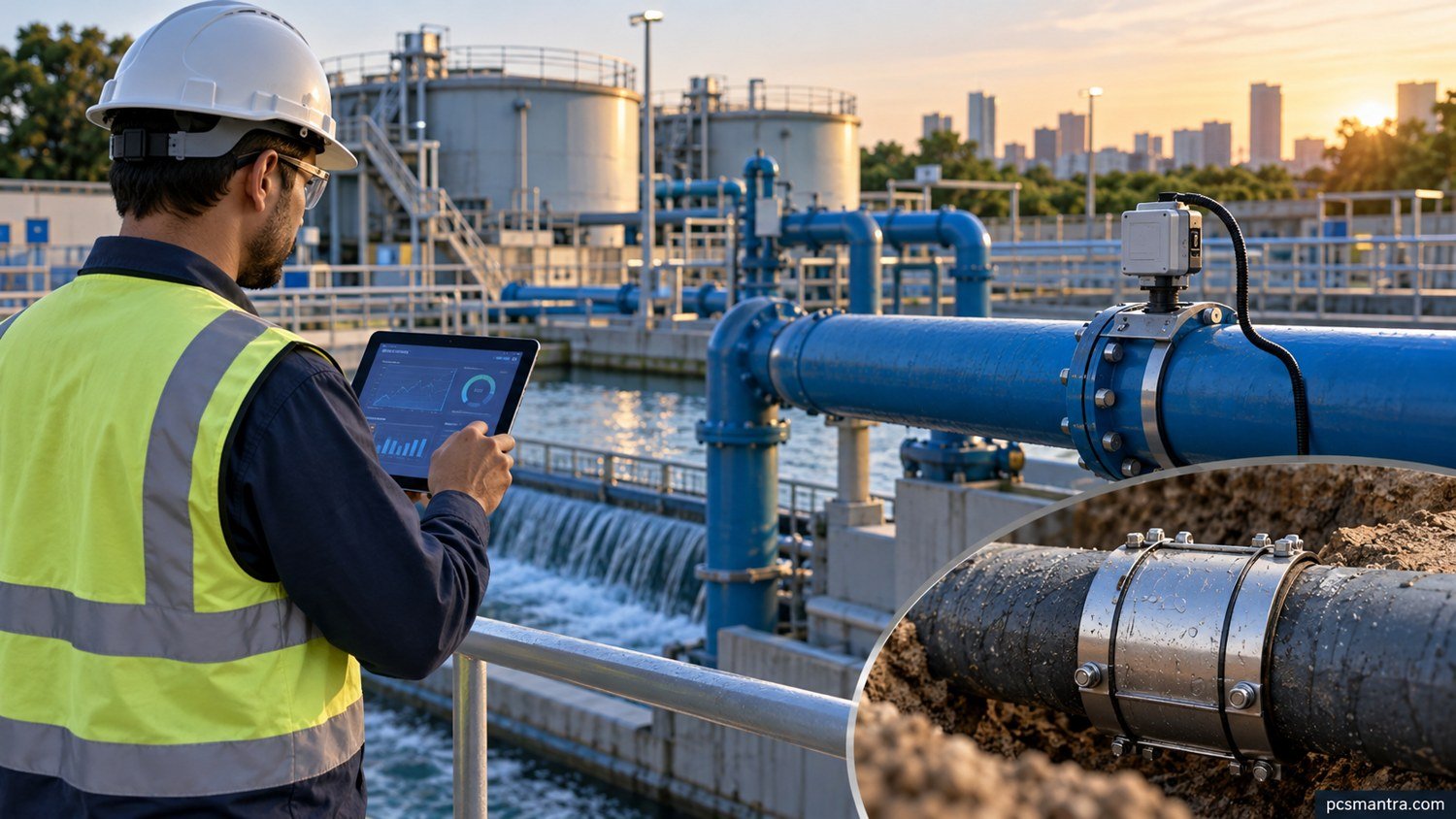
A news report dated 16 November 2026 describes water and sewage technologies shown to a visiting Indian delegation of EPC companies and municipal officials in Israel. The technologies include optical-fibre monitoring for reverse osmosis systems, AI-assisted wastewater process analysis and internal pipeline leakage repair. This is a report of demonstrations and potential partnerships, not proof of nationwide deployment in India.
Three technologies, three different jobs
Membrane diagnosis: The report describes Perciv's sensing technology as a way to understand membrane condition within the pressure vessels of RO systems. The phrase 'MRI of reverse osmosis' is a marketing analogy, not a description of medical imaging. An independent performance test was not obtained for this article.
Biological process analysis: Maji's own platform page says it combines microscopic activated-sludge data, process measurements and plant context to provide alerts and suggested actions. This does not mean that adding AI automatically makes water potable. The system supports understanding and operation of a treatment process.
Leakage repair: Curapipe describes TALR as an internal repair method for multiple leaks in water-distribution pipes. It should not be presented as a universal remedy for every pipe and operating condition. Suitability depends on the network and the problem being addressed.
Questions for Indian municipalities
Before procurement, define the problem: removing pollutants, diagnosing equipment faults, improving process operation or reducing distribution losses? These are different tasks. Evaluation should include independent testing, local water characteristics, energy and maintenance costs, staff training and control over operational data.
A successful pilot does not establish identical performance across a city. Municipal contracts and monitoring should focus on effluent quality and service reliability. A vendor's claim and regulatory compliance are different kinds of evidence.
Prelims Practice Questions
Question 1. Consider the following statements about municipal water management:
Statement 1: Sensor-based diagnosis and physical pipe repair are different tasks.
Statement 2: An AI platform analysing biological treatment automatically removes every contaminant.
Statement 3: Local testing and maintenance needs matter when assessing a new technology.
Which of the statements given above are correct?
Answer and Explanation
Correct answer: (b)
Statement 1 is correct. Monitoring can identify a problem; repair is a physical intervention.
Statement 2 is incorrect. Analysis and operational support do not guarantee universal purification.
Statement 3 is correct. Local water, pipe and operating conditions affect performance.
Mains Practice Question
Outline an evaluation and accountability framework for adopting new municipal water technologies. (150 words) (10 marks)
Answer Outline
Introduction: Distinguish monitoring, treatment and leakage repair.
Main Body: Set criteria for independent pilots, local water quality, energy, maintenance, training and data control.
Conclusion: Tie accountability to water quality and dependable service rather than claims.
Frequently Asked Questions (FAQ)
Does the AI platform itself produce drinking water?
The sources describe process analysis and operational support, not a universal drinking-water machine.
Is the 'MRI of RO' a medical MRI?
No. It is a vendor's analogy for membrane monitoring.
Has India begun nationwide deployment?
The report establishes a showcase and potential cooperation, not such deployment.
Sources
Download this article: PDF