
Update of 16 November 2026: Commerce and Industry Minister Piyush Goyal said on 15 November that India and the US have agreed on preferential market access for Indian goods in the American market, an understanding endorsed by both leaders. He said changes in the US tariff landscape have affected the agreement's timeline and negotiations on the final tariff framework continue - which will decide how much advantage Indian goods enjoy over competitors.
Source: https://economictimes.indiatimes.com/news/economy/foreign-trade/india-us-agree-on-preferential-market-access-for-indian-goods-in-america-piyush-goyal/articleshow/135851180.cms (Economic Times/PTI, 15 November 2026)
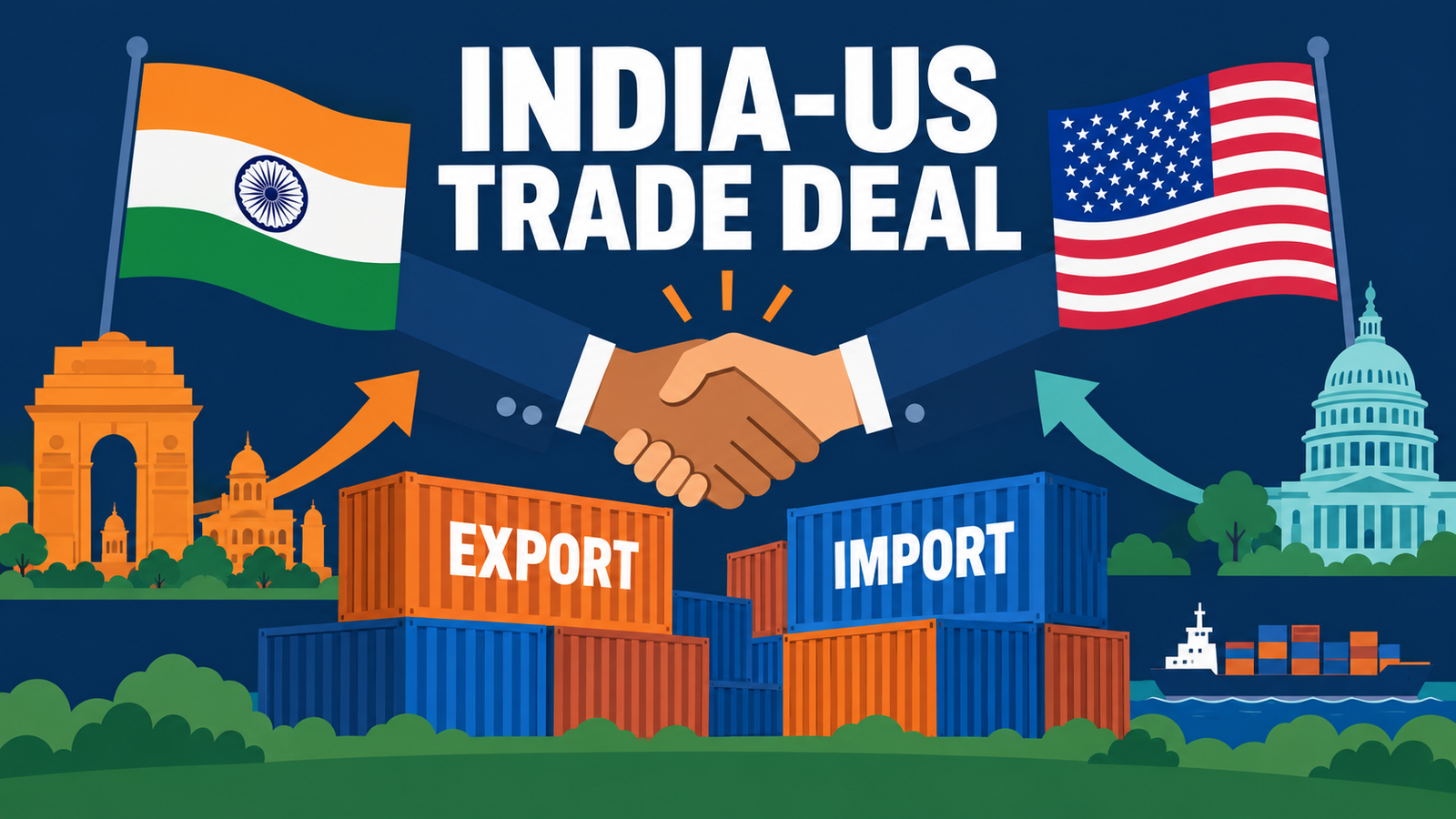
15 November 2026: External Affairs Minister S. Jaishankar said at the HT Leadership Summit that most issues in the proposed India-US trade deal - including tariff lines - have been sorted out, and talks on the "last stretch" of concerns are under way; the deal could be sealed "soon". The remarks come ahead of an expected meeting between Prime Minister Modi and President Trump on the sidelines of the ASEAN/East Asia summits in Manila on 16-17 November.
What Jaishankar said
- Near the 'finishing line': "It's certainly our hope, and in many ways anticipation, that we are at the last stretch... we have now reached almost the finishing line." The remaining issues are "not so much at our end" - more changes have occurred on the American side.
- India's terms: a deal that is 'beneficial... balanced' and gives India a comparative advantage over groups of comparable economies; the US is India's biggest market, so a deal clearly benefits the country.
- Why it took time: "These are very serious issues; people's jobs and lives are at stake. If you are serious, you go tariff line by tariff line. That takes time."
- On the midterms: there is a bipartisan consensus in the US on the defence, security and technology relationship with India, though the results "would change many things".
- On the China border: the border has become "more alive", requiring a much greater sustained commitment of troops; border infrastructure - tunnels, bridges, airfields - has been upgraded rapidly in the last decade after years of neglect.
The global backdrop
- Summit week: a possible Modi-Trump meeting in Manila (16-17 November); the APEC summit in Shenzhen follows, where Trump is expected to meet Xi Jinping and Vladimir Putin; Modi will visit the US for the G20 leaders' summit on 14-15 December.
- A mutually-wanted framework: Trump seeks bilateral deals to improve US market access; India wants comparative advantage and tariff relief - "the challenge is to find a landing point".
Analysis: the deal's dimensions
- Why tariff reconciliation matters: after the high tariffs of 2025, both sides moved 'tariff line by tariff line'; agriculture, energy imports and market access have been the sensitive links.
- The strategic layer: the trade deal is not merely economic - it is tied to the defence-technology partnership and India's position in the Indo-Pacific; bipartisan consensus partly insulates it from election cycles.
For the exam
- Questions can be asked on the state of the deal ('last stretch'), the ASEAN/East Asia summits (Manila, 16-17 November), APEC (Shenzhen), the G20 (December, US) and India-US trade figures.
Quiz: Test your knowledge
Q1: Consider the following about Jaishankar's statement on the India-US trade deal (November 2026): 1. Most issues, including tariff lines, have been sorted out. 2. He called the US India's biggest market. 3. He referred to bipartisan consensus in the US on defence ties with India. How many are correct?
(a) Only one
(b) Only two
(c) All three
(d) None
Answer and explanation: (c) All three are correct - Jaishankar said each of these at the HT Leadership Summit.
Q2: Where are the ASEAN and East Asia summits being held in November 2026?
(a) Jakarta
(b) Bangkok
(c) Manila
(d) Hanoi
Answer and explanation: (c) In Manila, the capital of the Philippines, on 16-17 November; a Modi-Trump meeting is expected on its sidelines.
Mains Practice Question
"The India-US trade deal is not merely a matter of tariffs but of strategic alignment." Evaluate this statement in the light of Jaishankar's latest remarks. (Answer in 250 words - 15 marks)
Answer outline:
Introduction: The context - the 'last stretch' remark.
Main body: The economic dimension - the largest market, comparative advantage, the tariff-line method; the strategic dimension - bipartisan consensus, defence-technology ties, the Indo-Pacific and the China factor; risks - US domestic politics, agricultural sensitivities, standards-related conditions; India's negotiating position - the condition of a 'beneficial and balanced' deal.
Conclusion: The deal can turn bilateral relations from 'transactions' into a 'structural partnership' - if the terms remain balanced.
Frequently Asked Questions (FAQ)
In short: Jaishankar says most issues in the India-US trade deal are sorted and talks are near the 'finishing line'; the deal could be finalised soon.
Question: What does 'tariff line by tariff line' negotiation mean?
Agreeing duties separately for every product category (tariff line) - precise but slow, because jobs and livelihoods are at stake.
Question: When is the next expected Modi-Trump meeting?
On the sidelines of the ASEAN/East Asia summits in Manila on 16-17 November 2026; Modi will also visit the US for the G20 on 14-15 December.
Question: What did Jaishankar say about the China border?
That it has become 'more alive', requiring sustained troop commitment, and that border infrastructure (tunnels, bridges, airfields) has improved markedly in the last decade.
Sources:
- Indian Express: Most of India-US trade deal issues sorted - Jaishankar, 14 November 2026
- Hindustan Times: Trade deal talks almost at finishing line - Jaishankar at HTLS
- LiveMint: India-US trade talks in final stretch - Jaishankar
Download this article: PDF