
02 International Relations • Maritime Security • Labour Welfare | GS-II / GS-III
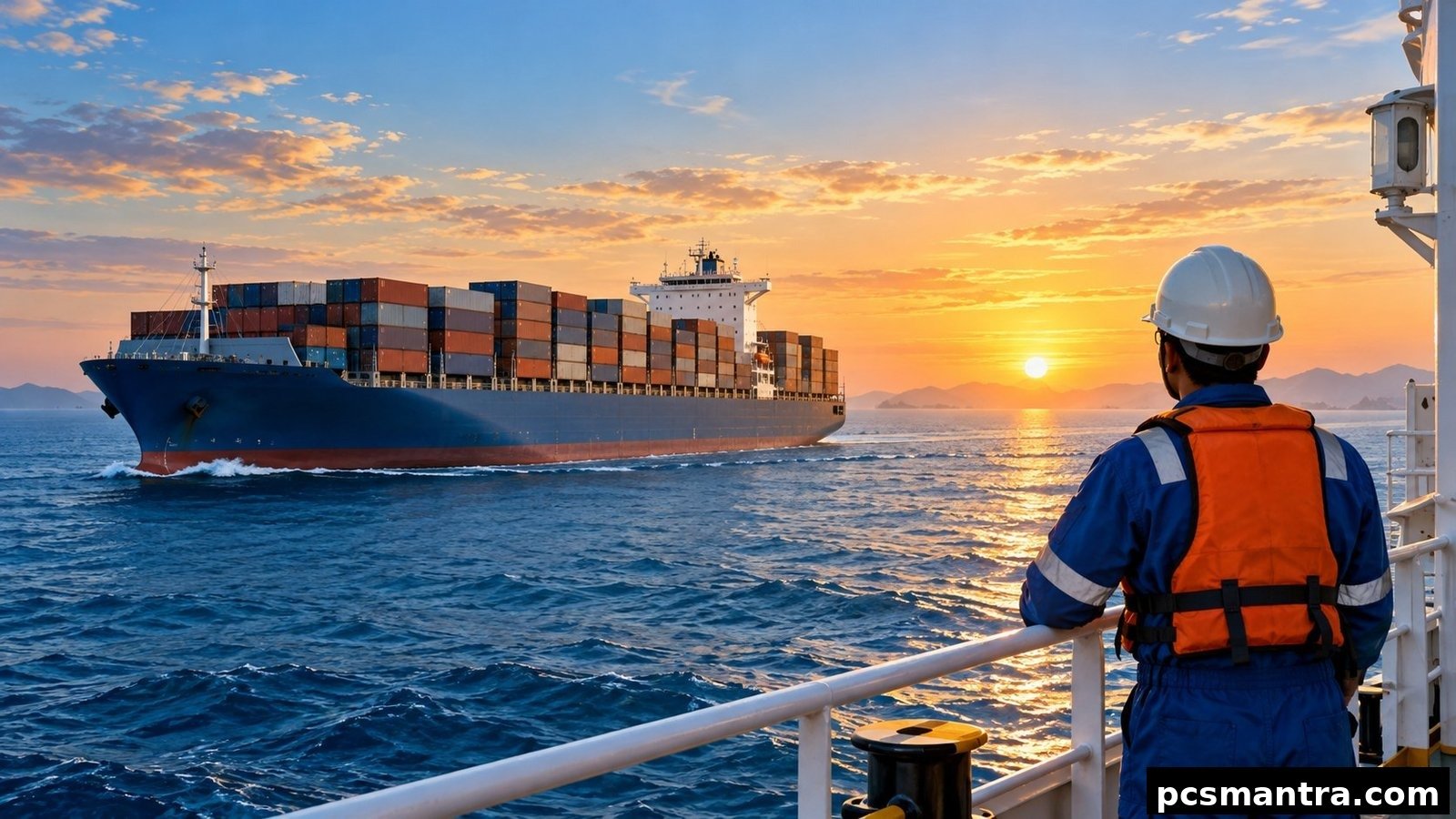
Indians working on merchant ships are not parties to the war, yet on conflict-affected sea routes both their lives and their jobs can be at risk.
Why in the News
According to a news report of 15 October 2026, since February, 16 Indian seafarers were reported dead, 33 injured and three missing because of attacks on merchant ships in the West Asia conflict. These are the figures at the time of that report, not an independently verified government total of 16 October.
Update of 8 November 2026: 19 seafarers safely evacuated from Yemen
Update: 9 November 2026 | News context: 8 November 2026
On 8 November 2026, the Indian Embassy in Yemen said that 19 Indian seafarers stranded for about the past two weeks in the cities of Hodeidah and Sanaa have been safely evacuated; all are safe, healthy and returning to India. The Embassy thanked all the parties that cooperated. This evacuation took place amid the same tension in which India had confirmed a few days earlier that 14 Indians involved in a boat incident near the Yemeni coast were safe - it is not clear whether those 14 are among these 19 seafarers. On 23 October, the Indian mission had reported that all 14 Indians aboard the boat near Hodeidah were safe. In the background is renewed tension between Saudi Arabia and the Houthi group: Saudi Arabia intercepted Houthi missiles and drones, the Saudi-led coalition carried out air strikes on Yemen, and after the ceasefire-calm of 2022, questions have risen again over the safety of international shipping through the Red Sea and the Bab el-Mandeb strait amid fears of a wider conflict.
Related sea routes: The Red Sea crisis and India's oil security; Avoiding Hormuz is not enough: the Bab el-Mandeb danger.
What Are a Seafarer, a Foreign Flag and a Risk Zone?
A seafarer is a person who works on a ship. A foreign-flag ship is registered in another country; the crew working on it can also be Indian. So the nationality of the ship and the citizenship of the seafarer are separate things. A risk zone is a sea area where journey becomes more unsafe because of conflict, attacks or other danger.

Key Facts
Centre of risk: The Strait of Hormuz, the Red Sea and the Gulf of Aden are described in the report as high-risk routes.
Effect on foreign ships: According to the report, of the 16 dead, 15 were on foreign-flag ships. This shows the weakness of limiting labour safety to Indian ships only.
Circular No. 47: The official list of the Directorate General of Maritime Administration (DGMA) records a circular of 5 August 2026 on the safety of Indian seafarers in the Gulf region. According to the report, prior information and the seafarer's written consent are necessary before Hormuz transit.
Ban or advisory?: According to the said report, the emphasis is on safety advisories and precautions rather than a wide navigation ban. Do not take this as permission to go on every sea route without conditions.
Why Do Seafarers Go Despite the Danger?
Economic pressure: The report gives payment of two to three times the normal wage and the compulsion of livelihood as the reason. Higher pay does not end the risk.
Global employment: Indian seafarers also work on ships with foreign registration. In safety, coordination between the recruitment agency, the ship owner, the flag state and India becomes necessary.
Effect on trade: When sea routes are disrupted, the cost of travel, insurance and transport can rise. So safe trade and labour rights should be seen together.
To understand the need for the safety and social protection of workers in another field of work, read: NAMASTE scheme: from safety of sanitation workers to dignified livelihood.
Way Forward
Written consent is meaningful only when the seafarer gets the right information on the danger and there is no unfair pressure on refusing. The aim of policy should not be only to give compensation, but also a risk check before departure, safe crew change, a contact arrangement and timely return. These are reform suggestions, not a claim of rights available in all cases.
Prelims
The difference between the citizenship of the seafarer and the flag of the ship; map practice of Hormuz, the Red Sea and the Gulf of Aden; RPSL means Recruitment and Placement Service Licence, that is, the licence for recruitment and placement service.
Mains
The relation of migrant worker safety, maritime trade and diplomacy. In the answer add informed consent, accountability of recruitment agencies, insurance and the arrangement for return from a conflict zone.
UPSC CSE Mains Style: Original Practice Question
Examine the limits of informed consent in ensuring the safety of Indian seafarers working on conflict-affected sea routes.
(Answer in 150 words) | 10 marks
Answer Outline
Introduction: The meaning of informed consent.
Main Body: Limits: economic pressure, incomplete information and lack of options; measures: risk check, pressure-free options, insurance and safe return.
Conclusion: Real safety along with consent.
Prelims Practice Question: Yemen and Maritime Geography
1. Consider the following statements:
I. The Bab el-Mandeb strait connects the Red Sea with the Gulf of Aden
II. Hodeidah is a port city of Yemen
Which of the above statements are correct?
(a) Only I
(b) Only II
(c) Both I and II
(d) Neither I nor II
Answer and Explanation
Answer: (c). Both statements are correct - Bab el-Mandeb connects the Red Sea with the Gulf of Aden (and beyond it the Arabian Sea), and Hodeidah is Yemen's major port city on the Red Sea coast, while the evacuation of the 19 seafarers relates to the group stranded in Hodeidah and Sanaa.
Sources
- Indian Express, 15 October 2026: risk, policy and assistance
- DGMA: official list of maritime circulars
- 8 November 2026: New Indian Express report on the Embassy's statement
- Akashvani News, 9 November 2026: the evacuation of 19 seafarers
Remember: Post-death assistance is necessary, but the first step of safety is to reduce the danger.
Download This Article: PDF