
Why in News
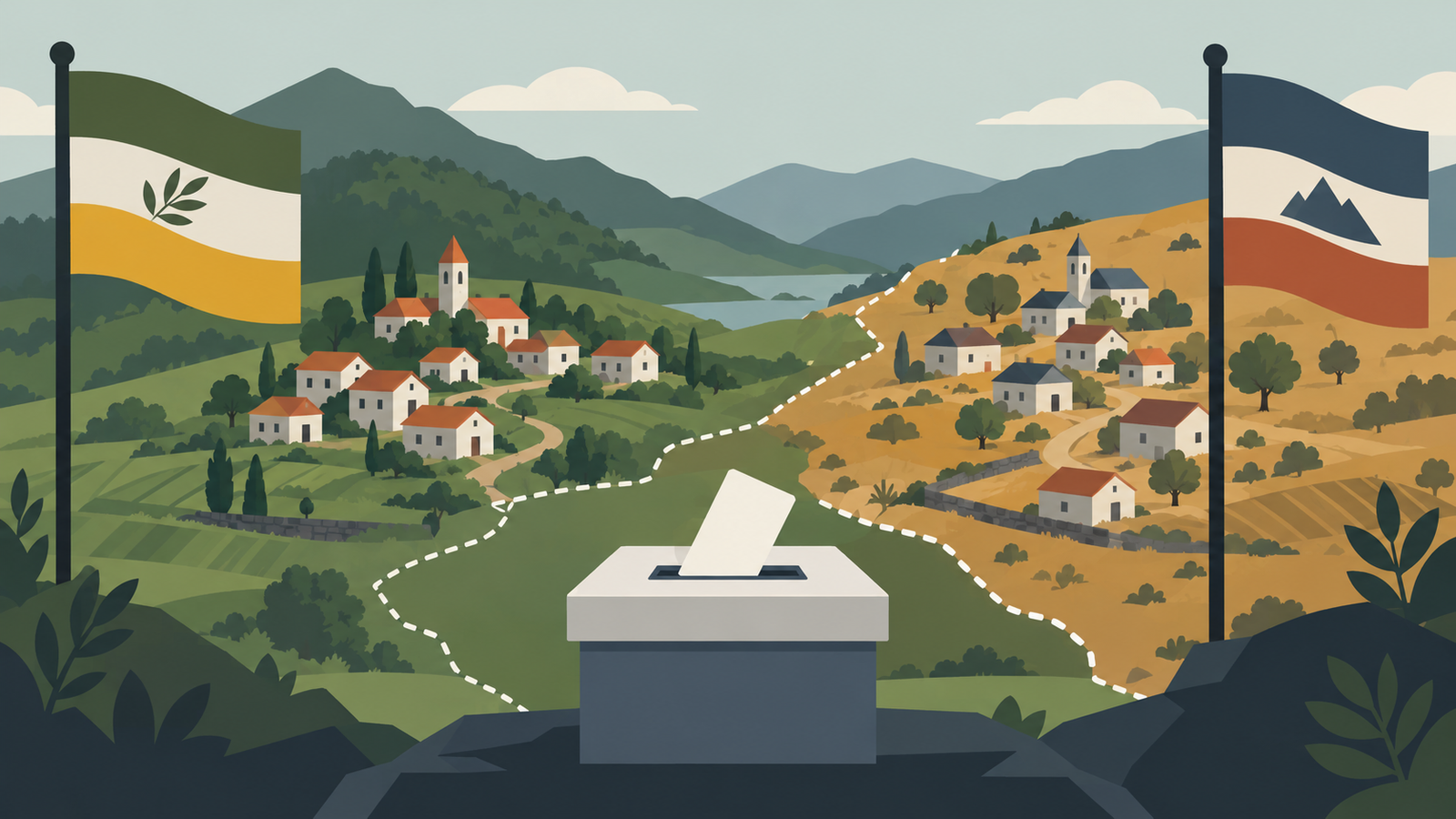
Holding panchayat elections in the Kotia cluster of villages on the Andhra Pradesh-Odisha border has become a fresh challenge for the Andhra government. According to The Hindu (15 November 2026), weeks after disruptions in the ZPTC and MPTC polls, tension surrounds the panchayat elections: Odisha officials allegedly barred TDP and YSRCP from campaigning in several villages including Ganjaibhadra, Pagluchennuru and Pattuchennuru, and detained MPTC candidates from Ganjaibhadra - angering both parties. Polling in the ZPTC-MPTC elections was just 34%.
The Latest Developments
- Campaign restrictions: Odisha officials stopped Andhra parties from campaigning in several villages; canvassing remained largely confined to Andhra-side villages such as Sarika and Kurukuttu.
- Booth relocation: following Odisha's objections, the Andhra government removed polling stations at several places.
- Political pressure: on 15 November, former deputy chief minister Peedika Rajanna Dora said the state government must hold the polls to establish its geographical jurisdiction; he cited the States Reorganisation Act, 1956 and warned that bowing to pressure would fuel suspicion of an "internal understanding between the two governments."
- Police outreach: meanwhile, Odisha Police (Koraput) plans a series of community policing programmes in Kotia - a soft-power move.
Background of the Dispute
- Decades old: the Kotia villages (claimed by Andhra in Parvathipuram Manyam district) fall administratively within Odisha's Koraput district; Andhra bases its claim on the States Reorganisation Act, 1956.
- Judicial track: the dispute has long been pending before the Supreme Court; both states have been asked to maintain the status quo on the shared borders and pursue institutional resolution (background based on news reports).
- Ground reality: both states have used schemes, documentation and electoral assertions to deepen their influence; similar tensions surfaced in the 2021 local body polls.
Why It Matters
- Federal structure: an inter-state border dispute tests cooperative federalism and the working of Article 131 (original jurisdiction).
- Governance: obstruction of the electoral process directly affects citizens' democratic rights and services.
- Land and resources: the region's farmland, forest land and development benefits are tied to the claims.
Prelims Practice Questions
Q1. The Kotia cluster of villages is disputed between which two states?
(a) Andhra Pradesh and Telangana
(b) Andhra Pradesh and Odisha
(c) Odisha and Chhattisgarh
(d) Andhra Pradesh and Karnataka
Answer and Explanation
Answer: (b) The Kotia villages are disputed between Andhra Pradesh and Odisha; administratively under Koraput (Odisha), with Andhra's claim based on the States Reorganisation Act, 1956.
Q2. The Supreme Court's original jurisdiction in a dispute between two states flows from which Article?
(a) Article 32
(b) Article 131
(c) Article 136
(d) Article 226
Answer and Explanation
Answer: (b) Article 131 gives the Supreme Court original jurisdiction in Centre-state or inter-state disputes, including inter-state boundary disputes.
Mains Practice Question
Q: "Inter-state border disputes are not merely questions of territory but of governance and democracy." Analyse this statement in the context of the Kotia cluster and suggest institutional routes to resolution. (250 words)
Outline: Introduction - the Kotia dispute and the latest poll tensions; dimensions - administrative claims, citizen services, electoral rights; constitutional framework - Article 131, Inter-State Council (Article 263); political mechanism - Union mediation; conclusion - a boundary commission / negotiated long-term settlement.
FAQ
Short answer: Tension surrounds panchayat elections in the disputed Kotia villages on the Andhra-Odisha border: Odisha officials allegedly blocked Andhra parties' campaigning and detained candidates; ZPTC-MPTC polling was 34%. Andhra's claim rests on the States Reorganisation Act, 1956.
Q: What is happening in Kotia right now?
Ahead of panchayat polls, Odisha officials allegedly stopped TDP-YSRCP campaigning in several villages and detained MPTC candidates; Andhra removed several booths, and ZPTC-MPTC polling was just 34%. Former deputy chief minister Rajanna Dora is pressing for the polls to be held.
Q: On what basis does Andhra Pradesh claim the villages?
Andhra regards the Kotia villages as its own under the allocation made by the States Reorganisation Act, 1956; administrative control lies with Odisha (Koraput district), and the dispute has long been pending before the Supreme Court.
Q: What constitutional routes exist to settle such disputes?
Article 131 (Supreme Court's original jurisdiction); Article 263 (Inter-State Council); Union mediation and bilateral agreement - a durable settlement ultimately comes through a political-administrative accord.
Sources
- The Hindu (15 November 2026, Parvatipuram): Kotia panchayat polls - campaign curbs, detentions, 34% polling
- Times of India (15 November 2026): Koraput police plan community policing in Kotia
- Background note: dispute history and judicial status based on news reports; the underlying court record was not independently verified
Download this article: PDF (English)