
News context: 18 November 2026 | Prelims: GS-2, GS-3 | Mains: GS-2
In this article: ICMR-NIMR's golden jubilee, malaria-control data, basics of the disease and vector, the national framework and the 2030 goal, challenges, practice questions, FAQ
Why in the news
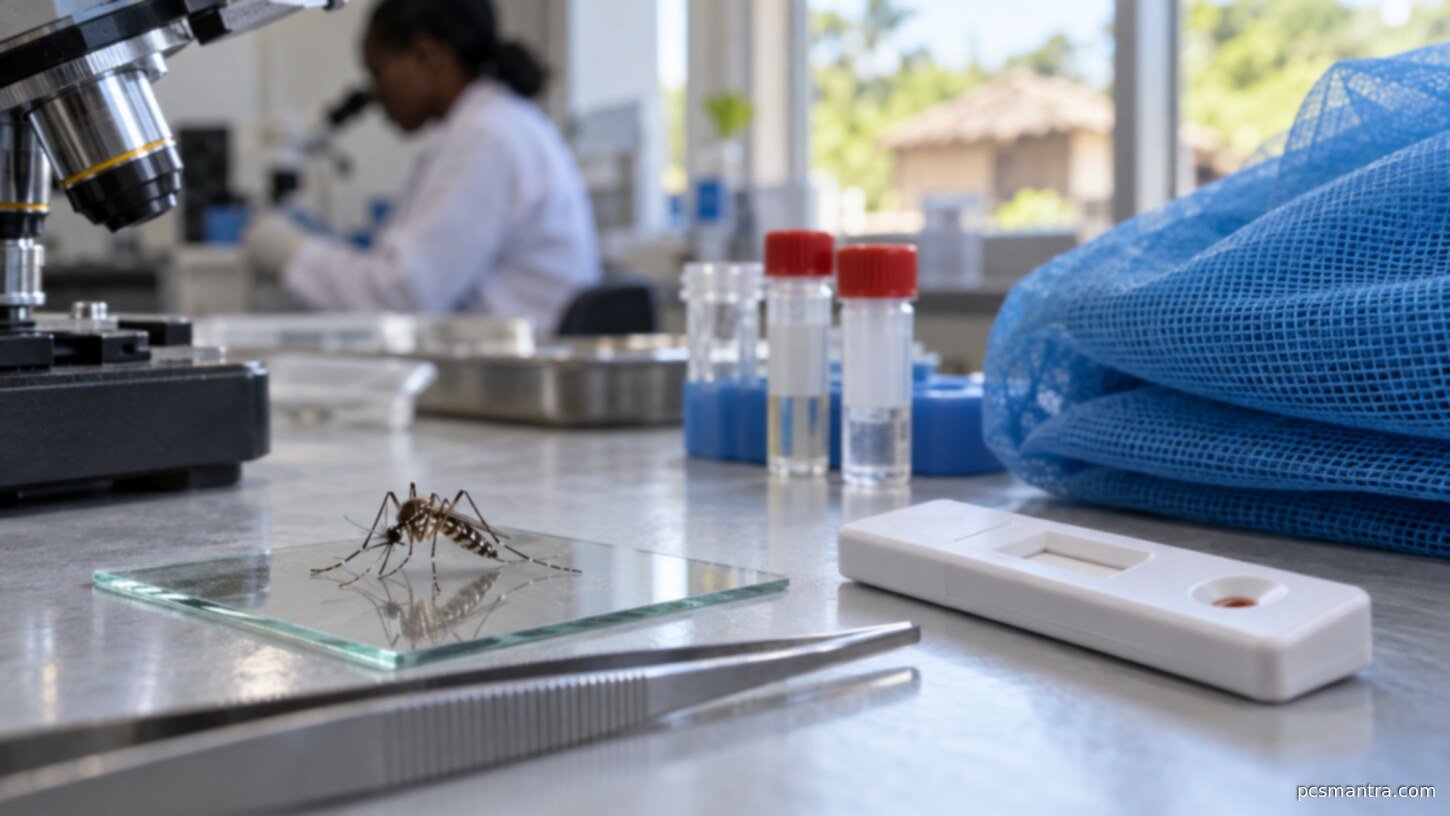
President Droupadi Murmu inaugurated the Golden Jubilee (50 years) celebrations of the ICMR-National Institute of Malaria Research (NIMR) on 17 November 2026. The figures shared on the occasion are notable:
- Between 2015 and 2025, malaria cases and deaths in India declined by nearly 80%.
- High-burden districts fell from 155 to 33.
- 160 districts reported zero indigenous malaria cases during 2022-2025.
- India exited the WHO's 'High Burden to High Impact' (HBHI) group in 2024.
- According to Union Health Minister J.P. Nadda, India, with about 16% of the world's population, now accounts for only about 0.7% of global malaria cases and 0.6% of malaria deaths; the goal is malaria elimination by 2030.
- An indigenous malaria vaccine is being developed in Bhubaneswar - the President praised ICMR-NIMR's contribution to it.
Malaria: disease and vector (basics)
- Parasite: Plasmodium species - mainly Plasmodium falciparum (the deadliest) and P. vivax; others include P. ovale, P. malariae and P. knowlesi.
- Vector: The female Anopheles mosquito.
- Symptoms: Fever with chills, sweating, headache; severe falciparum infection can be fatal.
- Diagnosis: Peripheral smear examination and Rapid Diagnostic Tests (RDTs).
The national framework and the 2030 goal
- National Framework for Malaria Elimination (NFME) 2016-2030: The target is zero indigenous cases by 2027 and sustaining elimination through 2030. A target is not an achieved outcome.
- National Centre for Vector Borne Diseases Control (NCVBDC; formerly NVBDCP): The nodal programme for six vector-borne diseases including malaria - surveillance, diagnosis and treatment, vector control (LLIN, IRS) and community participation.
- HBHI initiative (2018): Launched by WHO with 11 high-burden countries; India's exit from it (2024) is a formal milestone of progress.
- WHO elimination certification: A country is certified malaria-free after three consecutive years of zero indigenous transmission (examples: Sri Lanka 2016, China 2021).
Challenges
- Climate change: Shifting temperature and rainfall expand mosquito habitats and lengthen transmission seasons.
- Insecticide resistance: Rising resistance in vectors reduces the effectiveness of IRS and LLINs.
- Unplanned urbanisation: Waterlogging and breeding sites.
- Access to diagnosis and treatment in border, tribal and remote areas; incomplete treatment courses causing relapse.
Way forward
- District-level micro-planning and active surveillance; focused action in the 33 high-burden districts.
- Research into new medicines, diagnostics and the indigenous vaccine (Bhubaneswar).
- A One Health approach and environmental management (preventing waterlogging).
- Community participation - awareness and complete treatment through ASHAs and local bodies.
Prelims Practice Questions
Question 1
With reference to malaria control in India, consider the following statements:
Statement 1: Malaria cases and deaths declined by nearly 80% between 2015 and 2025
Statement 2: India exited the WHO's 'High Burden to High Impact' group in 2024
Statement 3: India's goal is malaria elimination by 2035
Which of the statements given above are correct?
Answer and Explanation
Correct answer: (a)
Statement 1: Correct - cases and deaths fell by nearly 80%; high-burden districts fell from 155 to 33
Statement 2: Correct - India exited the HBHI group in 2024
Statement 3: Incorrect - the target is 2030
Question 2
With reference to malaria, consider the following statements:
Statement 1: Its vector is the female Anopheles mosquito
Statement 2: Plasmodium falciparum is its deadliest species
Statement 3: ICMR-NIMR was established fifty years ago and is headquartered in Bhubaneswar
Which of the statements given above are correct?
Answer and Explanation
Correct answer: (a)
Statement 1: Correct - the female Anopheles mosquito is the vector
Statement 2: Correct - falciparum is the deadliest Plasmodium species
Statement 3: Incorrect - NIMR has completed 50 years but is headquartered in New Delhi; the indigenous vaccine work is under way in Bhubaneswar
Frequently Asked Questions (FAQ)
What is India's malaria elimination target year?
Zero indigenous cases by 2030, under the National Framework for Malaria Elimination 2016-2030.
What is the WHO condition for malaria-free certification?
Three consecutive years of zero indigenous transmission (examples: Sri Lanka 2016, China 2021).
What is ICMR-NIMR?
The Indian Council of Medical Research's National Institute of Malaria Research - five decades of research on the malaria parasite, vector control, insecticide resistance and community surveillance.
Sources
Download this article: PDF