
News: 20 November 2026 | Publication: 20 November 2026
News context: A current debate on civic and ethnic nationalism raises a central question: how can a shared political community accommodate differences of religion, language and culture? Sociologist D.V. Kumar's analysis of 20 November 2026 argues that the nationalism that grew during India's freedom struggle was largely civic in nature.[1]
Exam context: This topic is directly relevant to UPSC and State PCS examinations, the ideology of the Indian national movement, the founding values of the Constitution, and the Essay paper. Questions about shared citizenship, identity and constitutional values help connect the national movement with contemporary governance.
General Studies (GS-I): Indian history: ideology and character of the Indian national movement
General Studies (GS-II): Indian Constitution: Preamble, Fundamental Rights, secularism, democracy
Prelims: Theories of nationalism, key thinkers and their works, the Preamble
Introduction
Many twentieth-century social scientists believed that nationalism and ethnic feelings would gradually weaken with the spread of developed capitalism and modernity. The experience of the twenty-first century has proved the opposite. Nationalism remains one of the most resilient and powerful forces in world politics. The question today is not whether nationalism will endure, but in what form it will endure. This distinction helps examine the relationship between citizenship, identity and constitutional values in India.
Main Body
What is nationalism
In his celebrated work "Nations and Nationalism" (1983), Ernest Gellner defined nationalism as a political principle which holds that the political and the national unit should be congruent.[2] Benedict Anderson, in "Imagined Communities" (1983), described the nation as an "imagined political community", imagined because no member of even the smallest nation will ever know most of their fellow-members, yet in the minds of each lives the image of their communion.[3]
Civic nationalism
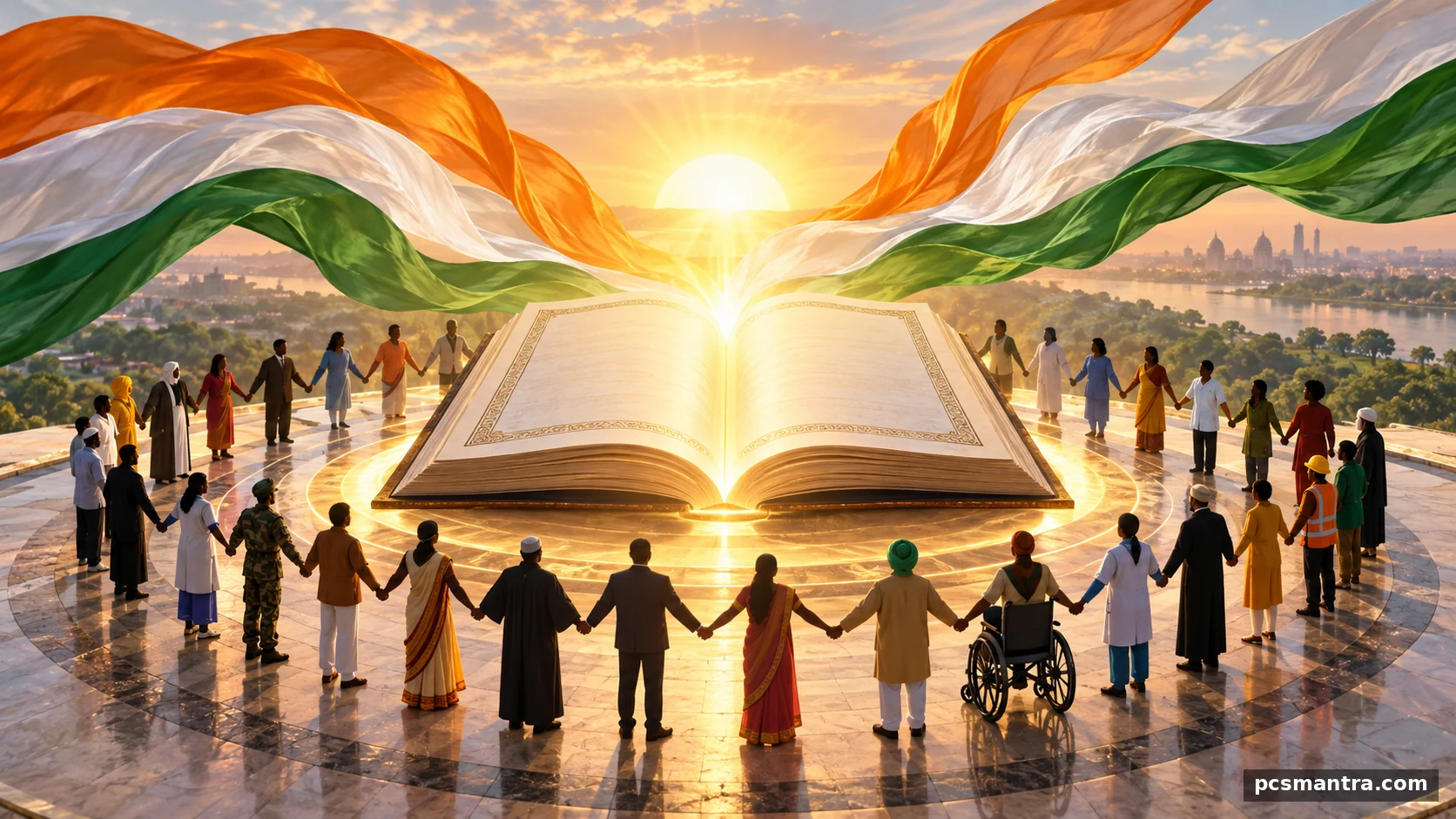
Civic nationalism rests on shared respect for the values of liberty, equality, justice and fraternity, and on an unshakeable faith in the constitutional framework. It is inclusive, progressive, liberating and democratic. It brings together people who are otherwise extremely diverse in religion, language, culture, food habits and social practices, and takes special care to accommodate marginalised and historically oppressed groups within the national framework. Hans Kohn presented this distinction between civic and ethnic nationalism most influentially in his classic "The Idea of Nationalism" (1944), later known as the "Kohn Dichotomy".[4]
Ethnic nationalism
In contrast, ethnic nationalism essentialises and privileges a single identity, religion, language or ethnicity. It is exclusionary, regressive and undemocratic, and it poses a danger to identities that do not fall within the dominant understanding of the nation. Kumar's analysis cites Hitler's Germany as a stark example, where ethnic nationalism built on the claimed superiority of the "Aryan race" led to unspeakable atrocities against Jews.[1]
The nationalism of India's freedom struggle
The nationalism that grew in India during the freedom struggle was largely civic in nature, an inclusive, liberating and democratic project. Justice, equality, freedom and secularism were its guiding principles. It was an open invitation to imagine a profoundly diverse society as one nation, with science as a partner in the endeavour. Notably, Indian tradition also carried a rich current of criticism of nationalism itself, Rabindranath Tagore, in his book "Nationalism" (1917), sharply criticised the Western, mechanically organised "Nation" and warned that when this organisation of politics and commerce becomes all-powerful at the cost of the harmony of higher social life, it is an evil day for humanity.[5]
The Constitution and civic nationalism
The Indian Constitution, the product of reasoned debates and contestations, is the offspring of this civic nationalism. Its incorporation of fundamental rights and freedoms was a paradigmatic shift in a society marked by deeply oppressive structures such as the caste system. The words "secular" and "socialist" were added to the Preamble by the 42nd Constitutional Amendment (1976), making the commitment to civic nationalism even more explicit. A democratic Constitution, the article argues, could have emerged only in the context of democratic nationalism.[1]
The changing dynamic
The civic-ethnic distinction offers an analytical lens, not a claim that every historical movement fits neatly into one category. A useful question is whether public institutions protect shared citizenship while allowing cultural differences. Answers should test particular policies and practices against constitutional values rather than assume a uniform political trend without evidence.
Conclusion
Nationalism is not a static idea; it changes its form over time. India's experience shows that only a Constitution-based civic nationalism can hold together such immense diversity. Reaffirming the inclusive imagination of the freedom struggle and the values of the Constitution is the right answer to the changing dynamic of nationalism, this is the central argument in Kumar's analysis.
Mains practice question
Question: "The idea of Indian nationalism was, at its origin, largely civic in character." Substantiate this statement, and bringing out the difference between civic and ethnic nationalism, present your views on the changing dynamic of nationalism in India. (15 marks, 250 words)
Answer outline:
Introduction
Give a brief definition of nationalism (Gellner/Anderson) and establish relevance with reference to the debate on citizenship and identity.
Main Body
Features of civic nationalism: constitutional values, inclusiveness, respect for diversity; features of ethnic nationalism: dominance of a single identity, exclusion, the example of Hitler; the civic character of the freedom struggle: secularism, equality, plurality; its institutional affirmation through the Constitution and the Preamble (42nd Amendment); include Tagore's critique for balance; the contemporary concern over the rise of identity-based nationalism: Indian and global context.
Conclusion
Conclude that the defence of India's diversity lies in Constitution-based civic nationalism; answering the changing dynamic requires a renewed affirmation of civic values.
Sources:
[1] "The changing dynamic of nationalism in India", D.V. Kumar, 20 November 2026, https://www.thehindu.com/opinion/lead/the-changing-dynamic-of-nationalism-in-india/article71721507.ece
[2] Ernest Gellner, "Nations and Nationalism" (1983), definition of nationalism
[3] Benedict Anderson, "Imagined Communities" (1983), Verso, https://www.versobooks.com/products/1126-imagined-communities
[4] Hans Kohn, "The Idea of Nationalism" (1944), the Kohn Dichotomy (civic/ethnic nationalism)
[5] Rabindranath Tagore, "Nationalism" (1917)
Frequently asked questions
How did Gellner and Anderson define nationalism?
Ernest Gellner, in 'Nations and Nationalism' (1983), defined nationalism as a political principle holding that the political and the national unit should be congruent. Benedict Anderson, in 'Imagined Communities' (1983), described the nation as an 'imagined political community', since no member knows most fellow-members, yet each carries the image of their communion. Source
What is the Kohn Dichotomy?
Hans Kohn's classic 'The Idea of Nationalism' (1944) influentially drew the distinction between civic and ethnic nationalism, later called the 'Kohn Dichotomy'. Civic nationalism is inclusive and rests on shared constitutional values, while ethnic nationalism essentialises and privileges a single identity and is exclusionary. Source
When were 'secular' and 'socialist' added to the Preamble, and what was Tagore's comment?
The words 'secular' and 'socialist' were added to the Preamble by the 42nd Constitutional Amendment (1976). Separately, Rabindranath Tagore's book 'Nationalism' (1917) sharply criticised the Western, mechanically organised 'Nation', part of a rich Indian current of criticism of nationalism itself. Source / Tagore original text