
Why in the News
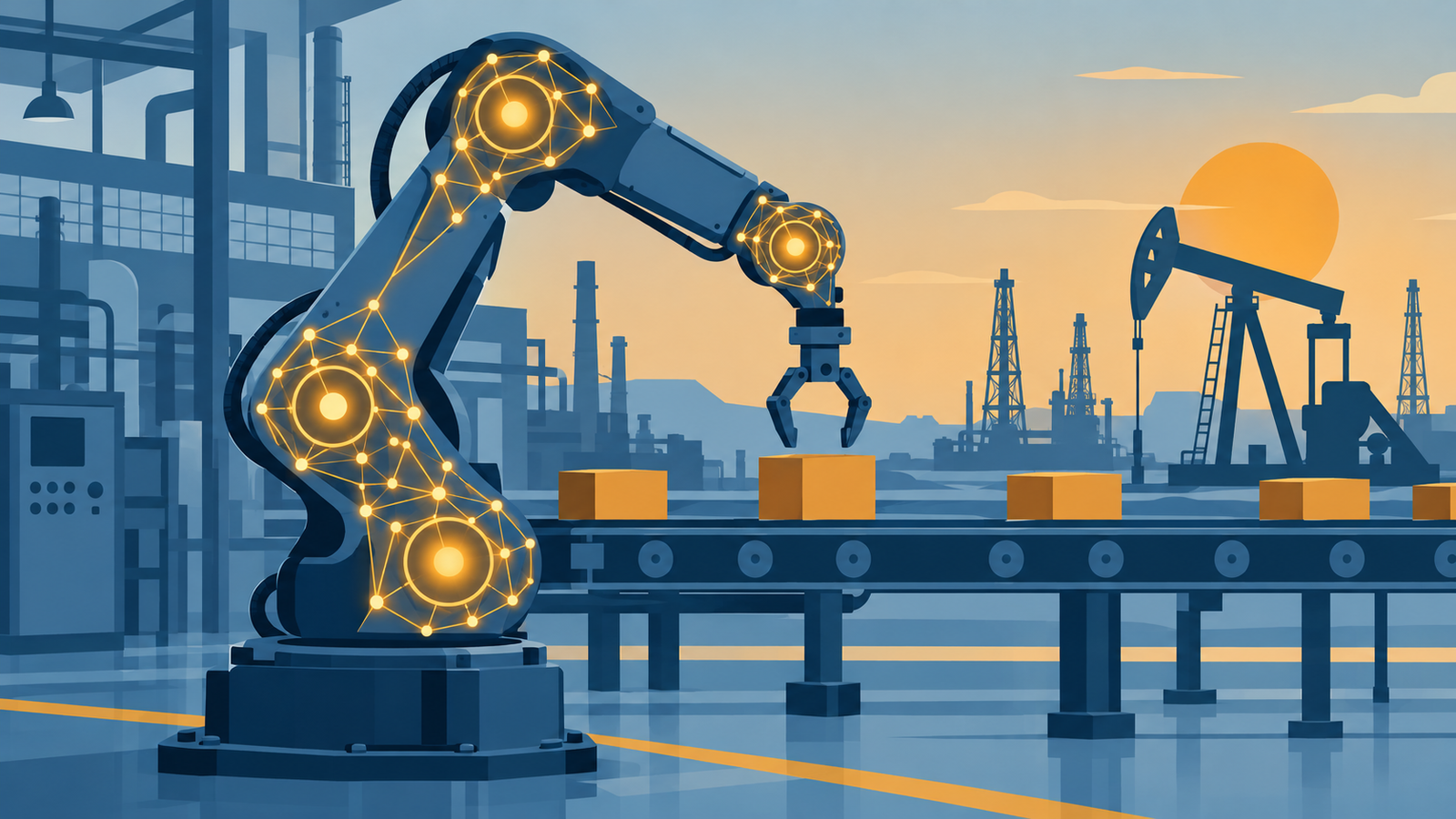
The next wave of AI is not inside the screen but on the factory floor and in oil fields. Companies are rapidly deploying AI-powered autonomous systems in industrial operations - from robotics and predictive maintenance to energy exploration and automated manufacturing. This is being called "Physical AI": AI that perceives, understands and acts in the physical world. McKinsey partner Ani Kelkar estimates that between now and 2040, robotics and Physical AI could create at least $1 trillion in economic value - mostly in manufacturing and logistics.
What Is Physical AI
Physical AI means combining AI models with sensors, actuators and control systems, enabling machines to perceive and respond to real-world environments. Traditional industrial robots repeat predefined tasks in controlled settings - welding the same section of a car again and again. AI-enabled robots, by contrast, can use broader contextual understanding to adapt to changing situations and perform more complex tasks. The technology applies to individual robots as well as larger systems - AI-powered factories, smart energy grids and fleets of autonomous vehicles.
From Generative AI to Physical AI
- Generative models like ChatGPT or Llama are trained mainly on text and image data; they can produce language and visuals but have limited understanding of physical environments.
- Physical AI overcomes this through multimodal inputs: images and video, text and speech, real-world sensor data and spatial information.
- It combines LLMs with reinforcement learning and specialised training; real-world data is especially vital - synthetic data alone cannot prepare machines for complex physical environments.
Real-World Industrial Use
- ADNOC (Abu Dhabi): on the opening day of ADIPEC 2026 it announced a partnership with OpenAI and G42, becoming the first energy company to deploy OpenAI Frontier across its operations (ADNOC's official report).
- Shell: an enterprise-scale predictive maintenance programme with C3 AI running since 2018, monitoring more than 13,000 pieces of equipment; a new multi-year agreement in June 2026 extends C3 AI Reliability and adds AI agent-based root cause analysis (C3 AI press release).
- BP: between 2022 and 2024, AI and advanced analytics helped increase bp-operated production by around 4% and protected around 10% more from shutdowns through monitoring and analysis; its AWTO tool designs well trajectories in a fraction of the earlier time, and "Wells Assistant" is bp's own generative AI platform (bp.com).
- Chevron: the in-house generative AI platform ApEX - launched in August 2024 and first used in deepwater exploration in the Gulf of America; multi-agent search combs more than a million files to speed up subsurface data access and the assessment of prospective drilling sites (Chevron newsroom).
- Foxconn: AI robotics + digital twins simulating and automating precision tasks like screw tightening and cable insertion (on NVIDIA's platform/Omniverse) - per a World Economic Forum report, deployment time fell 40%, robotic cycle times improved 20-30%, error rates dropped 25% and operational costs fell 15%.
The Monetisation Challenge and the Opportunity
Generative AI has drawn massive investment, but converting capability into sustainable revenue remains the industry's worry. Physical AI offers the opportunity where measurable gains - productivity, maintenance, cost reduction - convert directly into commercial value. Partnerships like OpenAI-G42-ADNOC reflect this enterprise shift. McKinsey argues the value will come not from replacing workers but from re-imagining which products are made, how they are made, and which tasks humans versus machines perform.
Challenges
- Dependence on real-world data: integrating multiple sensory inputs is hard.
- Complexity of physical environments: unlike digital systems, the real world is dynamic and unpredictable; safe, accurate responses are essential.
- Integration with existing infrastructure: connecting with legacy machinery, sensors and control systems.
- Commercial viability: measurable returns on investment must be demonstrated.
India's Perspective
For manufacturing-led growth (Make in India, PLI schemes), Physical AI is a double-edged sword: efficiency-competitiveness versus the pressure of skill transition. In the exam, link it to GS-III (science and technology, economy, employment) and the theme of "technological change and labour".
Prelims Practice Questions
Q1: With reference to Physical AI, which statements are correct?
1. It combines AI models with sensors, actuators and control systems.
2. It operates only in digital environments.
3. It combines LLMs with reinforcement learning and specialised training.
(a) 1 and 2 only
(b) 1 and 3 only
(c) 2 and 3 only
(d) 1, 2 and 3
Answer and Explanation
Answer: (b) Physical AI is defined by acting in the physical world (statement 2 is wrong); it combines AI models with sensors/actuators and LLMs with reinforcement learning.
Q2: Per McKinsey's estimate, how much economic value could robotics and Physical AI create between now and 2040?
(a) At least $100 billion
(b) At least $500 billion
(c) At least $1 trillion
(d) At least $5 trillion
Answer and Explanation
Answer: (c) McKinsey partner Ani Kelkar estimates robotics and Physical AI will create at least $1 trillion in economic value between now and 2040, mostly in manufacturing and logistics.
Mains Practice Question
Question: "The rise of Physical AI extends the AI revolution from the digital to the physical domain." Discuss with examples, and assess the opportunities and risks for India's manufacturing sector. (250 words)
Outline: Definition and difference from generative AI; industry examples (verified Shell/ADNOC/Foxconn figures); the monetisation argument and the McKinsey estimate; India - Make in India/PLI link, skill reskilling; challenges - data, integration, viability; conclusion - a balanced human-machine partnership model.
Frequently Asked Questions (FAQ)
Short answer: Physical AI is the trend of AI-powered autonomous systems understanding the physical world and acting in it - robots, factories, energy grids and autonomous vehicles. Companies like Shell, ADNOC and Foxconn are already applying it for measurable cost-efficiency gains.
Q: How is Physical AI different from generative AI?
Generative AI mainly produces digital outputs (text, images); Physical AI connects to sensors and actuators to understand real environments and perform physical actions - like a robot adapting to a changing situation.
Q: How are Shell and Foxconn using it?
Shell monitors 13,000+ pieces of equipment predictively with C3 AI; Foxconn cut deployment time by 40%, improved cycle times 20-30% and cut error rates 25% using AI robotics and digital twins (WEF report).
Q: Why is Physical AI important for the tech industry?
It converts AI capabilities into measurable commercial value (productivity, maintenance, cost cuts) - the industrial answer to generative AI's monetisation challenge; McKinsey estimates at least $1 trillion in value between now and 2040.
Sources
- McKinsey: The age of thinking machines - the $1 trillion by 2040 estimate (Ani Kelkar)
- C3 AI press release (4 June 2026): expanded Shell collaboration - 13,000+ pieces of equipment monitored
- bp.com: AI/analytics lifted production ~4% (2022-24), ~10% more protected from shutdowns; AWTO and Wells Assistant
- Chevron newsroom: the ApEX generative AI platform - analysing 1M+ files for subsurface exploration
- World Economic Forum report: Physical AI - Powering the New Age of Industrial Operations (Foxconn case-study figures)
- NVIDIA blog: Foxconn's digital twin and AI robotics (Guadalajara virtual plant)
- ADNOC official report: first energy company to deploy OpenAI Frontier - OpenAI-G42 partnership (ADIPEC 2026)
Download this article: PDF (English)