
Why in News
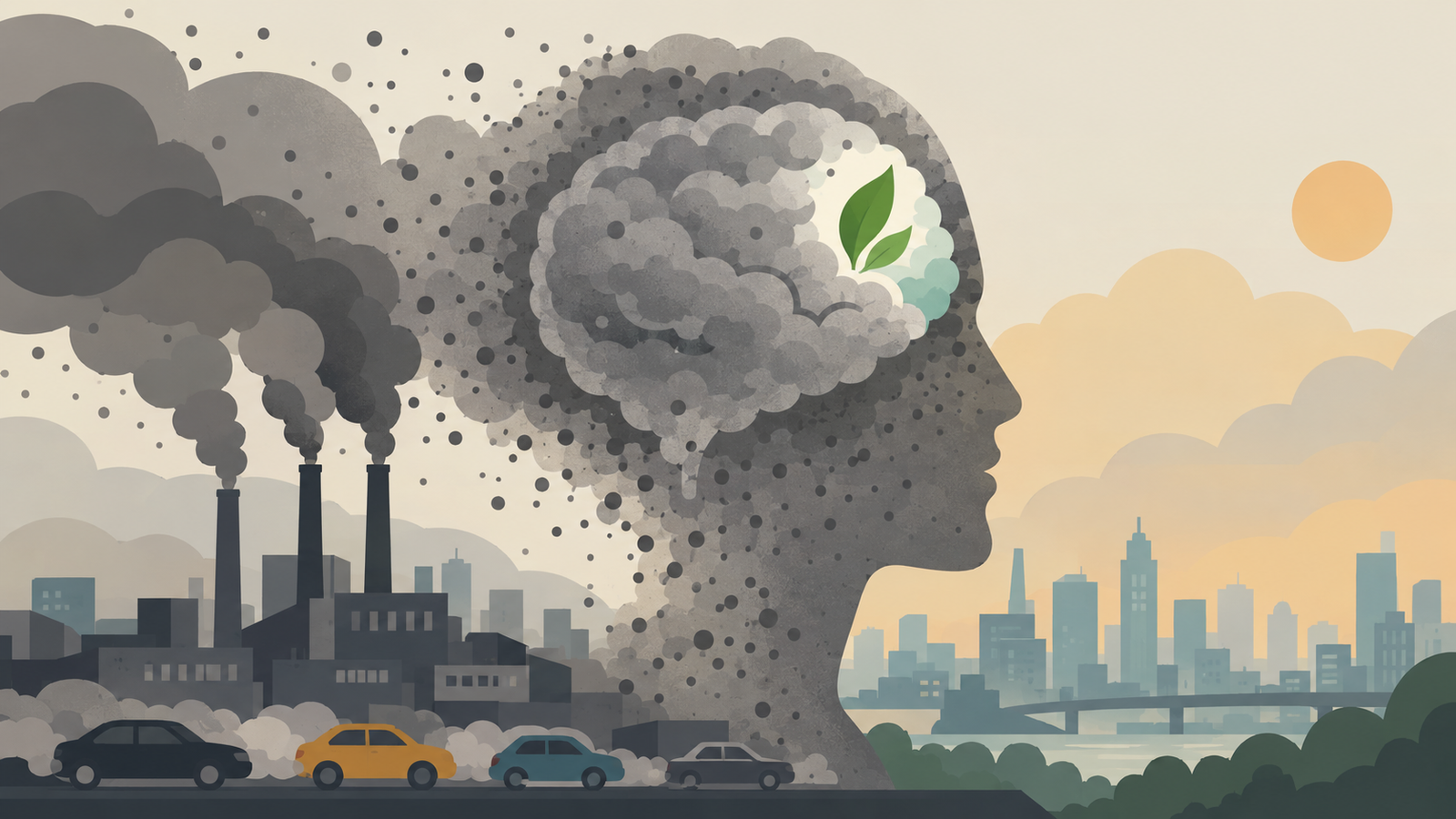
Former WHO chief scientist Dr Soumya Swaminathan, in an interview to the Indian Express (16 November 2026), said India's clean-air strategy must move beyond measuring AQI to engaging with the health consequences of pollution. Her prescription: NCAP should carry pollutant-specific health-based benchmarks and advisories, because the effects of PM2.5, PM10, ozone and carbon monoxide are not equivalent.
Key Points from the Interview
- The AQI flaw: the index is based on the highest available pollutant-specific sub-index; Swaminathan says different pollutants have different health impacts and "cannot be treated as equivalent."
- Cognitive threat: major studies published in 2026 link PM2.5 and dementia; an Institute of Economic Growth study of children aged 2-11 found higher PM2.5 exposure over the preceding 12 months was associated with poorer performance in mathematics and reading.
- The stunting link: a one-standard-deviation rise in PM2.5 exposure was associated with about a five-percentage-point increase in stunting prevalence; with India's stunting at ~30% (NFHS), air pollution may be slowing nutrition gains. Prenatal exposure is linked to low birth weight and preterm births.
- A hopeful finding: a 2026 London study found children growing up where air quality improved after stricter controls showed faster lung growth - pollution control delivers measurable gains.
- Break the data silos: integrating daily pollution data with hospital admissions (heart attacks, asthma, strokes) over 12 months would reveal the immediate and long-term health burden for policymakers.
- The NCAP 2.0 opportunity: since NCAP 2.0 is not yet public, a science-based ten-year roadmap can still be built - with clear accountability at national and state levels, and cities/states prioritising their dominant sources (vehicles, stubble, biomass cooking).
- Climate finance: with climate change increasingly treated as a public-health crisis (including in COP31 discussions), more climate finance is needed; the World Bank has already assisted Haryana, Punjab, UP and Bihar - and transport should be the top priority.
Why It Matters
- Public health (GS-2/3): pollution is no longer only a respiratory issue but one of cognitive development, stunting and the long-term disease burden - a "slow, invisible national crisis."
- Policy interface: health-based AQI, data integration and NCAP 2.0 accountability - a live governance case study.
- NCAP background: launched in 2019 to cut particulate concentrations; health-based benchmarks would be the new element in the 2.0 revision.
Prelims Practice Questions
Q1. India's current AQI is computed on the basis of:
(a) The sum of all eight pollutants
(b) The highest available pollutant-specific sub-index
(c) PM2.5 alone
(d) PM10 alone
Answer and Explanation
Answer: (b) The AQI is the highest pollutant-specific sub-index, calculated from each pollutant concentration and its health-based breakpoints - which Swaminathan finds inadequate from a health-effects standpoint.
Q2. Per the Institute of Economic Growth study cited, a one-standard-deviation rise in PM2.5 exposure was associated with about how much increase in stunting prevalence?
(a) 1 percentage point
(b) 5 percentage points
(c) 10 percentage points
(d) 15 percentage points
Answer and Explanation
Answer: (b) About five percentage points; with India's stunting prevalence around 30% (NFHS), the link is a serious public-health concern.
Mains Practice Question
Q: "Air-pollution policy must shift from being measurement-centric to health-outcome-centric." Analyse this statement in the context of Dr Soumya Swaminathan's recommendations. (250 words)
Outline: Introduction - AQI vs health outcomes; the evidence - dementia, children's cognitive performance, stunting; systemic fixes - data integration, NCAP 2.0, state-specific strategies, transport; financing - climate finance for clean air; conclusion - health-based standards with an accountability mechanism.
FAQ
Short answer: Dr Soumya Swaminathan says NCAP needs pollutant-specific health-based benchmarks and advisories; PM2.5 is linked to dementia, poorer maths and reading performance in children, and about five percentage points higher stunting; NCAP 2.0 should fix clear accountability and prioritise transport.
Q: What is Swaminathan's core recommendation?
Pollutant-specific health-based benchmarks and advisories instead of a single AQI; integration of pollution and hospital data; clear national and state accountability in NCAP 2.0; priority to transport and climate finance.
Q: What is the new health evidence on PM2.5?
2026 studies link PM2.5 to dementia; an IEG study ties higher exposure to poorer maths and reading in children aged 2-11; a one-SD rise means ~5 percentage points more stunting; prenatal exposure is linked to low birth weight and preterm births.
Q: What can change in NCAP 2.0?
A science-based ten-year roadmap, a clear accountability mechanism, local priorities based on dominant sources (vehicles/stubble/biomass), and making health outcomes the yardstick of success.
Sources
- Indian Express (16 November 2026): Link health risks to pollution plan, not just AQI - Soumya Swaminathan
- India Today (10 November 2026): air pollution needs a Covid-like response - Swaminathan
Download this article: PDF (English)