
Why in the news
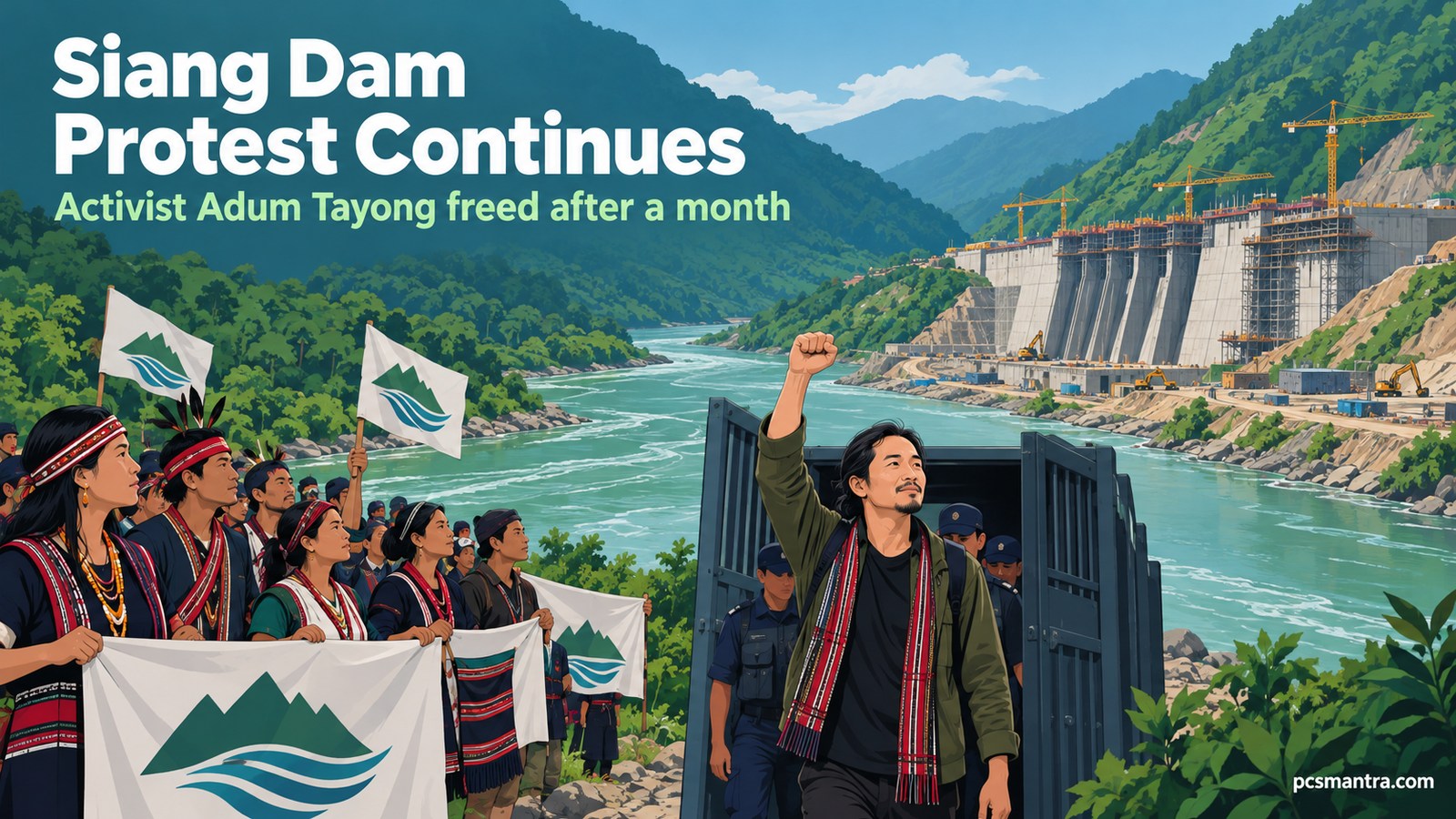
November 13, 2026: Four activists, including Adum Tayong, who were part of the agitation against the Upper Siang Multipurpose Project in Arunachal Pradesh, were released on November 7, 2026 after nearly a month in detention. After his release, Tayong has said the agitation against the project will continue - this resolve is back in the news on November 13, 2026. The district administration says the detentions became necessary after incidents of arson and the targeting of houses. The government has also invited the agitating forum for talks.
What is the project
The Upper Siang Multipurpose Project is a proposed multipurpose project of about 11,200 MW capacity on the Siang river in Arunachal Pradesh. Siang is the name of the Brahmaputra's main channel in Arunachal Pradesh - in Tibet it is called the Tsangpo, in Arunachal the Siang, and on reaching Assam it is known as the Brahmaputra. 'Multipurpose' means the dam is tied not only to power generation but also to objectives such as flood control and water storage.
The project is also seen from a strategic angle: China has announced large dams in Medog, in the upper reaches of the Brahmaputra, and the Upper Siang project is also presented as a counter to it - water-storage capacity in the lower reaches provides the ability to blunt the effect of steps taken in the upper reaches. Read about the difference between, and the disputes over, the hydropower projects of the Siang-Siyom region: Siang and Siyom: different hydropower projects
Reasons for the opposition
- Displacement: villages in the area to be submerged by the dam's reservoir will be uprooted; the land, farms and settlements of local tribal communities will be affected.
- Submergence: the submergence of large parts of the river valley will affect forests and wildlife.
- Livelihood and identity: the communities' livelihoods are tied to the river and the land; if a dependable rehabilitation arrangement is not built, there is a fear of the socio-economic fabric breaking down.
In other projects of this region too, communities in the downstream river areas have been raising their demands - read: The Dibang project: downstream river-area communities and their demands
Detention, release and the state of the agitation
According to the district administration, incidents of arson and the targeting of some houses took place during the agitation, after which the detentions were considered necessary - this is the administration's side. Four activists, including Tayong, were released on November 7, and they have reiterated their resolve to continue the agitation. The government has invited the forum for talks - that is, for now the doors of both confrontation and dialogue remain open.
Way forward
- Meaningful talks: both the forum and the administration should make the government's invitation for talks meaningful - there should be open discussion on the agitation's core concerns of displacement, submergence and rehabilitation.
- Transparent studies: the environmental and social impact assessments should be made public, and the participation of communities in local hearings should be ensured.
- Credible rehabilitation: the rehabilitation package should be decided and implemented first; only then is social consent on the project possible.
- Balancing the strategic need: the answer to upper-riparian challenges such as Medog is not only a dam, but also water-sharing arrangements and monitoring mechanisms.
Significance for the exam
This issue sits at the confluence of the environment, water politics and international relations. In Prelims, the Siang-Brahmaputra geography, the project's capacity and the Medog reference can be asked; in Mains, a question on 'development versus displacement' and Brahmaputra water politics is possible.
Prelims practice questions
Question 1: Consider the following two statements:
Statement-I: The Upper Siang Multipurpose Project is a proposed project of about 11,200 MW capacity on the Siang river
Statement-II: Siang is the name of the Brahmaputra's main channel in Arunachal Pradesh
Choose the correct answer from the options given below:
(a) Both Statement-I and Statement-II are correct
(b) Statement-I is correct, Statement-II is incorrect
(c) Statement-I is incorrect, Statement-II is correct
(d) Both Statement-I and Statement-II are incorrect
Answer and explanation
Answer: (a)
Statement-I is correct: the project's proposed capacity is about 11,200 MW.
Statement-II is correct: the Brahmaputra is called the Tsangpo in Tibet, the Siang in Arunachal and the Brahmaputra in Assam.
Question 2: Medog, whose dams the Upper Siang project is proposed as a counter to, lies in the territory of which country?
(a) Bhutan
(b) Myanmar
(c) China
(d) Bangladesh
Answer and explanation
Answer: (c)
Medog is in the upper reaches of the Brahmaputra in Tibet (China), where China has announced the construction of large dams.
Question 3: Adum Tayong, who was recently released after nearly a month in detention, is an activist associated with which agitation?
(a) Opposition to the Upper Siang Multipurpose Project
(b) Opposition to the Subansiri hydropower project
(c) Opposition to the Dihang-Patkai protected area
(d) Opposition to the expansion of the Namdapha Tiger Reserve
Answer and explanation
Answer: (a)
Tayong is an activist of the agitation against the Upper Siang Multipurpose Project in Arunachal Pradesh; four activists were released on November 7, 2026.
Mains practice question
'Large hydropower projects bring energy and strategic security, but also displacement and ecological risk.' Discuss this statement with reference to the Upper Siang Multipurpose Project and suggest the path to social consent. (General Studies-III; 250 words, 15 marks)
Answer outline:
In the introduction: State that the proposed 11,200 MW project on the Siang (Brahmaputra) is significant for energy, flood control and as a counter to the Medog dams, and the detention and release of activists opposing it is in the news.
In the body: Present the case for the project (power, water storage, strategic need) and the basis of the opposition (displacement, submergence, tribal land); refer to the administration's arson-related side and the government's invitation for talks; give suggestions such as transparent impact assessments, a pre-decided rehabilitation package and meaningful talks.
In the conclusion: State that a balance of national need and local rights is the sustainable solution - without consent, large projects get stuck in disputes.
Frequently Asked Questions (FAQ)
Summary answer: Four activists, including Adum Tayong, who were agitating against the Upper Siang Multipurpose Project, were released on November 7, 2026 after nearly a month in detention; Tayong has expressed his resolve to continue the agitation, and the government has invited the forum for talks.
Question: What is the Upper Siang Multipurpose Project?
It is a proposed project of about 11,200 MW capacity on the Siang river (Brahmaputra) in Arunachal Pradesh, whose objectives include power, flood control and water storage.
Question: Why are local communities opposing the project?
Fears of displacement, the submergence of villages and land, and the impact on the livelihoods and land of tribal communities are the main reasons for the opposition.
Question: What is the connection between China's Medog dam and this project?
China has announced the construction of large dams in Medog, in the upper reaches of the Brahmaputra; the Upper Siang project is considered a counter to it through water-storage capacity in the lower reaches.
Sources
[Press] PTI - Four Siang dam protesters released in Arunachal after nearly a month in detention
[Press] India Today - Arunachal releases four activists, invites forum for talks
Download this article: PDF