
News: 20 November 2026 | Publication: 20 November 2026
Prelims: DGHS, infection control; Mains: GS-II healthcare quality and accountability
In this article
Why in the news
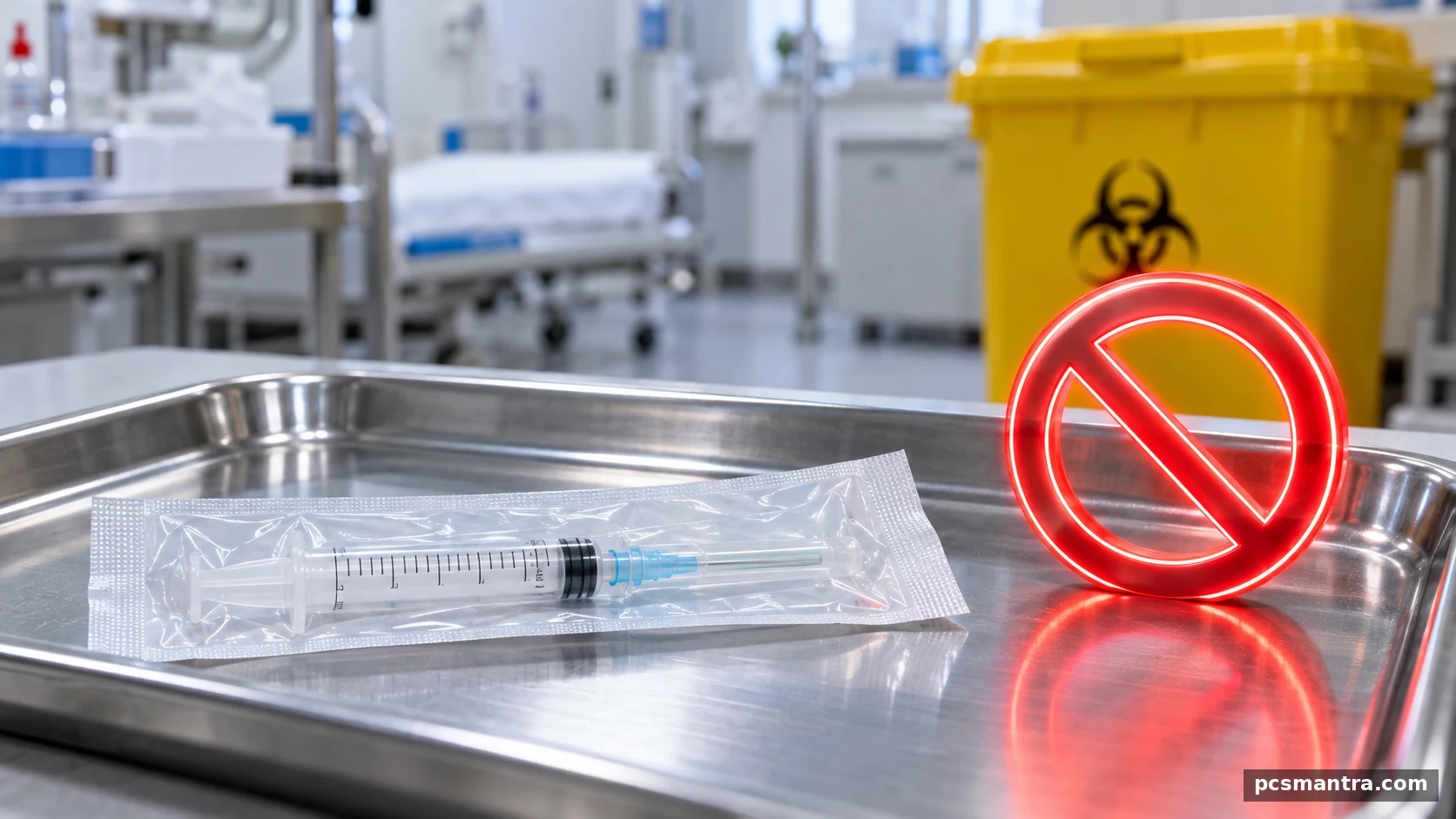
The Directorate General of Health Services has called for vigilance and effective enforcement against the reuse of single-use medical devices and disposable surgical items in public and private healthcare facilities. The direction is reported by the government broadcaster Akashvani. This is an exam-focused review of an October direction, not a report of a new November direction or a law issued on 20 November.
What the warning covers
DGHS expressed concern about some hospitals sterilising devices after a procedure and then reusing them. The report mentions cardiology, nephrology, oncology and complex surgical services. The issue concerns products designated for single use. It should not be confused with a ban on every device designed for reuse after appropriate cleaning and validated reprocessing.
Why sterilisation alone is not enough
The risks identified include cross-infection, device malfunction, loss of performance and other procedure-related complications. A claim that a device has been sterilised does not automatically establish its structural integrity, performance or suitability for another use.
Cost and safety
A cost-saving argument cannot replace patient safety. DGHS also flagged regulatory compliance and healthcare expenditure. Policy analysis should consider transparent procurement, use traceability, infection-control systems and hospital accountability. These are administrative concerns; the reported warning should not be turned into an invented new penalty or automatic compensation rule.
The exam distinction
A single-use product is designated for a single patient or procedure in accordance with its relevant labelling and instructions. Reusable devices and single-use products are different categories. The warning is not a new parliamentary law or evidence that every hospital has violated it.
Prelims practice question
Consider the following statements:
Statement-I: DGHS identified infection and loss-of-performance risks in reusing single-use devices.
Statement-II: A sterilisation claim automatically proves that a single-use device is safe to reuse.
Choose the correct option:
Answer and explanation
Correct answer: (c). Infection control and device performance both matter.
Source
https://newsonair.gov.in/dghs-warns-against-reuse-of-single-use-medical-devices/
Source status: government-broadcaster report available; an independently retrievable copy of the original DGHS letter was not found during preparation.
Frequently asked questions
What did the DGHS direction say, and when was it issued?
DGHS called for vigilance and effective enforcement against the reuse of single-use medical devices and disposable surgical items in public and private healthcare facilities. It is an October direction reported through the government broadcaster; an independent copy of the original DGHS letter was not retrievable. Source
What risks did DGHS identify in reusing such devices?
The risks include cross-infection between patients, device malfunction, loss of performance and other procedure-related complications. A sterilisation claim alone does not establish a device's structural integrity or suitability for another use. Source
Which healthcare services does the report mention?
The report mentions cardiology, nephrology, oncology and complex surgical services. The warning concerns products designated for single use, not devices designed for reuse after validated reprocessing. Source