
News context: 2026-11-16 | Publication: 17 November 2026 Mains: GS-II: Governance and citizen participation
Why in the News
An opinion by Shamika Ravi published on 16 November 2026 argues that Viksit Bharat should be understood as a movement owned by citizens. Using sanitation and housing as examples, she argues that development concerns social norms and aspirations as well as resources and institutions. This is policy commentary, not a notification of a new scheme or an independent impact evaluation.
The policy meaning of participation
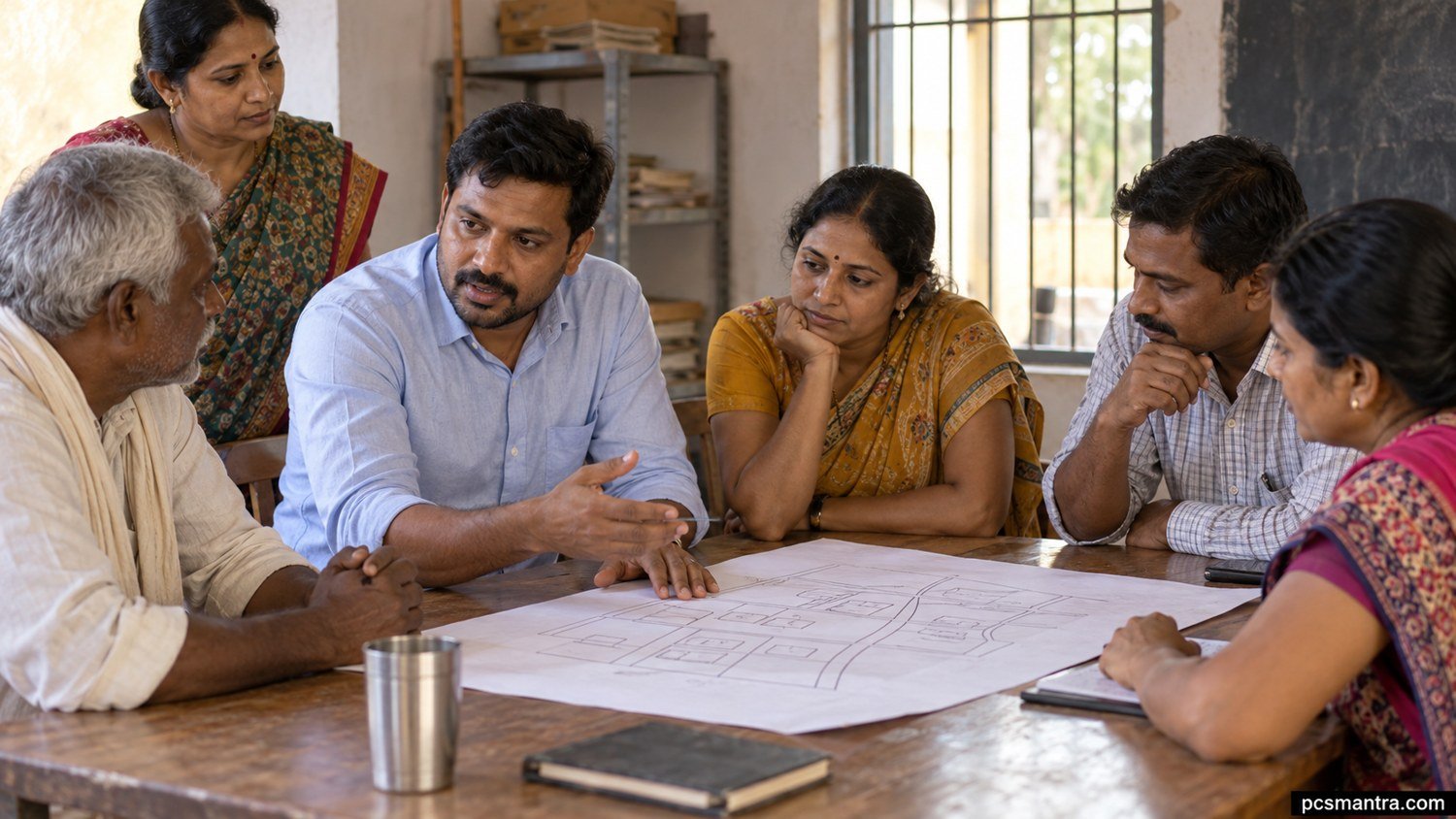
Participation becomes meaningful when citizens can help identify needs, implement programmes and monitor results, rather than only receive benefits. In sanitation, construction, use, maintenance, water availability and community behaviour are connected but distinct questions. In housing, an answer can examine the relationship between ownership, voice in decisions and access to services.
The author argues that public leadership can influence social norms. Present this as an argument, not automatic proof of every programme's success. Establishing that a particular campaign caused a behavioural change requires separate evaluation.
A balanced assessment
Citizen participation does not replace state responsibility. Public institutions must provide finance, services, technical support and grievance redress. Asking communities to solve every problem without resources is not meaningful participation. Assessment should also consider whether women, weaker groups and less vocal citizens can influence decisions.
Keep three distinctions clear: attendance in a campaign versus influence over decisions; creation of an asset versus its sustained use; and an announced target versus a durable outcome. Local adaptation should operate alongside public standards and transparent monitoring.
Mains Practice Question
How can development through people's movements balance citizen ownership with state accountability? (150 words) (10 marks)
Answer Outline
Introduction: Connect participation to identifying needs, implementation and monitoring.
Main Body: Discuss citizen ownership, the voice of women and vulnerable groups, resources, services and grievance redress.
Conclusion: Retain state responsibility while focusing on lasting, measurable outcomes.
Frequently Asked Questions (FAQ)
Can a people's movement replace public services?
No. Citizen ownership and government responsibility must operate together.
Is this a new government scheme?
The source is an opinion essay, not a scheme notification.
Why omit large impact estimates?
The original studies behind the opinion's health and social impact estimates were not separately examined, so those estimates are not repeated.
Sources
Download this article: PDF