
Published: 22 November 2026
In this article
Why in news
The Aakanksha - Rural Skilling and Innovation Centre (RSIC) in Chhattisgarh's Kondagaon district is in the news. According to a November 2026 news report, this modern garment-manufacturing facility, supported by NITI Aayog, has provided formal employment to 102 local residents, including 96 women, most of them from tribal communities. The same report says NITI Aayog has lauded the district's progress in skill development, employment and women-led sustainable livelihoods. According to the state government, the centre aims to create more than 300 direct jobs.
What the centre is
The centre is being developed with NITI Aayog's support in Konagud, a remote village in the Farasgaon development block of the district. Its purpose is to build a durable model that gives industry-based skill training to youth in remote and Left-wing-extremism-affected areas and connects them to employment. According to the state government, the centre aims to train 1,000 to 1,500 youth every year and create more than 300 direct jobs. In August 2026, the area's Member of Parliament and legislator reviewed the initial training-phase work.
Context: Kondagaon's challenges
Kondagaon is a tribal-dominated district long affected by Maoist insurgency and listed among NITI Aayog's Aspirational Districts - districts selected for rapid improvement on indicators of backwardness. According to Census 2011, the district had a sex ratio of 1,033 females per 1,000 males and a literacy rate of 57.31 per cent. Rural women's work remained largely confined to low-paid agricultural labour, and poverty pushed many families into distress migration to distant cities with no guarantee of steady employment.
How the model works
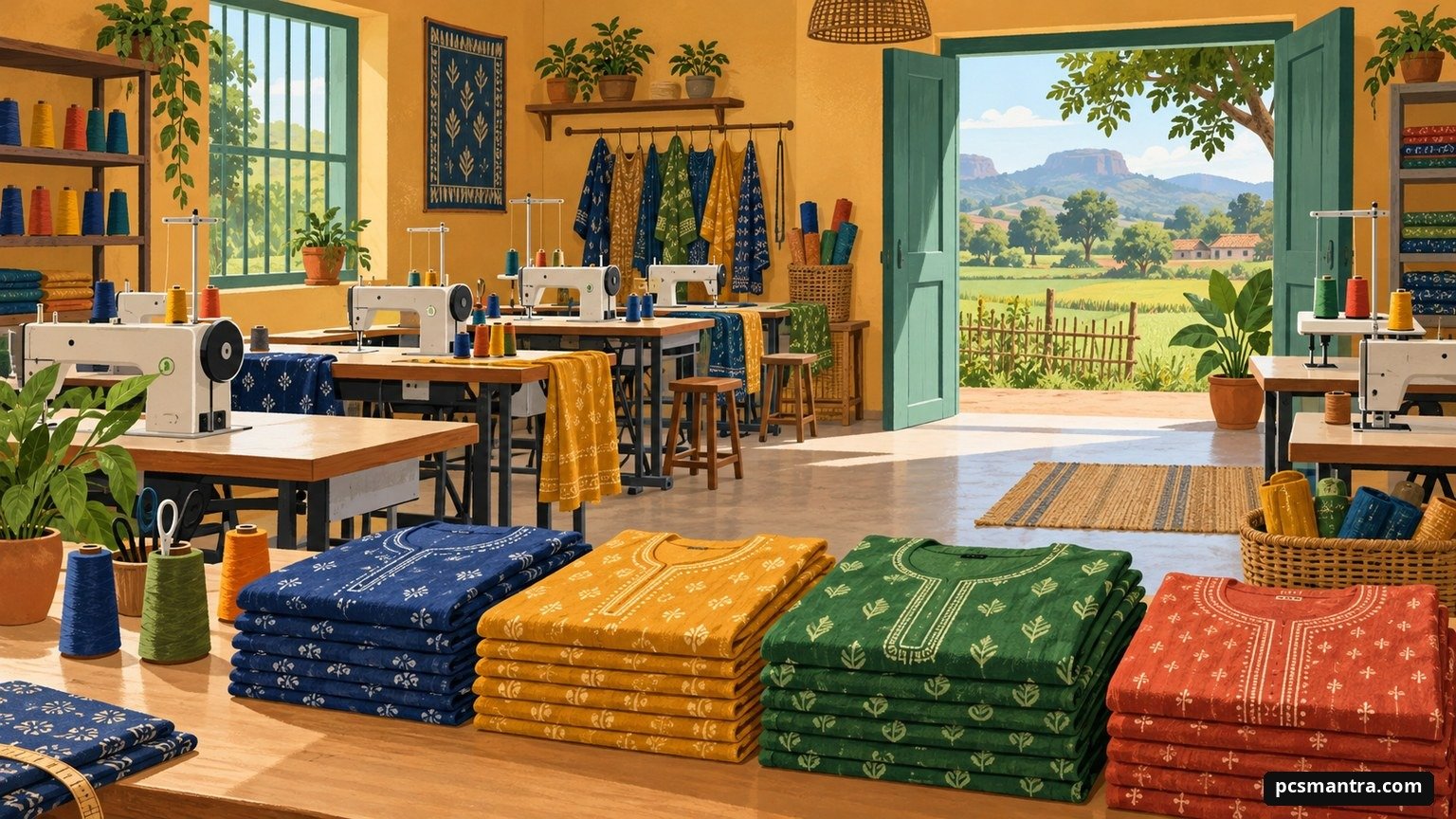
The centre brought machines, training and market linkages directly to the villages of North Bastar. Trained women now stitch bulk orders of uniforms and apparel for leading commercial brands and government departments. Instead of irregular seasonal wages, they earn a regular monthly income supplemented by performance-based incentives. In the report, worker Yashoda Darro describes the programme as the beginning of a completely new life; Rajnu Korram, a surrendered Maoist who joined the initiative, says it gives women formal, dignified employment in the ready-made garment sector.
Why the model matters
The initiative combines three things: skill training, industry partnership and local placement. Training alone does not create employment; income lasts only when orders and buyers are within reach. Second, development and peace are linked: dignified livelihoods in areas emerging from extremism support rehabilitation and social harmony. Third, a regular income for women is associated with a stronger voice in household decisions and better spending on children's education and health.
The way forward
The model's success depends on a few conditions: continuity of orders, quality standards, social security (health, pension, insurance) and the ability to replicate it in other districts. Announcements and measured outcomes are different tests, so regular data on jobs, incomes and retention will be essential. Like flawless stitching, development too is built from durable seams.
Exam relevance
In Mains, connect this example to women's empowerment, skill development, the Aspirational Districts Programme and the development of Left-wing-extremism-affected areas. For Prelims, remember the centre's name, location (Konagud, Farasgaon block, Kondagaon, Chhattisgarh) and supporting institution (NITI Aayog). The employment figures (102, including 96 women) are the reported position; do not confuse them with the target (over 300).
Mains practice question
"Skill development becomes empowerment only when it is linked to local industry and markets." Examine this statement with the example of the Aakanksha centre in Kondagaon. (250 words, 15 marks)
Answer outline
- Introduction: Begin with the limits on rural women's workforce participation and the need for skill-based formal employment.
- Main body: Discuss the centre's features - industry-based training, bulk orders, regular income, rehabilitation in an extremism-affected area and women-led livelihoods. Also mention conditions such as order continuity and social security.
- Conclusion: Conclude that a market-linked skilling model designed for the local context can anchor both durable livelihoods and peace.
Sources
- Kondagaon tribal women skilling report,19 November 2026
- Chhattisgarh government public relations department: Aakanksha centre,21 August 2026
Frequently asked questions
Where is the Aakanksha centre located?
In Konagud village of the Farasgaon development block in Kondagaon district, Chhattisgarh.
How many people has the centre employed?
According to the report, 102 local residents have formal employment, including 96 women. The target is more than 300 direct jobs.
Which institution supports the centre?
According to the state government, the centre is being developed with the support of NITI Aayog.
Download this article: PDF (English)