
News reference: 27 November 2026
Published: 28 November 2026
Prelims: Art and culture, living heritage and cultural tourism
In this article
Why in the news
The inaugural CII Banaras Biennale opened in Varanasi on 27 November 2026. Its full theme is 'Kashi/Light: City as Sensorium'. The event runs from 27 November to 31 December 2026. The first five days, 27 November–1 December, are Preview Week, followed by exhibitions and selected programmes through December. Describing the entire event as a five-day festival would be incorrect.
The Confederation of Indian Industry (CII) presents it in partnership with the Ministry of Culture, Ministry of Tourism, Government of Uttar Pradesh and Banaras Hindu University (BHU). It extends beyond a single exhibition building, connecting museums, a university, public spaces, ghats and craft traditions.
What living heritage means
Heritage is more than old buildings and stored objects. Weaving techniques, musical traditions, craft skills and the process of teaching the next generation are also part of it. The Banaras event brings historical collections into conversation with contemporary artworks and artists and craftspeople working today.
'City as Sensorium' invites an understanding of the city through its sounds, materials, touch, memory and everyday cultural life as well as its appearance. For an exam answer, connect this with city-based cultural tourism, the creative economy and community-centred conservation. It is not the name of a new statutory protection category.
Venues and programmes
BHU's Bharat Kala Bhavan, Jnana Pravaha, Namo Ghat, Chet Singh Fort and other cultural sites are part of the programme. Exhibitions in museums, galleries and cultural spaces in Banaras and Mirzapur continue through December. The organiser asks visitors to check the timing, registration and access conditions for individual events.
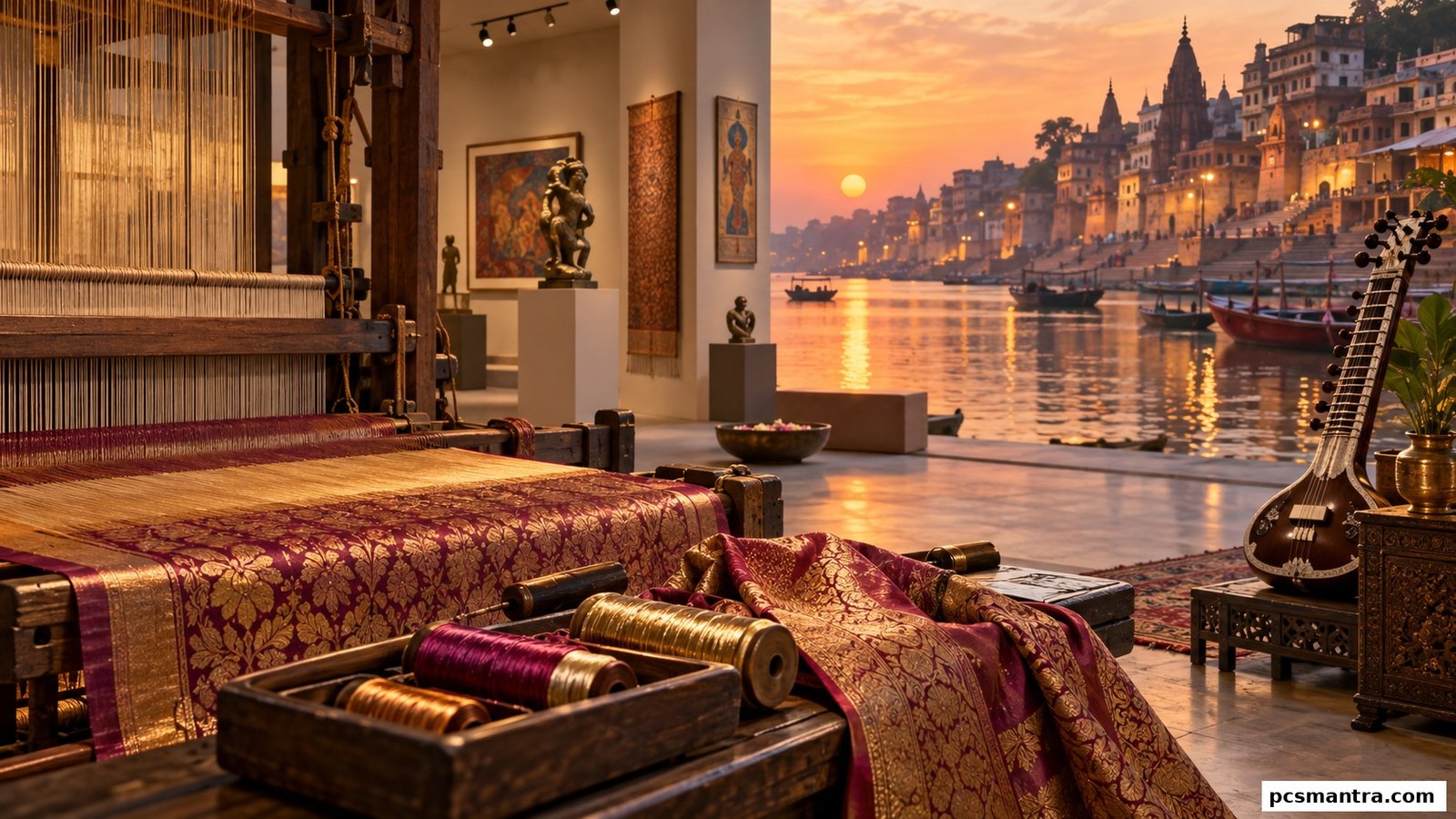
Two major exhibitions at Bharat Kala Bhavan are 'Lines in the Water' and 'Ek Dhaga, Ek Duniya: Silk, Zari'. Historical miniature paintings, terracotta objects and textiles are presented alongside contemporary art and craft. Music, film, conversations, craft visits and masterclasses are also included.
The opening day, 27 November, was invitation-only. The organiser's programme says events open to general visitors from 28 November, but this does not guarantee entry to every event. Individual access conditions may still apply.
From culture to livelihoods and health
The organiser has also announced plans for the 'Varanasi Healthy Weavers Initiative'. Its proposed focus is primary healthcare, non-communicable diseases and older people's health needs. It identifies weaving clusters in Ramnagar, Lohta and Badi Bazar, with an estimated reach of 4,000–5,000 weavers and their families. This is an announced target, not a count of people already served.
Other announced long-term initiatives concern artisan skill training, a model career centre and industry-linked career support at BHU. Their value must be assessed through actual services, training, employment and benefits reaching craftspeople, rather than announcements alone.
Analysis for Mains
Such events can widen access to collections, create demand for local crafts and connect the city's identity with art, music and knowledge beyond religious tourism. More visitors, however, do not automatically mean better conservation. Site capacity, waste, traffic, fair payment to craftspeople and local participation also matter.
Visitor counts should not be the only measure of success. Access to collections, artisan incomes, transfer of skills to younger people and support that continues after the event are better tests. Corporate backing can provide resources, while curatorial independence and the public cultural purpose need to remain clear.
Prelims Practice Question
Question 1
Consider the following statements about CII Banaras Biennale 2026:
Statement 1: Its theme is 'Kashi/Light: City as Sensorium'.
Statement 2: The entire event is limited to 27 November–1 December.
Statement 3: It connects historical collections and living craft traditions with contemporary art.
Which statements are correct?
Answer and explanation
Correct answer: (b)
Statement 1 is correct. This is the organiser's full theme.
Statement 2 is incorrect. Preview Week runs from 27 November to 1 December, while exhibitions continue until 31 December 2026.
Statement 3 is correct. Dialogue across museums, textiles, craft, music and contemporary art is a central idea of the event.
Mains Practice Question
Question 1
How can city-based cultural events support living heritage and the local creative economy? Discuss with reference to the Banaras Biennale. (150 words, 10 marks)
Answer outline
Introduction: Explain living heritage as continuity of knowledge, skills and cultural practices alongside collected objects.
Body: Cover access to collections, markets for craftspeople, cultural tourism, youth training and institutional partnerships. Use the connections between museums, ghats and textile traditions in Banaras as an example. Include site capacity, community participation, fair payment and curatorial independence as conditions.
Conclusion: Suggest assessing success through artisan incomes, continuity of skills and support after the event, rather than visitor numbers alone.
Frequently Asked Questions
Question 1: When does Banaras Biennale 2026 end?
It runs from 27 November to 31 December 2026. Preview Week is 27 November–1 December, followed by exhibitions and selected programmes.
Question 2: Who presents it?
CII presents it with the Ministry of Culture, Ministry of Tourism, Government of Uttar Pradesh and BHU.
Question 3: Is it only an exhibition of paintings?
No. It includes historical collections, textiles and crafts, music, film, conversations, visits and masterclasses.
Question 4: Is the health initiative's beneficiary number an achievement already delivered?
No. The estimate of 4,000–5,000 weavers and their families is the organiser's proposed reach, not a completed service-delivery count.
Sources
https://www.ciibanarasbiennale.in/
https://www.ciibanarasbiennale.in/programme
https://www.ciibanarasbiennale.in/media
Download this article: PDF