
Why in News
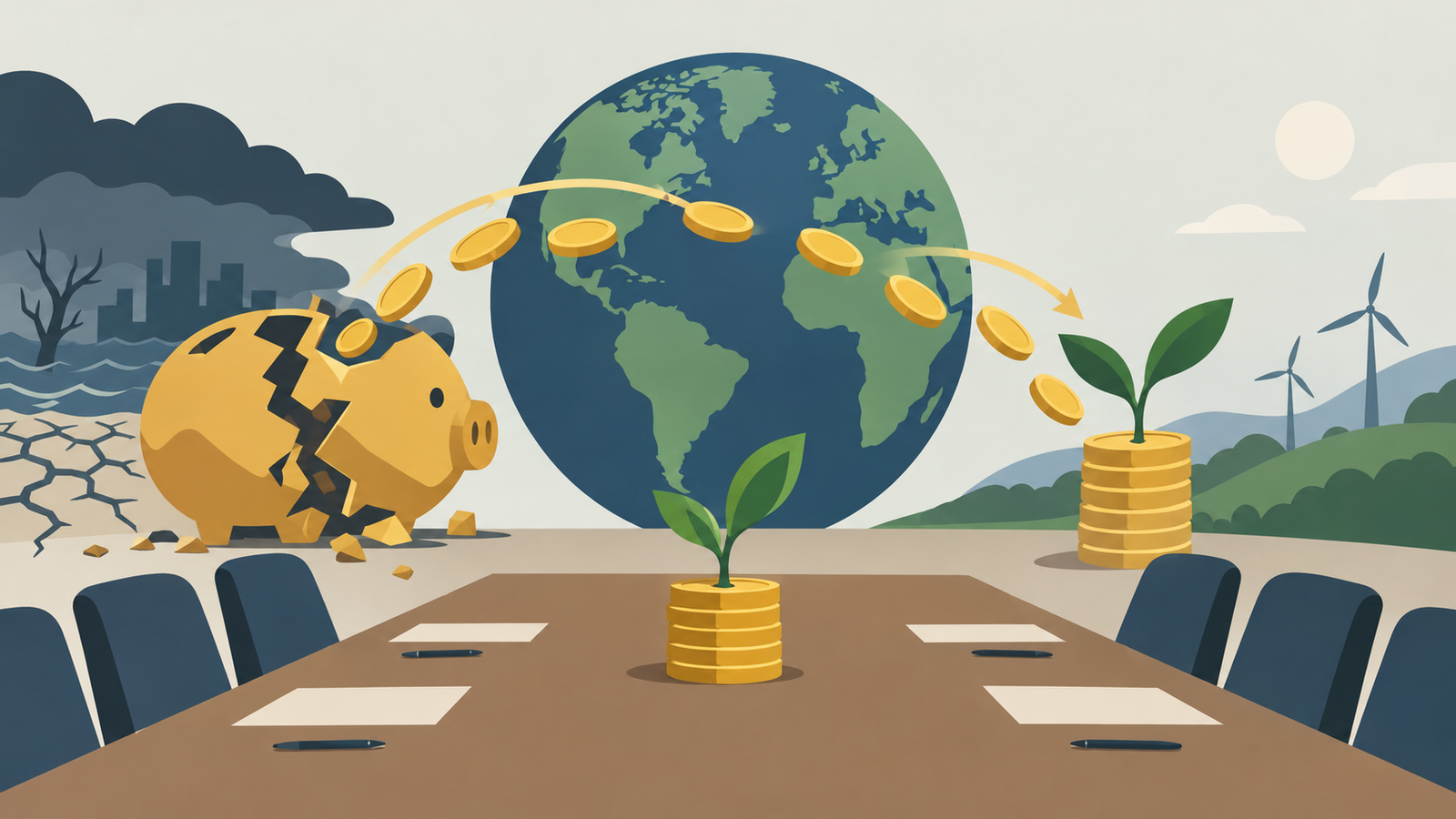
At the end of week one of COP31 in Antalya, Turkiye (9-20 November 2026), climate-finance negotiations have stalled again: developing countries want clear rules on wealthy countries' funding duties, while developed countries stress private and commercial investment. Meanwhile, an Indian Express analysis (16 November), "At COP31, push for a more equal climate bargain," argues that India should make a minimum annual grant-finance commitment from developed countries the core of its negotiating capital.
Where the Talks Are Stuck
- Background goal: agreed at COP29 (Baku) - at least $300 billion a year by 2035; COP31 is being framed as an "implementation COP" - the question is how, and in what form, the money arrives.
- The divide: developed countries want a bigger role for private and commercial investment; developing countries point out that adaptation needs deliver public benefits without investor returns - reliance on private capital will leave them unmet.
- GCF controversy: the Green Climate Fund has proposed removing the cap on aggregate loan contributions and counting guarantees as grant-equivalent - a $100 million guarantee with $15 million grant-equivalent value would count towards replenishment, inflating the figure without new cash for grants.
- The data: according to the OECD, loans were 67% of public climate finance in 2024 versus 29% grants - a dangerous mix for debt-stressed vulnerable countries.
- Illustration: the Nepal floods showed the value of preparedness investments like warning systems and evacuation planning - they generate public value, not cashflows, and need grants.
The Way for India (Analysis)
- The ask: a quantified minimum annual public grant for adaptation, prioritising vulnerable countries and activities without commercial revenue; only actual grant disbursement should count towards the goal.
- Legal basis: Article 9.4 of the Paris Agreement, which recognises the need for public and grant-based resources for adaptation.
- The CBDR legacy: from the 1990 Conference of Select Developing Countries to shaping Common but Differentiated Responsibilities, India has been central - a minimum grant commitment continues that tradition.
Why It Matters
- GS-III Environment/International: the "quality" of climate finance (loans vs grants) is now the central negotiating issue - a favoured UPSC dimension.
- The debt-climate trap: vulnerable countries spend budgets servicing debt owed to developed countries, leaving less for climate shocks - a question of climate justice.
- India's diplomacy: G77+China leadership and coalition-building at an "implementation COP".
Prelims Practice Questions
Q1. The New Collective Quantified Goal agreed at COP29 is at least how much annual finance by 2035?
(a) $100 billion
(b) $300 billion
(c) $500 billion
(d) $1.3 trillion
Answer and Explanation
Answer: (b) COP29 (Baku) set at least $300 billion a year by 2035; $1.3 trillion is the broader Baku-to-Belem roadmap aspiration.
Q2. Which Article of the Paris Agreement recognises the need for public and grant-based resources for adaptation?
(a) Article 6.2
(b) Article 9.4
(c) Article 4.1
(d) Article 13
Answer and Explanation
Answer: (b) Article 9.4 - the legal basis of India's proposed minimum-grant ask.
Mains Practice Question
Q: "The climate-finance question is no longer about the amount but about its form." Comment in the context of the COP31 finance negotiations, and assess India's push for a minimum annual grant commitment. (250 words)
Outline: Introduction - the week-one stalemate; the form debate - 67% loans vs 29% grants, the GCF guarantee row; adaptation's public-good nature; India - Article 9.4, CBDR, coalitions; risks - stalemate stalls implementation; conclusion - a measurable grant commitment will rebuild trust.
FAQ
Short answer: COP31's first week ended with climate-finance talks stuck: developing countries want grant-based public finance, developed countries emphasise private investment. An IE analysis argues India should seek a minimum annual adaptation grant, grounded in Article 9.4 of the Paris Agreement.
Q: Why are the COP31 finance talks stuck?
Developed countries want private/commercial investment to fill the $300 billion goal; developing countries say adaptation needs do not generate returns and need public grants. The GCF's proposal to count guarantees as grant-equivalent has deepened the row.
Q: What is India's "minimum grant" ask?
A quantified minimum annual public grant for adaptation, prioritising vulnerable countries, with only actual grant disbursements counted - based on Article 9.4 and the CBDR principle.
Q: What is wrong with loan-based climate finance?
In 2024, 67% of public climate finance was loans; indebted small-island and poorer countries lose their capacity to absorb climate shocks while servicing debt - a debt-climate trap.
Sources
- Indian Express analysis (16 November 2026): At COP31, push for a more equal climate bargain
- Down To Earth: developing countries push to turn finance commitments into action as talks hit familiar divisions
- ACT Alliance: COP31 mid-point - too little progress in week one
- Related earlier post (pcsmantra): The first COP without the US: the real climate-finance battle at Antalya (9 November)
Download this article: PDF (English)