Why in the News
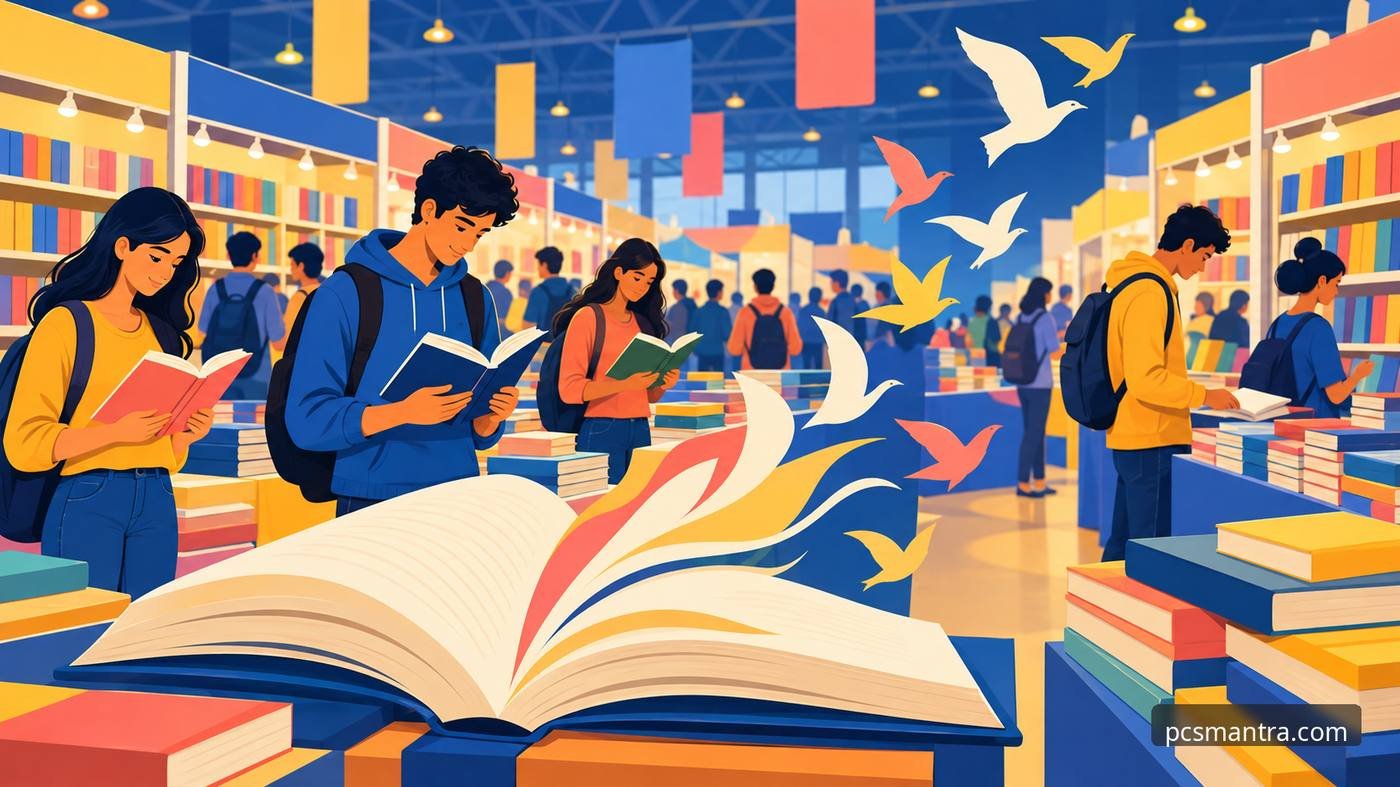
The National Book Trust (NBT - an autonomous body under the Ministry of Education) for the first time studied the reading and buying habits of young visitors to the New Delhi World Book Fair (NDWBF) 2026. According to an internal report obtained by The Hindu, Gen-Z preferences are led by international literary fiction (The Silent Patient, Yellowface, The Palace of Illusions), translated Asian literature (Han Kang's The Vegetarian - International Booker winner) and Hindi classics (Kabir's poetry, Babasaheb Ambedkar's writings). Around 20 lakh people visited the fair; a sample of 3,650 made purchases worth ₹59 lakh, from which total spending is estimated at ₹323 crore (average ₹1,615.80 per person). 40% of visitors were college students. The fair was held with free entry for the first time in 2026; NBT's expenditure was ₹33.83 crore.
The Language-Wise Publishing Picture
The fair had 1,373 stalls of 352 English publishers and 371 stalls of 156 Hindi publishers, while 24 Urdu publishers had only 40 stalls. Regional languages were almost absent: Punjabi 4, Tamil and Sanskrit 3 each, Bangla/Gujarati/Sindhi 2 each, Malayalam 1 publisher. The report accepts that interest in books in regional languages is growing, but that it is limited by the barrier of "publisher availability and discoverability".
Leading Trends in Young Readers' Preferences
(1) Literary fiction and thrillers - The Silent Patient, Yellowface; (2) translated Asian literature - Korean (The Vegetarian, Cursed Bunny), Japanese (Before the Coffee Gets Cold, Days at the Morisaki Bookshop); (3) self-help - Psychology of Money ("resonates with an emerging professional identity"); (4) Hindi - Kabir, Ambedkar, Osho, translated copies of the Constitution. According to the report, content tied to identity, belonging and social issues, as well as "Instagram-worthy" cover design, also influences buying decisions - and even in the digital age, demand for physical books endures.
NBT's Role and Plans Ahead
NBT (established in 1957, an autonomous body) is the national institution for promoting book publishing and making affordable books available. According to a senior official, NDWBF's figures should be compared with fairs in states such as Maharashtra, Jammu & Kashmir, Uttar Pradesh, Ladakh, Odisha and Meghalaya to get a true picture of vernacular publishing; the goal is to take "books to the reader's doorstep" through state-level fairs.
Exam Perspective: Linguistic Diversity and the Reading Economy
The figures show two tensions: (1) English-Hindi duopoly versus the marginalisation of regional-language publishing - a challenge for the publishing ecosystem in the direction of NEP 2020's mother-tongue education and linguistic equality; (2) youth culture - demand for physical books, vernacular literature as cultural identity, and a global outlook through translated literature. The event economics are also noteworthy: an estimated ₹323 crore of book spending against an expenditure of ₹33.83 crore.
Timeline
- 1957: National Book Trust (NBT) established
- January 2026: NDWBF 2026 - free entry for the first time; ~20 lakh visitors
- 3 November 2026: NBT's Gen-Z reading report comes to light (The Hindu)
Significance for the Exam
Mains (GS-I/GS-II): Youth culture and reading culture; linguistic diversity and regional publishing; educational institutions; NEP 2020 and the mother tongue.
Prelims: NBT (Ministry of Education, 1957); NDWBF; the International Booker Prize (The Vegetarian - Han Kang); translations of the Constitution.
Mains Practice Question
"India's young reading culture is moving towards both globalisation and cultural identity at the same time." Comment with reference to the NBT report. (250 words, 15 marks)
Answer Outline
Introduction: The NBT report on Gen-Z reading preferences raises questions of linguistic diversity and the publishing ecosystem.
Main Body: Signs of globalisation: English fiction, demand for translated Asian literature, international prize-winning authors. Signs of identity: Hindi classics, Ambedkar, translations of the Constitution, vernacular interest. The barrier: absence of regional-language publishers, discoverability.
Conclusion: Policy direction: "books to the doorstep" through state-level fairs, encouragement of translation, budgetary support for mother-tongue publishing - for linguistic equality.
Prelims Practice Questions
Question 1. With reference to the National Book Trust (NBT), consider the following statements:
Statement-I: It is an autonomous body under the Union Ministry of Education.
Statement-II: According to NBT's recent report, about 40% of the visitors to NDWBF 2026 were college students.
Which of the statements given above is/are correct?
(a) Statement-I only
(b) Statement-II only
(c) Both Statement-I and Statement-II
(d) Neither Statement-I nor Statement-II
Answer and Explanation
Answer: (c) - Both are correct: NBT is an autonomous body under the Ministry of Education, and in the report based on a sample of 3,650, college students were ~40%.
Question 2. According to the NBT report on NDWBF 2026, which of the following language groups had the lowest publisher participation?
(a) English
(b) Hindi
(c) Urdu
(d) Regional languages (Punjabi, Tamil, Bangla, etc.)
Answer and Explanation
Answer: (d) - Regional-language publishers were only a handful (Punjabi 4, Tamil/Sanskrit 3 each, etc.); Urdu's 24 publishers were also few, but regional languages were the most marginalised - the report identifies the barrier of "publisher availability and discoverability".
Sources
Download This Article: PDF

PCSMANTRA Editorial Team
Research and Editing
We prepare current affairs analysis, exam updates and study material in Hindi and English for UPSC, State PCS, PCS-J and other competitive examinations. Every article is verified against official sources before publication; sources are listed at the end of each article.
Read our editorial policy