Why in the News
A report of 4 November 2026 brought out a warning from the Indian National Centre for Ocean Information Services (INCOIS) about a marine heatwave in the Arabian Sea, the Bay of Bengal and the Indian Ocean. The same report also carried a swell-surge forecast for the coasts. A warm sea and high waves are separate events; the two warnings should not be read as the name of one cause or one danger. This article explains the 4 November advisory; it does not claim that the warning is active in all regions today.
What a Marine Heatwave Is
Marine heatwave: the sea temperature in a region staying abnormally above the local normal seasonal range. INCOIS's service description gives the criterion of five or more days and a temperature above the 90th percentile of at least 30 years of local temperature records. The 90th percentile is the limit below which about 90 per cent of comparable observations for that base period fall. So the same temperature is not called a heatwave everywhere.
Long-term ocean warming is the rising trend of average temperature over decades. A marine heatwave is a smaller, place- and time-specific event than that. A higher base temperature can make the background of such events more risky, but determining the cause of any single event needs separate scientific analysis.
Why Heat Persists in the Sea
- Heat building up at the surface: more solar radiation or heat exchange with the atmosphere can warm the upper layer of the sea.
- Mixing slowing down: with weak winds and more stable water layers, warm surface water mixes less with the relatively colder water below.
- Warm water arriving through currents: ocean currents can bring heat from another region.
- Local and large climate factors: weather, ocean circulation and large climate fluctuations like El Nino have an effect according to the region. Every event cannot be understood through only one factor.
Effects from Corals to Fisherfolk
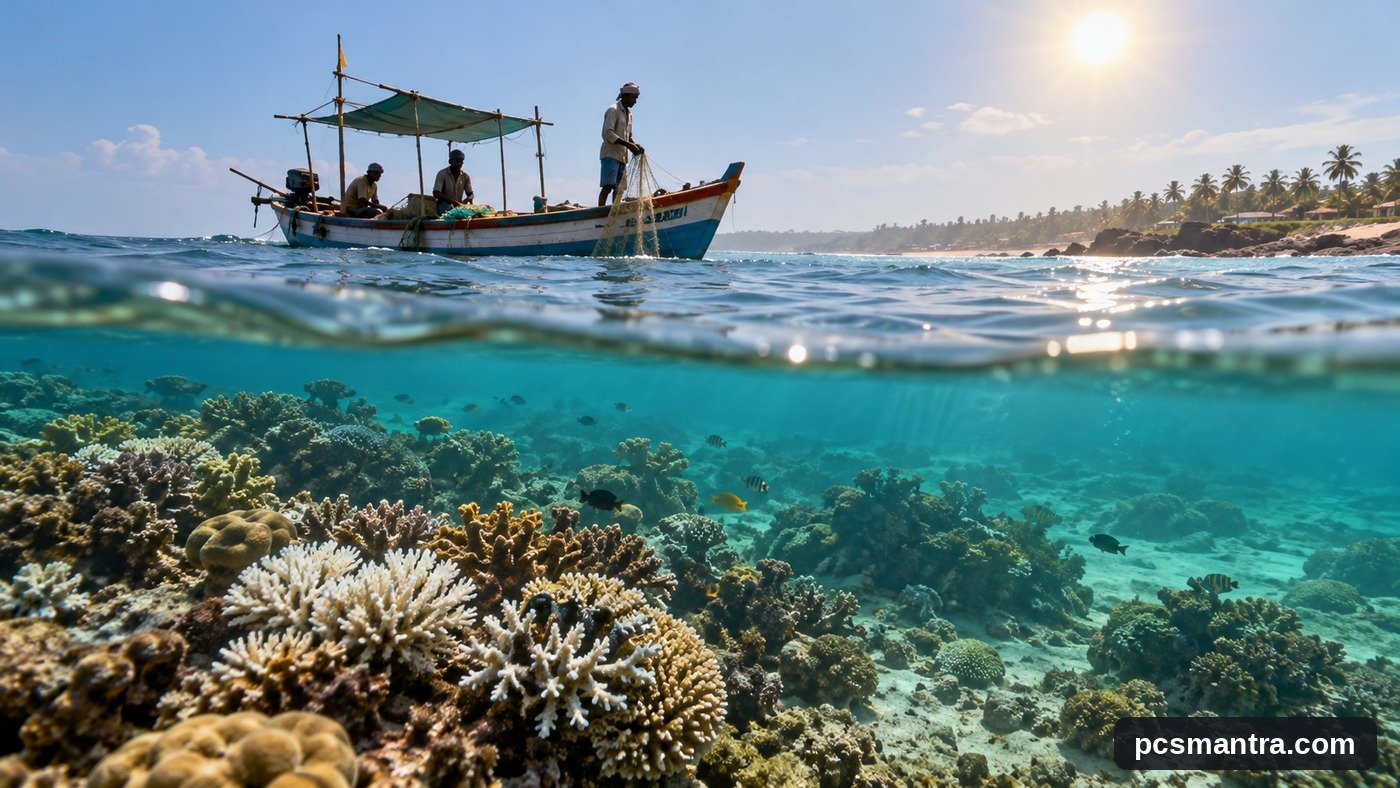
Excess heat can affect the relationship between corals and the microscopic algae living in them. When the algae separate, coral bleaching occurs. Bleaching is not the immediate death of every coral, but long or repeated heat stress raises the risk of death and difficulty in recovery.
When temperature changes, the habitat of fish and the food chain can change. This can change the place, timing and species composition of the catch. Small fisherfolk may have to go farther, spend more on fuel, or face uncertain income. Before linking a fall in the catch of a particular coast only to heat, local data and other pressures must also be looked at.
The effects on seagrass, fish-breeding grounds and coastal biodiversity reach as far as food security and livelihoods. Combined pressures such as a warmer sea and lower dissolved oxygen can increase problems for organisms.
Difference from a Swell Surge
| Event | Main feature | Key practical question |
|---|---|---|
| Marine heatwave | Persistence of abnormal sea temperature | Heat stress on corals, fish resources and the ecosystem |
| Swell surge | A sudden rise in coastal water level/waves from long waves generated by a distant weather system | Going out to sea, coastal activity and local safety warnings |
According to the 4 November report, INCOIS's monitoring covered six ocean basins and 14 regions of the Indian coast. The report mentioned temperatures about 1 degree Celsius above normal for some parts. This is not proof of a uniform temperature across the whole Indian Ocean or the same intensity everywhere.
Way Forward
Along with temperature monitoring, data on fish catch, coral health and local livelihoods should be linked. Warnings should reach fisherfolk in their language and through a trusted medium. Local administration should explain sea-travel warnings for weather and heat warnings for the ecosystem as separate things. In the long term, cutting emissions, controlling coastal pollution and saving healthy habitats are all needed together.
Importance for the Exam
In GS-III this is a subject that connects climate change, biodiversity, disaster risk and the livelihood of fisherfolk in one thread. In answers, a clear distinction between long-term warming, a specific heatwave and a swell surge will be useful.
Mains Practice Question
How are marine heatwaves different from long-term ocean warming? Discuss their effects on India's coastal ecology and livelihoods and the adaptation measures needed. (15 marks, 250 words)
Answer Outline
Introduction: define persistence of temperature above the local seasonal range; it is not just one hot day.
Main Body: explain heat exchange, mixing and currents. Connect coral bleaching, fish habitat, income and the last-mile reach of warnings. Keep heat warnings and swell surges separate.
Conclusion: give a combined view of ocean observation, local ecosystem protection and emission reduction.
Sources
- Report on the INCOIS warning of 4 November
- INCOIS: marine heatwave service and criteria
- INCOIS: MAHAS monitoring
- NOAA: ecosystem effects of marine heatwaves
- NOAA: winds, mixing and ocean heat
Download This Article: PDF

PCSMANTRA Editorial Team
Research and Editing
We prepare current affairs analysis, exam updates and study material in Hindi and English for UPSC, State PCS, PCS-J and other competitive examinations. Every article is verified against official sources before publication; sources are listed at the end of each article.
Read our editorial policy