Why in the News
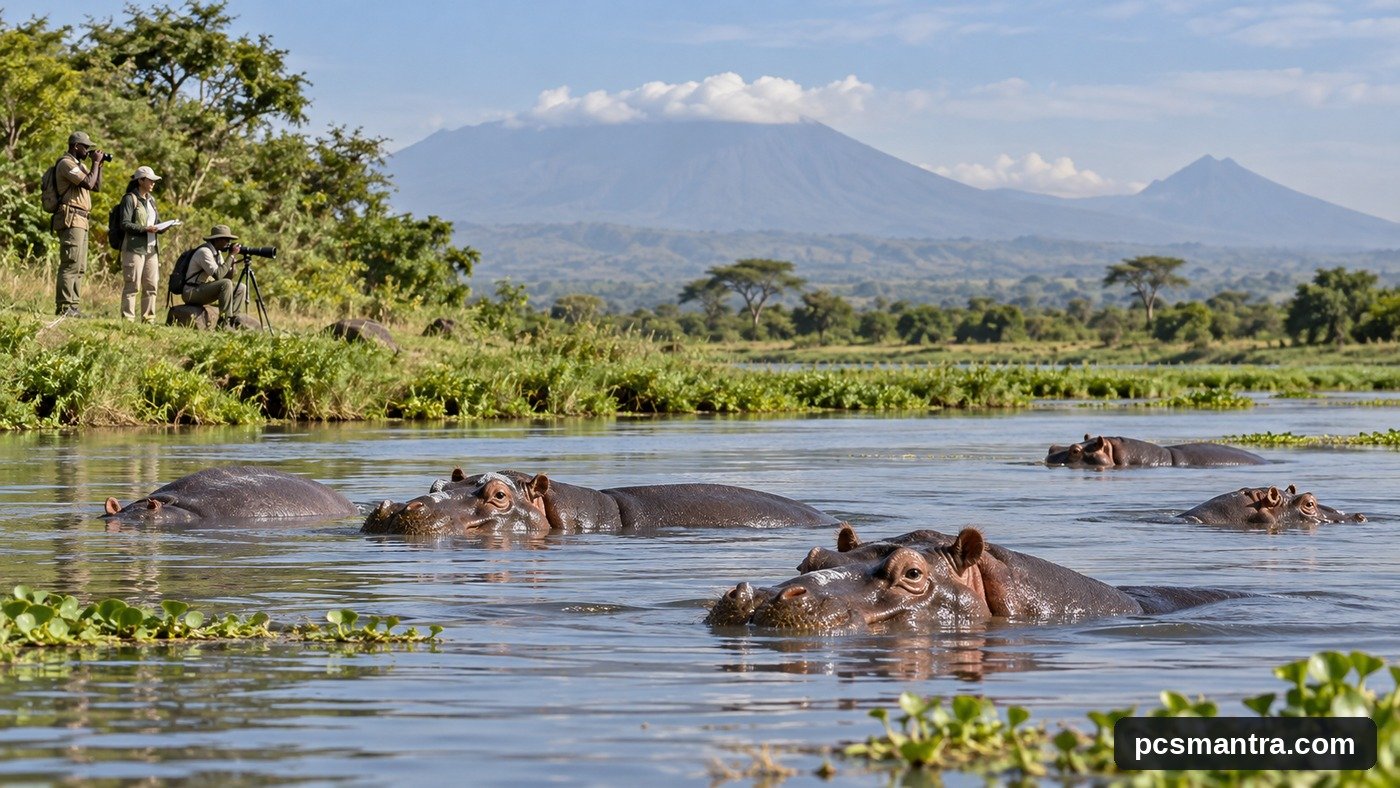
A Nature report of 4 November 2026 drew attention to an anthrax infection among hippopotamuses in the Democratic Republic of Congo's Virunga National Park. Per the report, dead animals had been found since September and laboratory testing confirmed anthrax. That report carried information about the deaths of at least 30 hippos and no recorded case in humans. These are figures as of the report's time, not a live count on 7 November or a guarantee of no infection across the region.
Where Virunga Is
Virunga National Park is in the eastern Democratic Republic of the Congo (DRC). Do not take the DRC and the separate country Republic of the Congo as one. Per the UNESCO World Heritage description, the park holds diverse ecosystems from wetlands and savanna to high mountain habitats. It is also important for the mountain gorilla and rich biodiversity.
Anthrax: The Bacterium and the Spore
Anthrax is an infection caused by a bacterium called Bacillus anthracis. Its spores are forms that can survive harsh conditions and can remain in soil. Animals can be infected by coming into contact with a contaminated environment. So anthrax should not be called a virus-caused disease like Ebola. The presence of different diseases in one region does not make them one disease.
How Wildlife Disease Connects with Human Health
Handling the carcass of an infected animal or eating contaminated meat can create risk for people. The relationship of wildlife, livestock, the environment and human health is seen together in the One Health approach. This is not a question of hospitals alone; animal-health surveillance, safe carcass management and carrying information to the community also matter.
Nature's report mentioned, citing the park's officials, monitoring of the affected area and safe management of carcasses. Conflict and other health crises can put pressure on the capacity for surveillance and response. No human case being recorded is good information, but in a low-surveillance region it should not be equated with zero risk. This article is health information, not individual treatment advice.
Significance for the Exam
In the Prelims, the DRC-Virunga place match, the UNESCO heritage site, bacterium versus virus and the connections of One Health are useful. In disease news, keep the event's start, the report's date and the current status separate.
Prelims Practice Questions
Question 1. With reference to Virunga National Park and anthrax, consider the following statements:
Statement 1: Virunga National Park is located in the Democratic Republic of the Congo.
Statement 2: Anthrax is a disease related to a bacterium called Bacillus anthracis.
Statement 3: In the One Health approach, environmental and animal health are kept separate from human health.
Which of the above statements is/are correct?
(a) Only 1 and 2
(b) Only 2 and 3
(c) Only 1 and 3
(d) 1, 2 and 3
Answer and explanation
Answer: (a) Only 1 and 2
Statement 1: Correct. Virunga is in the eastern DRC.
Statement 2: Correct. Anthrax is bacterial, not a viral disease like Ebola.
Statement 3: Wrong. One Health sees the interconnections of human, animal and environmental health together.
Question 2. After a report of anthrax in wildlife, which of the following steps best fits the One Health approach?
(a) Starting to test animals only after a case appears in humans
(b) Distributing dead animals as food
(c) Keeping animal-health information separate from the environment and health departments
(d) Coordinating wildlife and human-health surveillance and safely managing infected carcasses
Answer and explanation
Answer: (d) Coordinating wildlife and human-health surveillance and safely managing infected carcasses
Option (a): Wrong. Waiting only for a human case weakens advance animal surveillance.
Option (b): Wrong. Contaminated meat can create the risk of infection.
Option (c): Wrong. Keeping information separate instead of coordinated is contrary to One Health.
Option (d): Correct. It connects the animal, environmental and human sides of the risk.
Sources
- Nature: anthrax in Virunga, 4 November
- UNESCO: Virunga National Park
- The outbreak report of 2 November
Download This Article: PDF

PCSMANTRA Editorial Team
Research and Editing
We prepare current affairs analysis, exam updates and study material in Hindi and English for UPSC, State PCS, PCS-J and other competitive examinations. Every article is verified against official sources before publication; sources are listed at the end of each article.
Read our editorial policy