
News reference: 28 November 2026
Published: 28 November 2026
Mains: GS-III, energy security and energy transition
In this article
Why in the news
The global energy market has been buffeted through this decade; a pandemic, wars, climate pressure and the rise of renewables. In India the energy-security debate is back at the centre, driven not only by international events but by domestic numbers. According to Petroleum Planning & Analysis Cell (PPAC) data tabled in the Lok Sabha (July 2026), India's crude-oil import dependence rose to 88.7% in 2025-26, while domestic production slipped to 28.0 million tonnes. On the other side, renewable capacity is growing fast; by 30 September 2026, non-fossil capacity stood at 308 GW, nearly 55% of total installed capacity. Understanding energy security means reading these two pictures together.
Basics: Energy security: uninterrupted, reliable energy supply at affordable prices; availability, affordability and stability together. Import dependence: the share of imports in total consumption; the higher it is, the greater the exposure to external shocks. MMT: million metric tonnes. Non-fossil capacity: electricity-generation capacity from solar, wind, hydro, nuclear and bio-energy. Strategic Petroleum Reserve (SPR): secure underground storage of crude oil for use in a supply crisis.
Picture 1: Import dependence in oil and gas
PPAC's data (answer to Lok Sabha Unstarred Question 894, 23 July 2026).
| Financial year | Domestic crude production (MMT) | Petroleum product consumption (MMT) | Import dependence (%) | Crude imports (MMT) |
|---|---|---|---|---|
| 2021-22 | 29.7 | 201.7 | 85.5 | 212.4 |
| 2022-23 | 29.2 | 223.0 | 87.4 | 232.7 |
| 2023-24 | 29.4 | 234.3 | 87.8 | 234.3 |
| 2024-25 | 28.7 | 239.2 | 88.3 | 243.2 |
| 2025-26 | 28.0 | 241.6 | 88.7 | 245.8 |
Gas dependence has risen too: from 48.4% in 2021-22 to 50.1% in 2024-25 and 2025-26. Domestic gas production was 34.3 billion cubic metres in 2025-26 against consumption of 68.8 billion cubic metres. In other words, about 9 of every 10 units of oil and 1 of every 2 units of gas rest on imports. Domestic crude output has fallen from 29.7 to 28.0 MMT over five years instead of rising; the toughest part of the challenge.
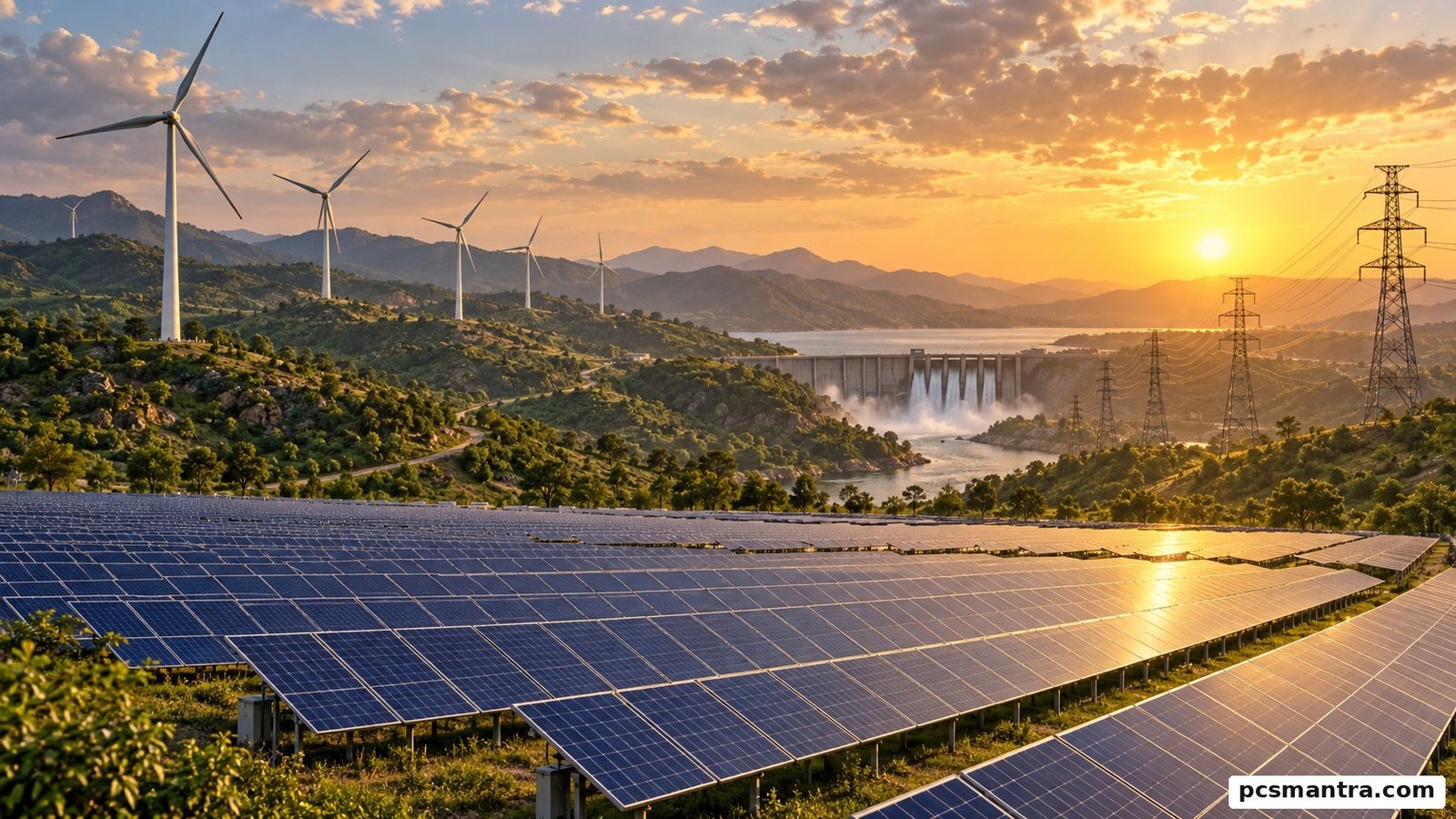
Picture 2: The rise of renewable and non-fossil energy
The second picture is encouraging. As per the Press Information Bureau factsheet (November 2026).
- Total installed power capacity: about 560 GW in October 2026; it was 249 GW in 2014.
- Non-fossil capacity: 308 GW by 30 September 2026; about 55% of total capacity; India ranks third in the world in installed renewable capacity.
- Solar energy: about 175 GW by 31 October 2026, roughly 62 times the 2.82 GW of 2014; a record 44.61 GW was added in 2025-26 alone.
- Targets: 500 GW of non-fossil capacity by 2030 and the declared commitment to net zero by 2070.
Layers of risk
Price shocks: imported oil and gas are priced in international markets; the impact runs straight into inflation and the trade deficit.
Route risk: a large share of imports passes through narrow straits; unrest around Hormuz and Bab el-Mandeb hits supply chains directly (see pcsmantra's Red Sea and Hormuz articles).
Geopolitical pressure: sanctions, tariffs and the 'weaponisation' of energy have turned purchase decisions into diplomatic ones.
Transition risk: renewables are rising, but new dependencies emerge in the supply chains of batteries, modules and critical minerals.
The government's response: key steps
As per official answers and announcements.
Raising domestic production: legislative changes such as the Oilfields (Regulation and Development) Amendment Act, removal of 'No-Go' restrictions in offshore areas, transition from Production Sharing Contracts to Revenue Sharing Contracts, investment in seismic data; over 3.5 lakh sq km of exploration acreage awarded in a decade.
Strategic storage: Phase-1 capacity of 5.33 million tonnes (Visakhapatnam 1.33, Mangaluru 1.5, Padur 2.5 MMT) is installed; in Phase-2, additional commercial-cum-strategic capacity of 6.5 MMT at Chandikhol (4 MMT) and Padur (2.5 MMT) has been approved on a PPP model (July 2021).
Supply diversification and fuel alternatives: wider import sources, the city gas distribution (CGD) network; 309 geographical areas authorised by May 2026; 1.69 crore domestic PNG connections and 8,916 CNG stations by 31 March 2026.
The renewable pillar: expansion of solar power and a push to domestic manufacturing; a November 2026 review said clean-energy investments had softened the impact of the West Asia crisis, and put renewable-sector investment opportunity at about $220 billion by the end of the decade.
Exam relevance
GS-3 connect: energy security is a standing Mains theme; questions recur on its dimensions, on cutting import dependence and on the energy transition. This article supplies a single, fact base updated to FY26.
Fact points (Prelims): 88.7% oil and 50.1% gas import dependence (2025-26), 560 GW total and 308 GW non-fossil capacity (2026), Phase-1 SPR of 5.33 MMT, 175 GW solar; all directly askable.
Analysis points (Mains): the trinity of development, security and sustainability; the pace of transition and its new dependencies; geopolitics and energy diplomacy.
Way forward
Domestic exploration and production: policy reforms must show results soon enough to reverse the falling output line.
Storage expansion: track Phase-2 SPR progress and the integration of commercial storage.
Electrification and efficiency: sustained focus on electricity-based options in transport and industry, energy efficiency and green hydrogen.
Supply-chain self-reliance: domestic capacity in solar modules, batteries and critical minerals, so that cutting one dependence does not grow another.
Conclusion
India's energy security runs at two speeds: rising import dependence in oil and gas (88.7% and 50.1%), and a fast pace in renewables (55% non-fossil). Keep both pictures in an exam answer; organise the remedies in three baskets; domestic production, storage and diversification, and the energy transition.
Mains practice question
Question 1. "India's energy-security problem is no longer only about import dependence; it is also about the pace of transition and its new dependencies." Comment in the light of official data. (250 words, 15 marks)
Answer and explanation
Introduction: the 2025-26 figures; 88.7% oil and 50.1% gas import dependence; 55% non-fossil capacity; introducing the two pictures.
Body: First dimension: the risks of import dependence (price, routes, geopolitics) and the response (domestic-production reforms, SPR, diversification). Second dimension: with renewable expansion (175 GW solar, 308 GW non-fossil) come new dependencies; modules, batteries, critical minerals; the pace of transition and the grid-storage challenge. Policy assessment: the Oilfields amendment, RSC, CGD expansion and the 500 GW target are in the right direction; implementation speed is decisive.
Conclusion: balanced energy security = cutting dependence + making the transition self-reliant; end on two or three suggestions.
Frequently asked questions (FAQ)
Short answer: In 2025-26, India's crude-oil import dependence was 88.7% and natural-gas import dependence 50.1%; over the same period non-fossil power capacity reached about 55% of total installed capacity; the challenge and the progress run together.
Q1. How large is India's oil import dependence?
As per PPAC data (Lok Sabha answer, July 2026), 88.7% in 2025-26; domestic production was 28.0 MMT and crude imports 245.8 MMT.
Q2. How large is India's Strategic Petroleum Reserve?
Phase-1 holds 5.33 million tonnes (Visakhapatnam, Mangaluru, Padur), filled; Phase-2 has approved 6.5 million tonnes at Chandikhol and Padur on a PPP model.
Q3. Are renewables reducing import dependence?
Non-fossil capacity has reached 55% of the power sector, but oil demand persists in transport fuels; so overall oil import dependence is still on a rising line; both things are true at once.
Sources
- PPAC data; answer to Lok Sabha Unstarred Question 894 (23 July 2026): https://sansad.in/getFile/lsapps/loksabhaquestions/annex/188/AU894_0YtgVt.pdf
- India's renewable journey; PIB factsheet (13 November 2026): https://www.pib.gov.in/FactsheetDetails.aspx?ModuleId=16&NoteId=151184&id=151184&lang=1®=1
- Solar capacity; PIB document (17 November 2026): https://static.pib.gov.in/WriteReadData/specificdocs/documents/2026/nov/doc_10505_20261117_09330401.pdf
- Strategic Petroleum Reserve; Ministry of Petroleum & Natural Gas: https://mopng.gov.in/en/pdc/investible-projects/oil-amp-gas-infrastructure/strategic-crude-oil-storage
- SPR Phase-2 approval; PIB: https://www.pib.gov.in/PressReleasePage.aspx?PRID=1739019&lang=2®=48
- News context (lead commentary, 28 November 2026): https://www.thehindu.com/opinion/lead/indias-place-in-the-emerging-global-energy-order/article71751717.ece
- Clean-energy investment and the West Asia crisis; report of the Prime Minister's address: https://www.thehindu.com/news/national/clean-energy-investments-helped-india-soften-west-asia-crisis-impact-pm-modi/article71657883.ece
- PIB, 17 November 2026, non-fossil capacity as of 30 September: https://www.pib.gov.in/PressReleasePage.aspx?PRID=2337251&lang=1®=3
Download this article: PDF