
News: 18 November 2026 | Published: 18 November 2026 Mains: GS-III, security and technology; GS-II, national security policy
Prelims: Mission Shakti, Defence Space Agency, Joint Military Space Doctrine, Outer Space Treaty
Why in the news?
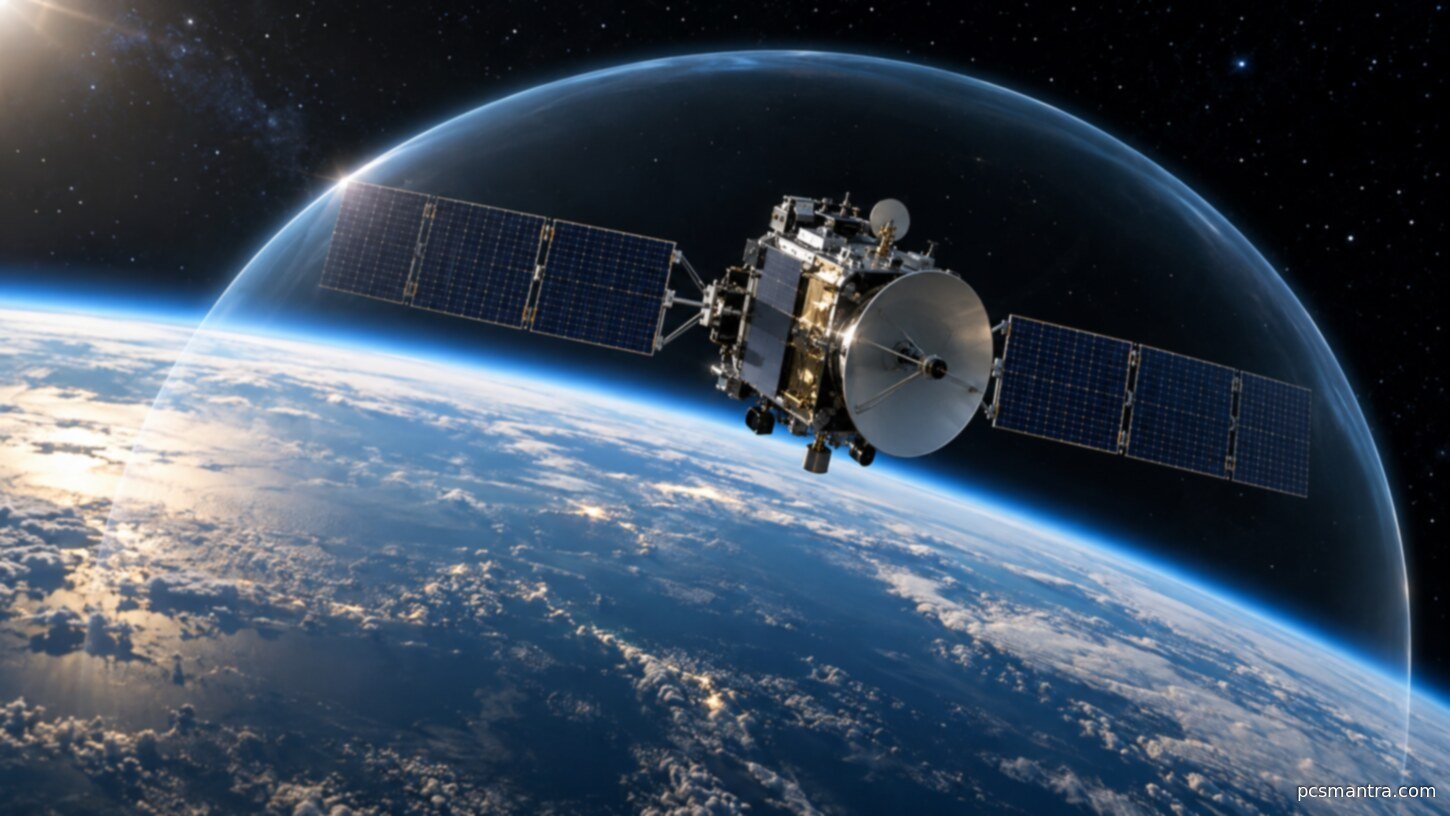
The Hindu's op-ed of 17-18 November 2026, "India needs a comprehensive doctrine on space security", argues that space is no longer just a domain of scientific exploration; communications, navigation, weather, disaster management, agriculture, banking and national security all ride on satellite services. The op-ed's central point: India's objective should not be to turn outer space into another arena of conflict, but to ensure that disruption in space does not translate into vulnerability on Earth.
Earlier, according to the official PIB release of 12 November 2026, Defence Minister Rajnath Singh told the Air Force Commanders' Conference that the IAF should develop dedicated doctrines and architectures for emerging domains of warfare, including electronic, cyber and space. He said victory in future conflicts would depend not merely on the number of aircraft but on technological sophistication, speed of response and precision of preparations.
The changing character of threats: from destruction to disruption
According to the op-ed, space threats now extend beyond destroying satellites to disrupting the services they provide. Jamming and spoofing interfere with communications and navigation; cyber interference can target satellite networks, ground stations and supporting infrastructure; electronic warfare can degrade signals. Such methods produce effects without physically damaging a spacecraft, making attribution and response more complex. The vulnerability lies not only in the satellite but in the whole architecture linking space assets to users on Earth.
India's institutional position
In September 2025 the Defence Minister released India's first Joint Military Space Doctrine (JP 2.07), which recognises space as a warfighting domain alongside land, sea, air and cyber. The doctrine focuses on space-centric warfare, asset protection and risk mitigation, and stresses a joint approach across the three Services. Institutional responsibility for implementation is tied to the Defence Space Agency (DSA).
The op-ed and other analyses urge that doctrine alone is not enough: without institutional ownership, resource allocation and implementation mechanisms, a doctrine remains a statement of intent. Also, operationalising "Defence for Space" - protecting all space assets including civilian ones - remains pending; progress so far has largely been on "Space for Defence", that is, military use of space.
Background: Mission Shakti and the international framework
In March 2019 India demonstrated anti-satellite (ASAT) capability through Mission Shakti. Internationally, the 1967 Outer Space Treaty bars weapons of mass destruction in space and treats space as the province of all humankind; but there is no binding global rule on conventional weapons, jamming or cyber attacks in space. India has supported the peaceful use of outer space and spoken against an arms race there.
Mains analysis
Three axes: strategic - growing space dependence makes national resilience a core question; the lessons of Operation Sindoor have accelerated the strengthening of the military space architecture (PIB). Institutional - the chain from doctrine to implementation; coordination among the DSA, the Services and ISRO. International - the role of norms of behaviour and dialogue in the absence of binding rules; India's position that space must not become an arena of conflict.
Mains practice question
"For India, disruption in space can mean vulnerability on Earth." In the light of this statement, discuss the need for a comprehensive space security doctrine for India. (250 words)
Answer outline
Introduction:
Growing dependence on space services; the shift of threats from destruction to disruption; the 2025 joint doctrine and the Defence Minister's 2026 call.
Main body:
Threats: jamming, spoofing, cyber, electronic warfare; the difficulty of attribution.
Institutional aspect: JP 2.07, the DSA, the move from "Space for Defence" to "Defence for Space".
International framework: the limits of the Outer Space Treaty; India's peaceful-use position.
Conclusion:
Linking doctrine to institutional ownership, resources and protection of civilian assets; keeping space from becoming an arena of conflict - that is the balance.
Frequently Asked Questions (FAQ)
What is the Joint Military Space Doctrine?
Released in September 2025, JP 2.07 recognises space as a warfighting domain and lays down a joint, three-Services approach to space-centric warfare, asset protection and risk mitigation.
How are space threats changing?
According to the op-ed, the threat has moved from destroying satellites to disrupting services through jamming, spoofing and cyber attacks - without physical damage, which makes attribution difficult.
What was Mission Shakti?
India's anti-satellite (ASAT) missile test of March 2019, in which a low-orbit satellite was targeted to demonstrate space-security capability.
What is the DSA?
The Defence Space Agency is India's military space institution, associated with implementing space-based military capabilities and doctrine. Sources: The Hindu - India needs a comprehensive doctrine on space security (op-ed, 17-18 November 2026) - https://www.thehindu.com/opinion/op-ed/india-needs-a-comprehensive-doctrine-on-space-security/article71713238.ece PIB (official) - Raksha Mantri at Air Force Commanders' Conference (12 November 2026) - https://www.pib.gov.in/PressReleseDetailm.aspx?PRID=2335351 Hindustan Times - India's defence for space (June 2026) - https://www.hindustantimes.com/ht-insight/governance/indias-defence-for-space-101780744003679.html
Sources
Download this article: PDF